



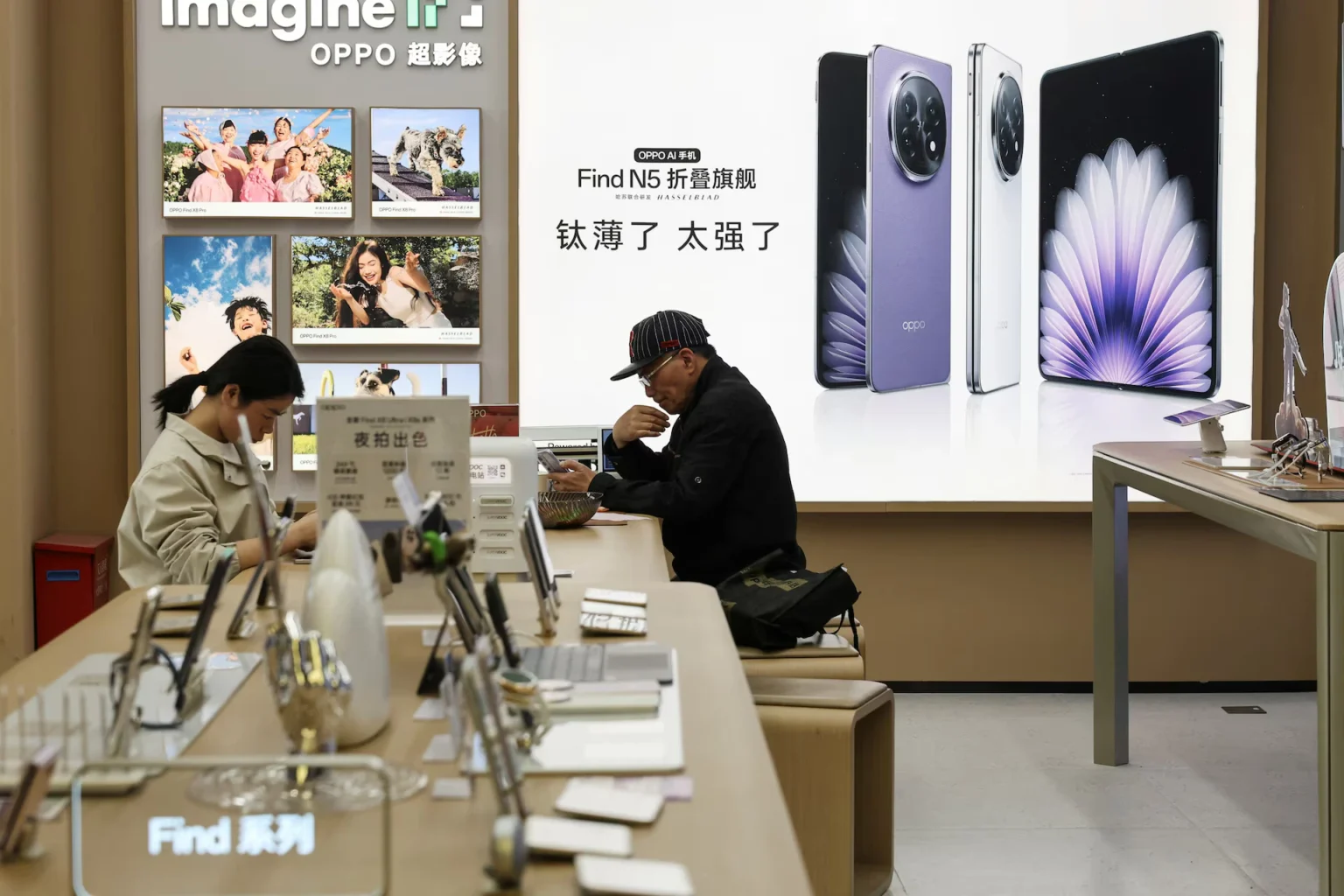
China’s smartphone market is once again signaling a structural shift rather than a temporary slowdown. The latest shipment data suggests that pressure on foreign brands is persisting, while overall demand remains weak in an increasingly saturated market. Shipments of foreign-branded smartphones in China declined by 7.7% year-on-year in February, reaching approximately 2.4 million units. At the same time, total handset shipments fell more sharply – down 14.6% to 16.8 million units. This divergence indicates that while the broader market is contracting, foreign brands continue to face consistent competitive pressure. As reflected in YourDailyAnalysis, relative resilience does not necessarily imply strength – it can also signal a slower pace of decline within a weakening environment.
The competitive landscape has been shifting for several years. Domestic manufacturers have steadily gained ground, particularly as they improve capabilities in premium devices. The return of stronger local offerings, including advanced chip integration and ecosystem development, has intensified competition in segments that were previously dominated by foreign players. Macroeconomic conditions are also playing a role. Consumer sentiment in China remains cautious, with slower income growth and heightened uncertainty influencing purchasing behavior. In this context, demand for smartphones becomes more price-sensitive, and replacement cycles tend to lengthen. This environment places additional strain on brands that rely on premium pricing strategies.
At the same time, the technological narrative is evolving. China’s push toward greater self-sufficiency across hardware, software, and digital ecosystems is reshaping consumer preferences. Devices produced by domestic companies are increasingly perceived as viable alternatives rather than secondary options. YourDailyAnalysis notes that this transition reflects not only competitive improvement, but also broader strategic alignment with national technology priorities.
The decline in total shipments highlights another structural factor – market maturity. With high levels of device penetration, incremental demand is no longer driven by first-time buyers but by upgrades. As upgrade cycles extend, growth becomes harder to sustain, and differentiation becomes more critical. Policy dynamics further reinforce this trend. Support for domestic technology champions, combined with indirect constraints on foreign devices in certain environments, contributes to a gradual rebalancing of market share. While these measures do not eliminate foreign competition, they create additional friction over time.
Despite these pressures, foreign brands retain a meaningful presence, particularly in the premium segment. Brand strength, ecosystem integration, and user loyalty continue to support demand. However, growth trajectories are becoming less predictable, and exposure to the Chinese market is increasingly associated with higher strategic risk. Two key dynamics are emerging simultaneously. On one hand, foreign brands are experiencing a gradual erosion of market position. On the other, the overall market is slowing as saturation deepens. Together, these forces are reshaping the competitive structure of the industry.
Taken together, current data points to a transition phase rather than a cyclical downturn. The market is not collapsing, but it is evolving toward a different equilibrium, where local players are likely to hold a larger share. From an analytical standpoint, the outlook remains cautious. In the near term, pressure on foreign brands is expected to persist, particularly in mid-range segments. Over a longer horizon, as emphasized in Your Daily Analysis, the trajectory will depend on three factors – the pace of recovery in consumer demand, the ability of foreign companies to adapt to local competition, and the continued technological advancement of domestic manufacturers.