

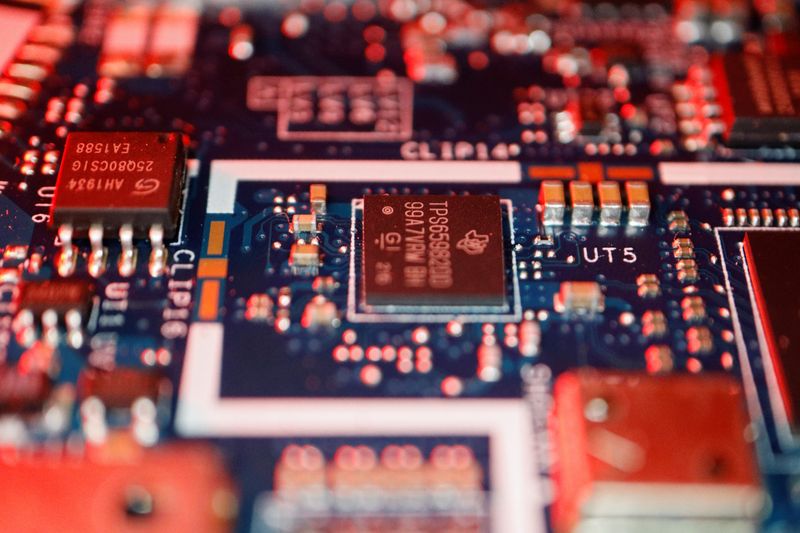
South Korea announced three national mega-projects on Monday – covering semiconductors, physical AI, and AI data centres – with investment commitments that require a moment of mental recalibration before they register properly. Samsung Electronics plans to invest 400 trillion won, approximately $259 billion, in new semiconductor fabrication plants in the southwestern city of Gwangju. YourDailyAnalysis flags that number immediately: it exceeds South Korea’s entire annual defence budget by a multiple of roughly fifteen. SK Group, the country’s second-largest conglomerate, outlined long-term plans worth about 1,100 trillion won for semiconductor production and a further 1,000 trillion won for AI data centre projects. SK Group chairman Chey Tae-won said his group expects to invest, on average, more than 100 trillion won per year in South Korea over the next decade.
YourDailyAnalysis breaks down the data centre piece separately, because the scale is distinct from the chip investment and the timeline is more concrete. The government announced that SK, conglomerate GS Group, and tech giant Naver will invest a combined total of roughly 550 trillion won to build 8.4 gigawatts of AI data centres in an initial phase, with construction targeted to begin in the first half of 2028. South Korea’s science minister said those investments are expected to grow to more than 1,000 trillion won by around 2035. SK Telecom, an SK affiliate, noted in a regulatory filing that it is considering funding through strategic partners including global big tech companies and overseas capital.
Zoom out on the SK Hynix component, which is arguably the most market-relevant piece. Nvidia’s primary HBM supplier – the high-bandwidth memory that makes AI training at scale possible – SK Hynix plans to complete construction of the fourth fabrication facility at its Yongin semiconductor cluster by 2033. That is twelve years ahead of the previous target of 2045. In addition, SK Hynix plans to invest 400 trillion won in a new chip production base in the country’s southwest, sitting alongside existing front-end memory plants in Icheon, Cheongju, and Yongin. Chey declined to name a specific southwestern location. Samsung, for its part, also plans to invest 56 trillion won in advanced high-bandwidth memory fabs in Cheonan and Onyang, and its total domestic investment plan between 2026 and 2040 reaches 2,450 trillion won, of which 2,100 trillion won targets semiconductor clusters.
The physical AI and robotics component is where the government’s ambition becomes most explicit. Seoul aims for South Korea to become one of the world’s top three AI robot powers by 2030 and the world’s leading nation in physical AI. The plan includes commercialising industry-specific humanoid robots tailored to ten major sectors by 2028, establishing data factories, developing Korean physical AI foundation models, and training 10,000 AI robotics specialists over five years. YourDailyAnalysis isolates this robotics target as the most politically significant element – it positions South Korea in direct competition with Japan and China on sovereign AI capability, at a moment when Beijing is tightening export controls on Korean chipmakers.
There is a counter-argument worth considering before assigning this announcement full credibility. South Korean mega-investment plans have a long history of announcement-to-execution gaps. The Yongin semiconductor cluster, for instance, has faced years of permitting and infrastructure delays. Samsung’s own recent performance – the company lost market share in HBM to SK Hynix and has navigated production yield challenges – raises questions about whether the capital will deploy at the announced pace. Your Daily Analysis weighs the announcement as genuine in intent but contingent in execution: the chip war with China and Taiwan makes inaction more expensive than overcommitment, so the numbers, however staggering, reflect a rational strategic calculation rather than pure optimism.
The three variables to watch: whether SK Hynix’s accelerated Yongin timeline holds against ongoing HBM demand cycles; whether the data centre investments attract meaningful participation from US big tech partners, which would signal export-control risk tolerance; and whether the physical AI commercialisation target of 2028 produces anything more than prototype demonstrations. On all three, execution evidence will matter far more than the announced won figures.