



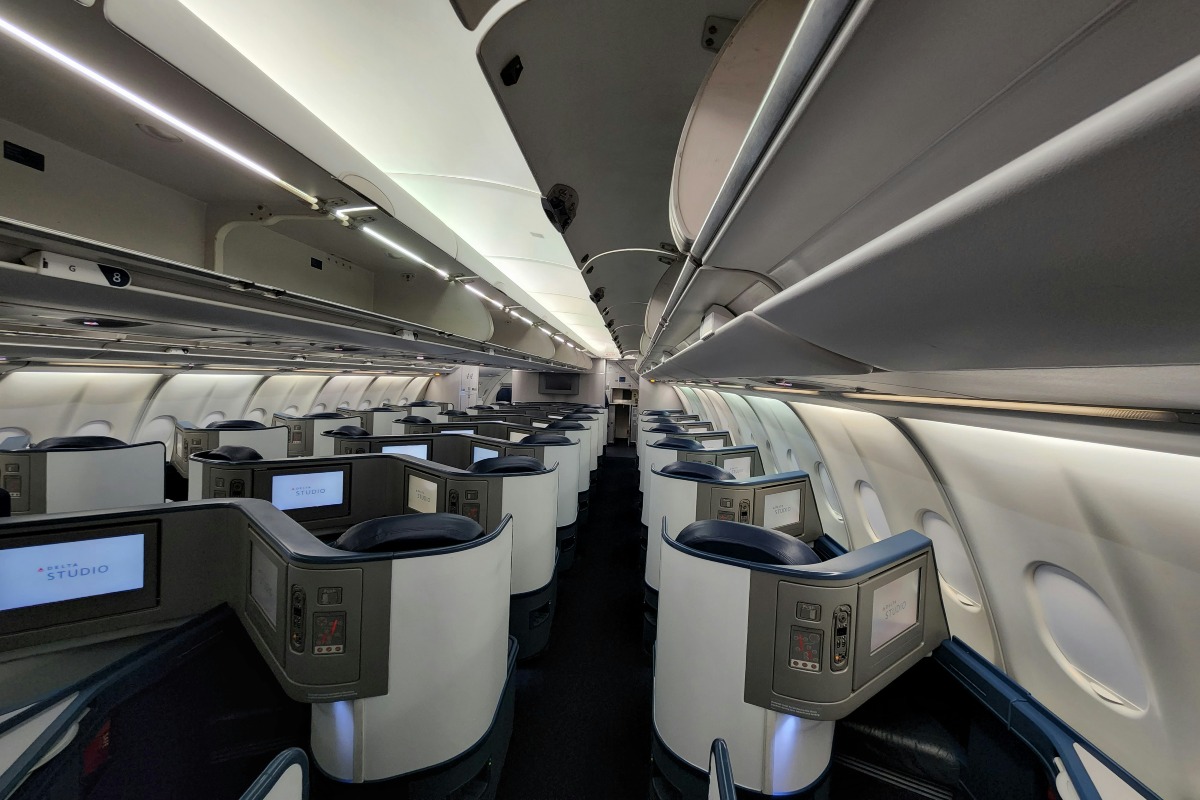
A renewed battle for high-spending passengers is unfolding in the aviation sector, with Delta Air Lines unveiling a redesigned Delta One suite aimed at redefining long-haul comfort and reinforcing its premium positioning. The upgrade, scheduled for deployment on Airbus A350-1000 aircraft starting in 2027, signals a strategic shift toward higher-margin offerings, and YourDailyAnalysis reflects how cabin innovation has become central to airline profitability in an increasingly segmented travel market.
The updated suites introduce incremental yet targeted enhancements – longer beds, improved cushioning, and expanded personal space – designed to align with evolving passenger preferences. These adjustments follow nearly a decade without major redesigns, highlighting the pace at which premium expectations have advanced. Airlines are no longer competing solely on service quality but on physical product differentiation, where privacy, ergonomics, and sleep quality directly influence purchasing decisions.
This shift occurs against a backdrop of changing revenue structures within the industry. Premium ticket sales have outpaced growth in economy cabins, with Delta reporting a 14% increase in higher-end revenue streams. Such trends indicate a bifurcation of demand, where affluent travelers continue to prioritize comfort and flexibility, while price-sensitive segments remain constrained. YourDailyAnalysis draws attention to this divergence as a defining feature of post-pandemic aviation economics, where profitability increasingly depends on extracting value from a narrower, higher-yield customer base.
Competitive dynamics reinforce this trajectory. Rival carriers are introducing similarly ambitious cabin concepts, ranging from upgraded business-class suites to hybrid seating configurations that blur the line between economy and premium offerings. YourDailyAnalysis notes that this escalation reflects not only direct competition but also a broader recalibration of airline business models, where seat density and class segmentation are optimized to maximize revenue per available square meter rather than passenger volume alone.
The investment required to support these upgrades is substantial, involving aircraft retrofits, design innovation, and extended development timelines. Airlines must balance these capital expenditures against uncertain macroeconomic conditions, including fluctuating fuel costs and demand volatility. However, the relative resilience of premium demand provides a degree of insulation, enabling carriers to justify long-term commitments to product differentiation even as broader travel patterns remain uneven.
Beyond immediate financial considerations, the emphasis on premium cabins carries implications for network strategy and fleet deployment. Aircraft configured with a higher proportion of business-class seating are better suited to long-haul routes connecting major financial and commercial hubs, reinforcing a concentration of capacity on high-yield corridors. This reallocation may gradually reshape global connectivity, prioritizing profitability over geographic coverage.
The transformation underway reflects a structural repositioning of the airline industry, where experience-driven differentiation supersedes traditional competition on price and frequency. Your Daily Analysis integrates this evolution into a wider narrative of sector adaptation, where airlines recalibrate their value proposition around exclusivity and comfort, effectively redefining what constitutes competitive advantage in long-haul travel markets.