


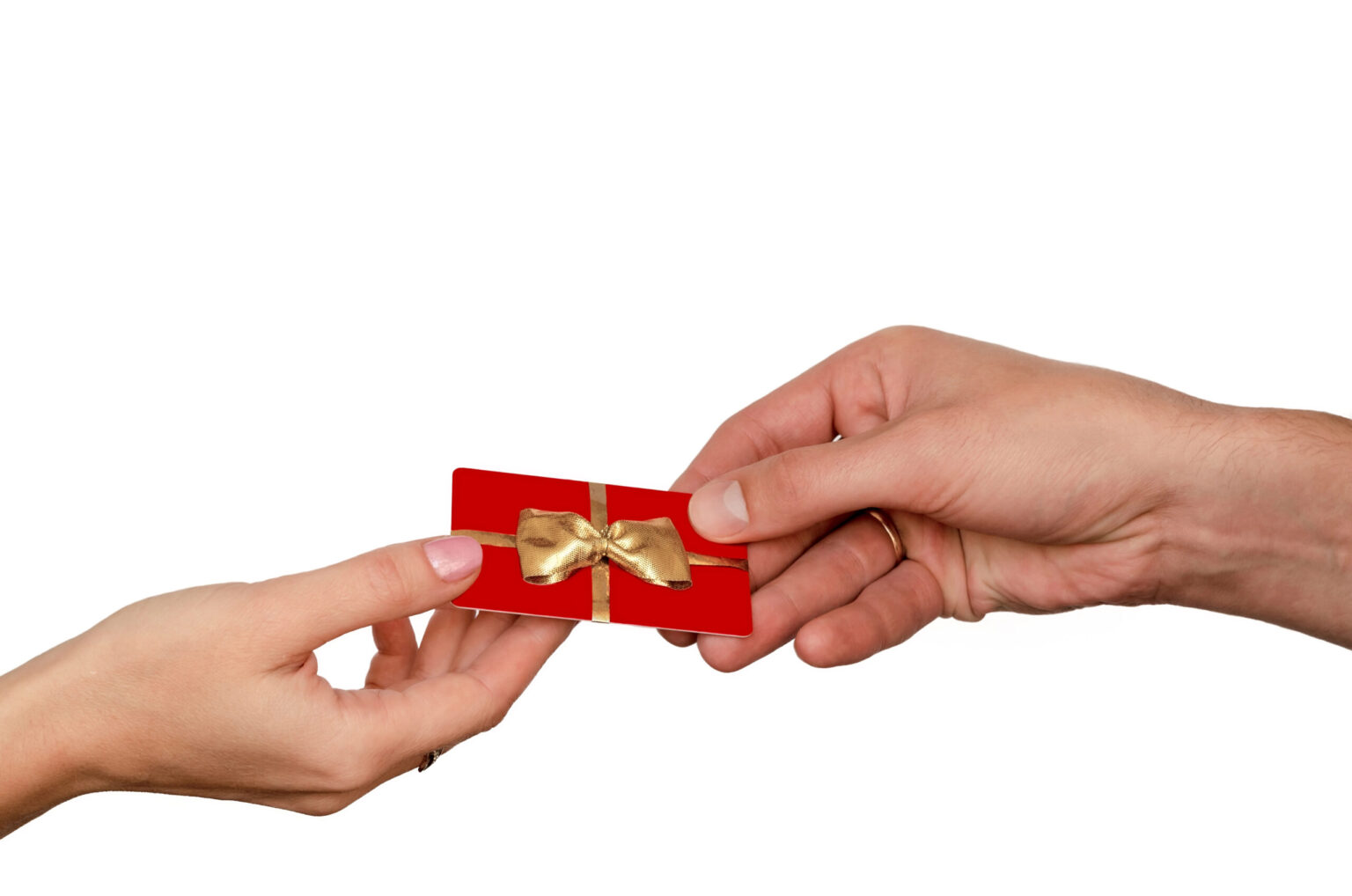
One of my brothers recently joked that he would love to meet the person who first pitched gift cards. Who ever thought that consumers would agree to make their money less useful?
This is an important question for economists as well. Carl Menger’s famous book On the Origins of Money argues that money could have emerged without the government because people naturally traded for more “saleable” goods.
Menger’s “saleableness” is a lot like our term “liquidity.” A more saleable good can be more easily sold at any time without having to lower the price. A house, for example, is not very saleable, because it might take months to find a good buyer, as contrasted with Girl Scout cookies, which have much broader appeal—even children can sell them.
Because it’s hard to find someone willing to make a direct exchange for exactly what you want, Menger argued that people traded for more saleable items, which they would then use for exchanges. Over time, the most saleable commodities became the naturally emergent money.
If people tend to trade for more saleable goods, why would they ever buy a gift card? This is the basic intuition behind my brother’s joke. If gift cards can only be used for specific goods, doesn’t that mean they are less saleable?
Of course, people don’t always trade because they want more saleableness. I might happily give cash for a chocolate bar, even though I know I am losing saleableness. I have other reasons I want to buy chocolate. But in the case of gift cards, the purchaser is still buying something intended for use as currency. Most people buy gift cards hoping they will be spent. Why, then, would there ever be demand for a less saleable currency? Does this contradict Menger’s insight?
One potential response is that the purchaser might have his own judgment for what the recipient should purchase. Reduced saleableness itself might be valued as a good. For example, one man I knew always kept $100 McDonald’s gift cards in his wallet to give to homeless people he met. He kept gift cards, not Benjamins, because he hoped a gift card would be more difficult to exchange for drugs. He couldn’t carry food around all the time, so the gift cards fulfilled the monetary characteristic of transportability without sacrificing his ability to choose what the recipient consumed.
But if your grandma buys you a $50 Amazon gift card, I highly doubt she is trying to keep you away from drugs. In many cases, people buy gift cards because they want to serve the interests of the recipient. So how did gift cards get so popular?
A major factor in this could be norms. It is common for people to give children cash as a gift across cultures. But once we become adults, cash gifts are less acceptable. Thoughtfulness is more central to gift giving when adults have the means to buy things for themselves. Besides, adults would simply be trading cash back and forth.
These norms serve as a constraint on the range of possible gifts one adult can give another. If I want to give $20 to my friend, I must spend my time figuring out what my friend wants so I can buy it for her. Even if I know her well, I can get it wrong, or not spend the $20 exactly as she would have.
That’s where gift cards get interesting: when norms prevent giving cash, buying a gift card is actually increasing the saleableness of my $20.
Think of it this way. If I plan to give my friend something worth $20, I could buy her two Yankee Candles, or a new book, or a grocery store bouquet of flowers. But whatever I give is what she receives. My $20 will be locked into a physical gift with very limited resale value. If I buy a $20 gift card to Target instead, I lose the saleableness of my twenty US dollars, but my gift becomes more saleable to its recipient. My friend will have a much easier time exchanging the $20 gift card at an economic price than she will trying to barter with Yankee Candles.
But what about the norms surrounding cash gifts to adults? Gift cards conveniently work around some of the objections. Instead of trading cash, if two adults happen to give each other gift cards, they each still end up with something different than they had before. A gift card is a bit more specific, which does mean it is less saleable than cash, but it also means that it satisfies the minimum requirements for thoughtfulness. Maybe it’s a little less thoughtful, but gift recipients seem to appreciate the greater saleableness too much to object.
So the next time you buy a gift card for a friend, don’t wonder if Carl Menger is rolling over in his grave. The 1.24 trillion dollar gift card market is exactly the kind of emergence he was talking about.
(2 COMMENTS)