


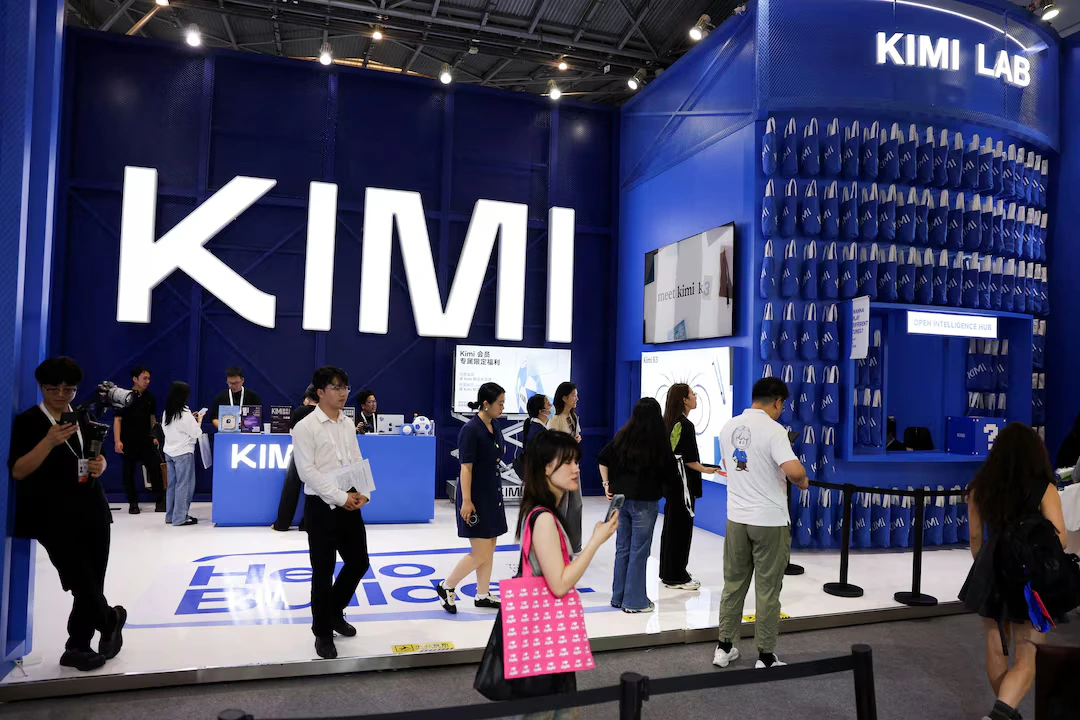
Chinese startup Moonshot AI has temporarily paused new subscriptions after demand for its newly launched Kimi K3 model strained capacity, a bottleneck that comes as the company seeks fresh funding and prepares for a potential Hong Kong listing. “Kimi K3 has received far more love than we expected, and our GPUs are feeling it,” Moonshot said on X, adding that new subscription spots would reopen in batches as capacity was added. In YourDailyAnalysis’s assessment, a company voluntarily turning away new paying customers immediately after a major product launch is a genuinely unusual signal – most startups would rather degrade service quality than cut off new revenue outright.
The scale of the model behind this crunch explains why the compute strain is so severe. The capacity crunch follows a strong reception for Kimi K3, which Moonshot unveiled Friday as a 2.8-trillion-parameter model, making it the world’s largest open-weight AI system according to the company; over the past 48 hours, user requests had sharply exceeded forecasts and were approaching the limits of existing clusters. This is where YourDailyAnalysis‘s read parts ways with the conventional take on open-weight releases: Kimi K3’s size and its focus on coding and agent-style tasks make it unusually expensive to serve at scale, since such workflows typically require repeated model calls and heavy inference capacity, which is a structurally different cost profile than a standard chat-style open model.
The fundraising and IPO context sitting behind this launch is substantial and specific. Moonshot raised more than $2 billion in May from investors including Meituan, China Mobile and CPE, bringing its total historical fundraising to over $5.5 billion, and has since begun seeking up to $2 billion in fresh capital, with its valuation reaching $30 billion in June; the company is also in the process of unwinding its offshore structure ahead of a Hong Kong IPO, having engaged financial advisers including Goldman Sachs and China International Capital Corp, though the timetable remains fluid. YourDailyAnalysis zeroes in on the sequencing here: launching your most technically ambitious model right as you’re simultaneously fundraising and prepping an IPO is a high-risk, high-visibility bet, since any stumble in serving that model reliably becomes a live data point for investors evaluating the listing.
Moonshot’s operational fix reveals something about its underlying cost structure that’s worth spelling out. The company said it would pause new consumer subscriptions immediately, allocate available computing power to current paid users who would be unaffected by the shortage, and split future memberships into two plans, including one just for coding, a move aimed at matching compute resources more precisely with user demand. By YourDailyAnalysis’s estimation, that coding-specific plan split is the more durable structural change here – it suggests Moonshot has concluded coding and agent workflows consume disproportionately more compute per user than general chat use, and is restructuring pricing to reflect that cost reality going forward rather than treating this as a one-time capacity blip.
This capacity crunch is unfolding inside a broader competitive scramble among Chinese AI labs that makes Moonshot’s timing particularly exposed. Moonshot’s competitors, including DeepSeek, have recently sought external capital to expand compute capacity as Chinese AI firms race to narrow the gap with U.S. rivals, while other firms such as Z.ai and MiniMax are releasing more capable models at lower cost, challenging assumptions that China’s model developers lag U.S. peers by months; Alibaba, an investor in Moonshot, separately debuted its own 2.4-trillion-parameter Qwen3.8-Max-Preview model the same weekend. That competitive backdrop means Moonshot’s public compute struggles are playing out in full view of rivals simultaneously racing to demonstrate their own capacity and capability.
Watch how quickly Moonshot reopens new subscription batches, since the pace of that reopening will be a direct, real-time indicator of how fast the company can actually add compute capacity relative to demand. U.S. export controls on advanced Nvidia chips make this compute constraint structurally harder for Moonshot to solve than a simple cash infusion would suggest, since capital alone doesn’t guarantee access to the hardware needed to expand clusters at the pace this launch’s demand requires.