


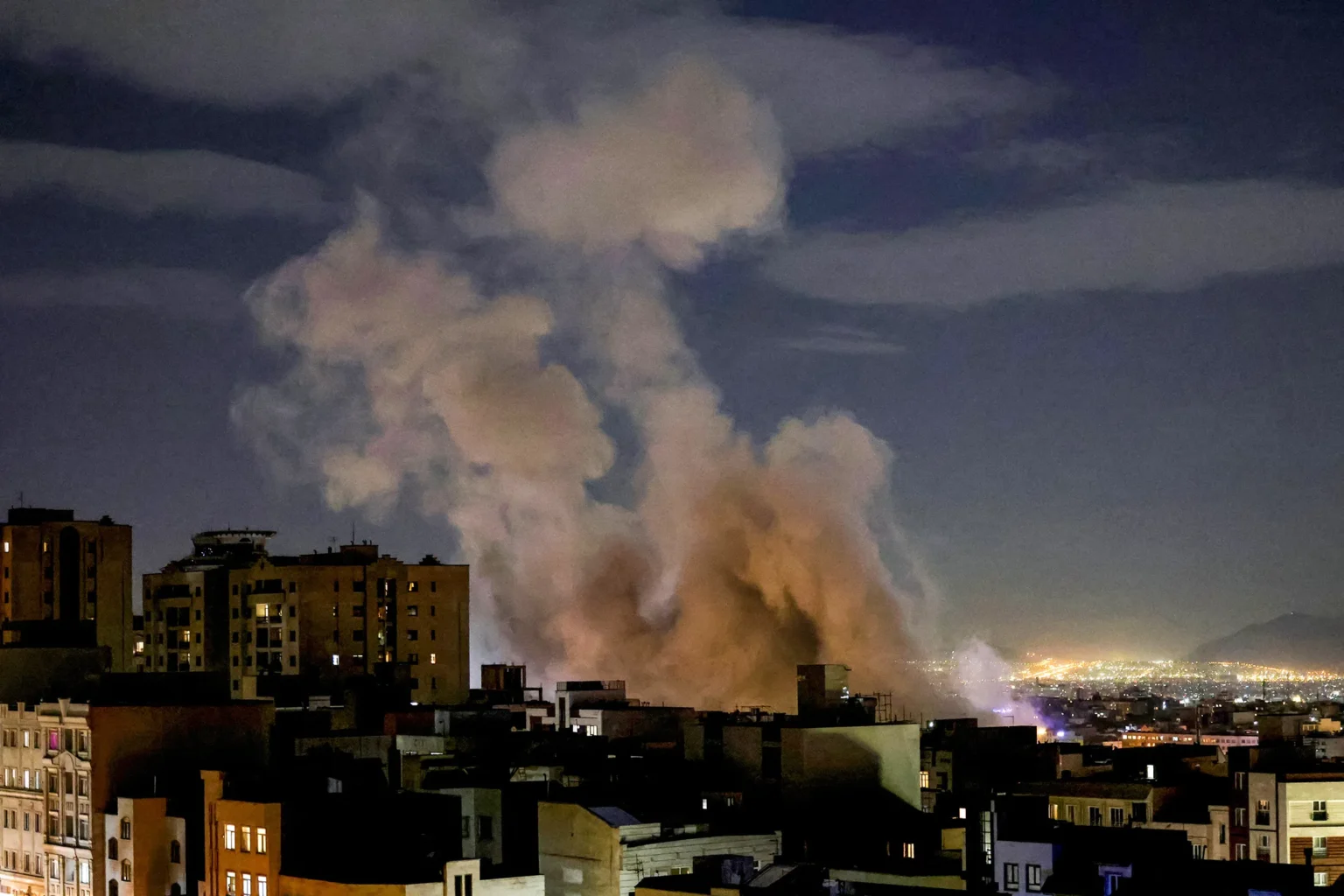
Global financial markets retreated sharply as escalating military strikes in the Middle East forced investors to reprice geopolitical and inflation risks simultaneously. Equity futures in the United States declined around 1%, while major indices across Europe and Asia followed suit. Oil delivered its strongest surge in four years, and the dollar strengthened as capital rotated toward perceived safe havens. From the perspective of YourDailyAnalysis, this is not a panic-driven selloff but a rapid recalibration of macro expectations under heightened uncertainty.
Brent crude jumped toward the high-$70s per barrel after an initial spike exceeding 7%, reflecting fears that the Strait of Hormuz – a corridor responsible for roughly one-fifth of global oil flows – could remain constrained. European natural gas prices surged sharply as well, amplifying concerns about energy-intensive industrial sectors. In the assessment of YourDailyAnalysis, energy markets are currently pricing not only headline risk but also potential second-order effects: freight insurance costs, supply-chain rerouting, inventory hoarding and renewed inflationary pass-through into transportation and manufacturing.
Safe-haven dynamics unfolded quickly. Gold advanced toward record territory, while the U.S. dollar gained as investors reduced exposure to cyclical assets. Notably, short-term Treasury yields edged higher, signaling that traders are reassessing whether elevated energy prices could delay Federal Reserve rate cuts. According to YourDailyAnalysis, this combination – slower growth expectations paired with reduced monetary flexibility – represents a challenging environment for equities, as it pressures valuation multiples while earnings visibility deteriorates.
Sector dispersion was pronounced. Energy and defense stocks outperformed, with major integrated oil producers gaining as markets anticipated stronger realized pricing. Defense contractors extended recent gains amid expectations of sustained military spending. Conversely, airline and travel-related stocks declined, reflecting both rising fuel costs and operational disruptions across regional airspace. From the standpoint of YourDailyAnalysis, this leadership pattern remains tactical rather than structural; its durability depends heavily on whether physical supply disruptions persist or prove temporary.
Investors are also navigating broader fragilities already present before the escalation, including shifting U.S. trade policy, artificial intelligence–driven capital reallocation, and stresses within private credit markets. The current shock overlays geopolitical uncertainty onto an environment that was already sensitive to macro recalibration. As Your Daily Analysis emphasizes, markets are now trading probabilities rather than confirmed outcomes, with volatility reflecting the distribution of potential scenarios rather than concrete economic data.
Looking ahead, the decisive variable will be duration. A contained conflict that allows shipping lanes and refining capacity to normalize would likely moderate energy prices and stabilize risk assets. However, a prolonged disruption that pushes crude toward or above $100 per barrel could meaningfully impact global growth and delay monetary easing across advanced economies. In such a scenario, inflation expectations could re-anchor higher, complicating central bank communication and tightening financial conditions.
In conclusion, the current episode underscores how quickly geopolitical risk can migrate into macroeconomic pricing. Portfolio positioning should prioritize balance-sheet strength, selective exposure and prudent hedging against energy-driven inflation. While sharp market reactions often overshoot in the short term, sustained supply impairment would justify a broader repricing of global risk assets – a scenario that warrants disciplined risk management in the weeks ahead.