

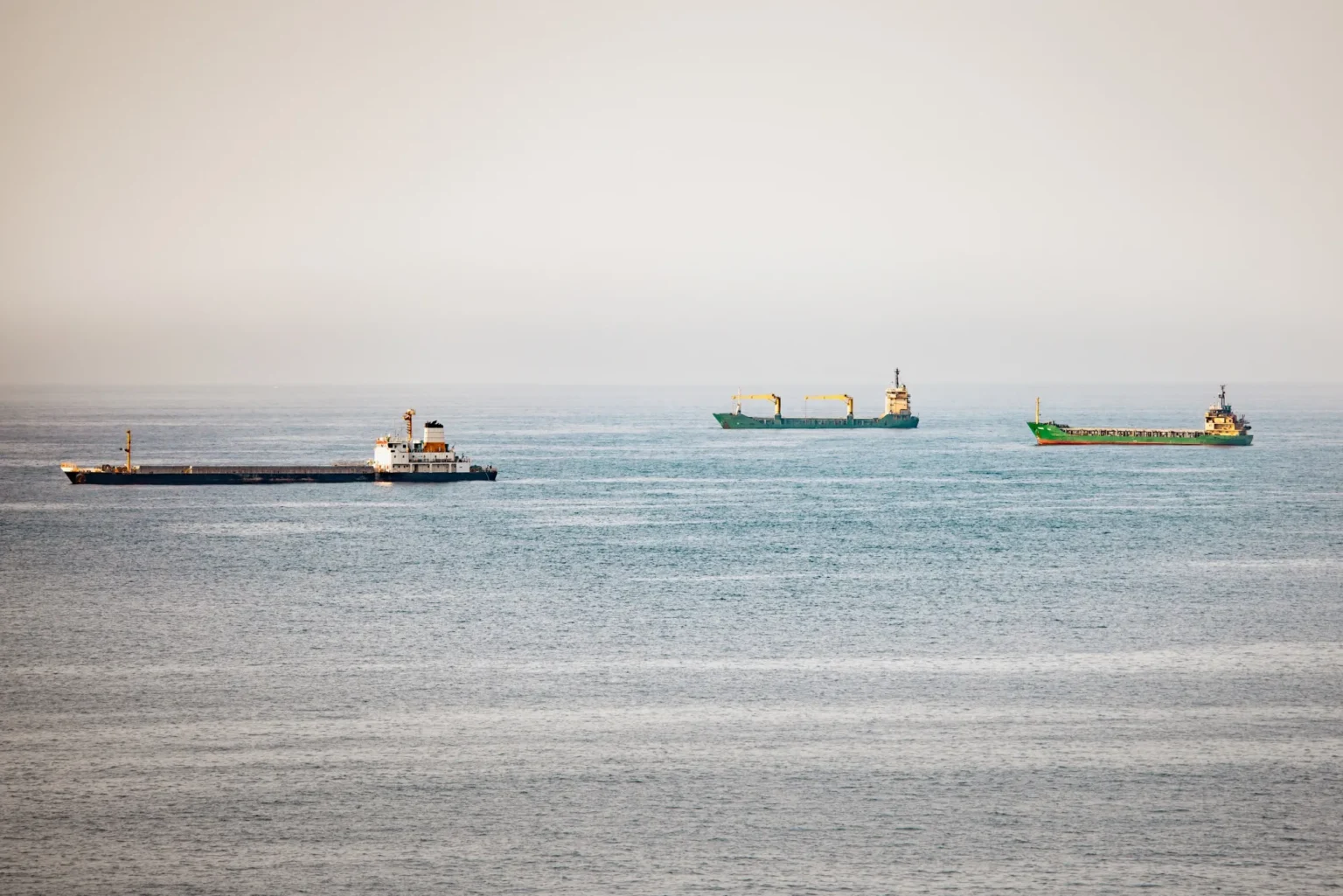
An attack on a container vessel sailing through the Strait of Hormuz on Friday prompted some shipowners to review exit plans, but traffic continued to flow in both directions through the vital thoroughfare, according to ship-tracking data. Two fully laden tankers headed out of the Persian Gulf while four empty, inbound very large crude carriers sailed along the Omani coast. The attack comes nine days after the U.S.-Iran memorandum of understanding was signed and adds a specific complication to the commercial logic that was supposed to follow the ceasefire announcement. YourDailyAnalysis spotlights the attack as a test of whether the MoU’s ceasefire commitments can survive the kind of kinetic incident that, before June 19, would have constituted a clear violation of international maritime law and triggered insurance escalation.
The vessel backlog remains the operative measure of normalization progress. As of June 21, approximately 2,300 vessels were holding position in the Gulf and Gulf of Oman, including 1,566 cargo ships, 705 tankers, and 255 fully loaded oil tankers. Before the conflict began, more than 100 ships transited Hormuz daily. The highest daily count since the ceasefire was 25 ships on June 19. At 25 transits per day against a pre-war baseline of 100-plus, normalization is at roughly one quarter of pre-war volume.
The governance dispute over Iranian service fees has not been resolved. Iran’s IRGC has re-declared the strait closed on multiple occasions since the MoU signing, citing Israeli operations in Lebanon. U.S. Central Command has disputed each declaration. The divergence creates a dual-narrative environment where commercial operators must make transit decisions with genuinely uncertain information about who controls the waterway. YourDailyAnalysis identifies that information ambiguity as a more persistent commercial obstacle than the physical transit risk itself: when shipowners cannot determine whether a transit requires Iranian authorization or UNCLOS transit rights alone, the risk calculus defaults to caution.
The insurance picture has not normalized. Lloyd’s of London elevated the strait to its highest war-risk zone during the conflict, and reclassification requires 30 to 60 days of sustained incident-free transits at volume. Friday’s container ship attack directly resets any clock that had been running toward reclassification since the June 19 ceasefire.
Eighteen of the 25 ships that transited on June 19 followed the route designated by Iran rather than the route defined by the International Maritime Organization. If the Iran-designated route introduces authorization requirements, commercial operators who use it are implicitly accepting Iranian maritime jurisdiction in a body of water the U.S. classifies as an international transit passage zone.
Goldman Sachs has projected that Strait of Hormuz traffic may stabilize at approximately 70% of pre-crisis normal levels, implying a structural shortfall of roughly 30% may persist. The Cape of Good Hope rerouting adds approximately 3,800 nautical miles per round trip. Even if the strait reopens at 70% capacity, the remaining shortfall sustains demand for Cape route shipping above pre-conflict baselines. YourDailyAnalysis weighs the 70% stabilization projection against the current 25% traffic level: the commercial reopening that energy markets have been pricing since June 19 still requires a factor-of-three traffic recovery just to reach a structurally diminished normal.
The fertilizer dimension has received less attention than oil and LNG. The Persian Gulf region accounts for approximately 30% to 35% of global urea exports in normal years. Recovery in fertilizer flows will follow energy recovery with a lag.
Watch the IMF PortWatch daily transit count and the AIS transponder activation rate as the most reliable real-time indicators of whether Friday’s attack produced a traffic reversal or a temporary hesitation.
Ships are moving. Ships are being attacked. Iran is declaring closures that CENTCOM disputes. Service fee negotiations have not concluded. Insurance reclassification has not occurred. Your Daily Analysis settles on the most accurate single description of the current status: the Strait of Hormuz is neither closed nor open. It is in a contested reopening where every transit is a negotiated event between commercial operators, insurance underwriters, two sovereign states, and an international legal framework that none of the parties fully controls.