


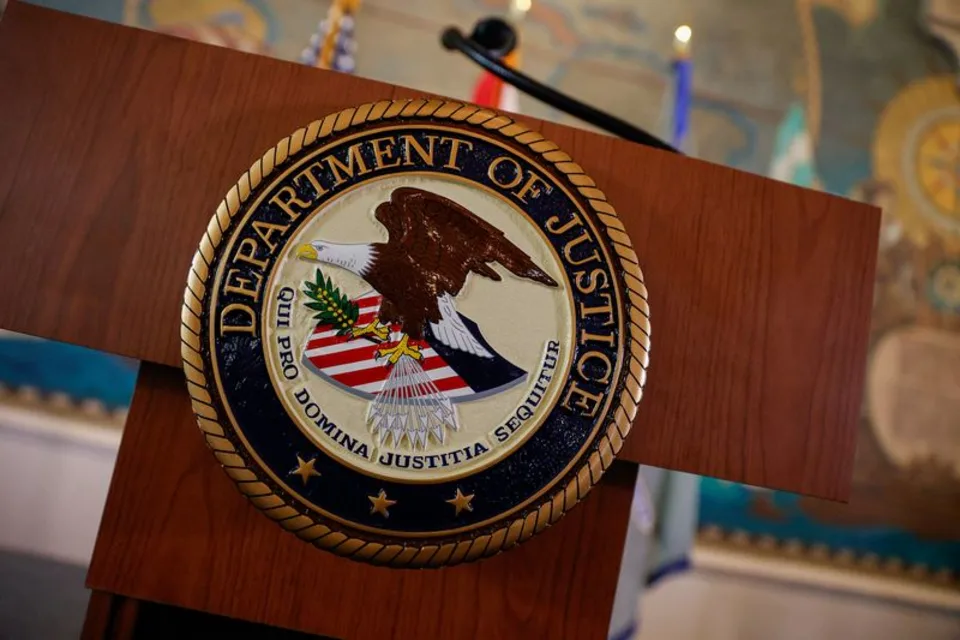
The Justice Department announced Tuesday that Chemours has agreed to settle EPA claims over PFAS discharges and other alleged non-compliance at three facilities, paying a $22.5 million civil penalty and committing to $90 million in additional mitigation projects over 15 years, plus approximately $60 million in pollution controls and $280 million in clean drinking water supply to affected communities. The total value of the settlement exceeds $450 million. Chemours did not admit wrongdoing. YourDailyAnalysis catalogues the settlement as the most significant PFAS enforcement action against a standalone chemical manufacturer under the current administration, notable for its explicit provision allowing Chemours to continue manufacturing PFAS for critical commercial and military applications.
PFAS – per- and polyfluoroalkyl substances – are synthetic chemicals used in a wide range of industrial and consumer products, including non-stick cookware, food packaging, firefighting foam, and semiconductor manufacturing. They have been called forever chemicals because they do not break down in the environment or in the human body. The three Chemours facilities at issue are Washington Works in West Virginia, Fayetteville Works in North Carolina, and Chambers Works in New Jersey.
The $22.5 million civil penalty is below what critics argue is necessary to reflect the scale of harm and cost of remediation. Chemours noted that $15 million had already been accrued, meaning the incremental cash impact is $7.5 million in new penalty exposure. The $90 million in mitigation projects and $280 million in drinking water remediation represent the substantive remedial obligations that will actually address the contamination. YourDailyAnalysis picks apart the penalty structure as a common feature of environmental settlements with large chemical producers: the civil penalty is calibrated to financial capacity, while the remediation obligations carry the real cost.
The West Virginia Department of Environmental Protection is also a party to the settlement, adding a state enforcement layer. State agencies often have more immediate on-the-ground capacity to monitor compliance with operational requirements, and the settlement creates accountability to both federal and state authorities simultaneously.
Principal Deputy Assistant Attorney General Adam Gustafson described the settlement as showing the administration’s commitment to protecting the public from harmful pollution while allowing Chemours to continue its manufacturing operations. Military applications, semiconductor manufacturing, and certain industrial processes rely on PFAS chemistry that cannot be quickly replaced.
Chemours was spun off from DuPont in 2015 and inherited a portfolio of PFAS liabilities along with its production facilities. Previous PFAS settlements include 3M’s $12.5 billion settlement with public water systems in 2023 and DuPont, Chemours, and Corteva’s $1.185 billion settlement with public water systems in 2021. The current settlement addresses regulatory enforcement claims from the EPA rather than private litigation.
The most consequential provision for affected communities is the drinking water supply commitment. Providing clean drinking water to communities in West Virginia and New Jersey that have experienced PFAS contamination addresses the most immediate public health harm. YourDailyAnalysis surfaces the timeline tension: community members whose water has been contaminated for years will wait years more for the full remediation commitments to be implemented.
Chemours committed to reducing process emissions of fluorinated organic chemicals by 99% or more by 2030. The proposed consent decree will be filed with the U.S. District Court for the Southern District of West Virginia. The public has 30 days to comment before the court considers approving it.
Watch whether the proposed consent decree faces significant opposition during the 30-day public comment period. Community groups, environmental advocates, and affected municipalities routinely object to environmental consent decrees as insufficient. Your Daily Analysis drives home the distinction between the two settlements announced on the same day: Doe Run’s $150 million resolves private tort claims; Chemours’ $450 million-plus resolves regulatory enforcement claims, and only one of them must withstand a public test before it takes effect.