



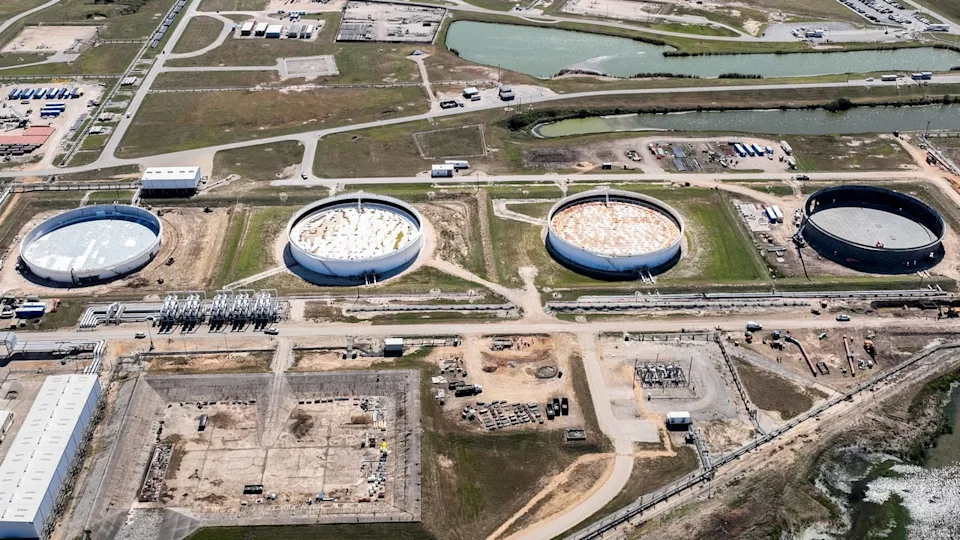
Department of Energy data show the U.S. Strategic Petroleum Reserve shed about 5.1 million barrels in a single week, bringing total stocks to 311.4 million barrels, a level not seen since March 1983. The ongoing withdrawals stem from a U.S. pledge to release 172 million barrels from the reserve, with SPR inventories down 104.04 million barrels since the war with Iran erupted at the end of February, measured through July 17. YourDailyAnalysis starts with the 1983 comparison itself: that’s more than four decades of reserve-building being unwound inside roughly five months, which puts the pace of this drawdown in a category well beyond routine strategic-reserve management.
The scale of this action within the broader international response is substantial, not a unilateral U.S. move. The Trump administration announced the 172 million-barrel release on March 11 to counter supply disruptions from the conflict, which has disrupted shipping through the Strait of Hormuz, a chokepoint through which about 20% of the world’s oil transited before the war began; the U.S. release was part of a broader 400 million-barrel action coordinated by the International Energy Agency across 32 member nations. YourDailyAnalysis reads the U.S. share of that coordinated release, 172 million of the total 400 million barrels, as evidence Washington is shouldering a disproportionate 43% of the internationally coordinated response relative to its roughly 15% share of IEA membership, underscoring how central the U.S. reserve has become to managing this specific supply shock.
The financial mechanism behind this release is structured very differently from a simple emergency sale, and that structure matters for how to think about the SPR’s actual depletion. Rather than an outright sale, the government is lending crude to companies that must repay the same volume with an added premium at a future date; through solicitations launched from mid-March onward, the Department of Energy has contracted out more than 133 million barrels, with repayment premiums running as high as 28% and no lower than 18%, and Energy Secretary Chris Wright said in March the agency expects to receive back more than 1.2 barrels for every barrel released. Your Daily Analysis treats that loan-with-premium structure as meaningfully different from a permanent drawdown: if the repayment terms hold, the SPR’s barrel count should eventually recover with interest, which reframes today’s 311.4 million-barrel low as a temporary trough tied to a specific conflict rather than a structural depletion of America’s emergency reserve.
The combined inventory picture, when commercial stocks are added to the SPR figure, shows the tightness extends well beyond the strategic reserve alone. Total U.S. crude inventories, combining commercial and SPR holdings, stood at 726.2 million barrels as of July 10, down 129 million barrels and the lightest level since 1984. That means both the emergency reserve and the ordinary commercial oil-storage system are simultaneously running near multi-decade lows, which leaves less of a buffer across the entire U.S. oil-storage system, not just the government’s strategic stockpile, should a fresh supply shock hit on top of the current conflict.
A government audit released just weeks before this latest drawdown milestone raises real questions about the reserve’s physical readiness to handle further stress. A Government Accountability Office report released in early July found the SPR could draw down oil at only about 61% of its originally intended rate as of December 2025, while its capacity to accept returning crude had slipped to just 56% of design specifications; the GAO also found the agency’s $1.4 billion Life Extension Phase 2 overhaul has repeatedly slipped behind schedule, and that no update to the Department of Energy’s overarching SPR strategy has been issued in nearly a decade. “The SPR’s operational capability to meet mission demands is at risk,” the GAO report said – a warning that lands with particular weight given the reserve is simultaneously being drawn down toward a four-decade low.
Watch whether the SPR’s remaining 311.4 million barrels approaches its statutory minimum of 252.4 million barrels, which would trigger restrictions on further drawdowns under the Energy Policy and Conservation Act, and watch whether the Department of Energy’s contracted repayment volumes, currently above 133 million barrels, actually flow back into the reserve on the schedule Secretary Wright described. YourDailyAnalysis views the GAO’s 61% drawdown-capacity finding as the more structurally important number here, since it suggests the reserve’s usefulness in any future emergency may already be compromised regardless of how many barrels remain on paper.