


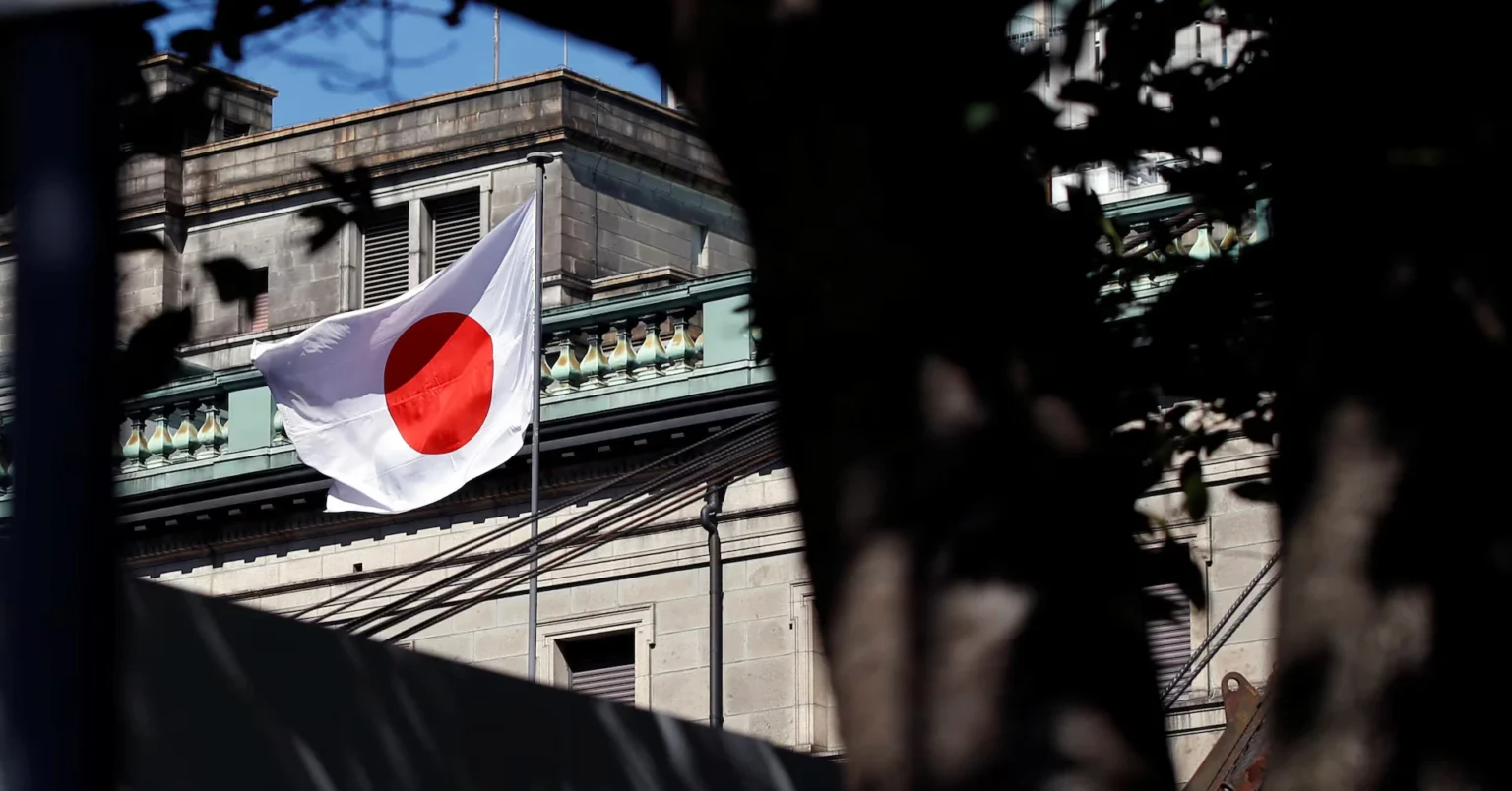
Japan’s 10-year government bond yield hit a 30-year high of 2.8% last week, nudging toward the 3% threshold that the Ministry of Finance used in compiling its fiscal 2026 budget – and the Bank of Japan is now weighing whether to pause its bond-taper program in fiscal 2027. At its June 15-16 meeting, the BOJ will review its current taper plan and set a new framework for the year ahead. What looks like a technical QT decision is, as YourDailyAnalysis dissects it, inseparable from the political moment: Prime Minister Sanae Takaichi is under investor pressure over her spending plans, and a BOJ pause on quantitative tightening would hand her direct relief.
The mechanics are worth laying out clearly. The BOJ has been tapering its bond purchases since 2024 as Governor Kazuo Ueda normalizes after more than a decade of ultra-loose policy. The current taper runs through March next year. At the June meeting, the BOJ will decide the fiscal 2027 taper schedule – whether to continue at roughly the same pace, slow it, or pause entirely. Markets currently price a rate hike from 0.75% to 1.0% as a “strong possibility” at the June meeting itself. What analysts now debate is whether the BOJ can push through a rate hike and simultaneously announce a taper pause without sending a contradictory signal: tightening on rates, loosening on QT, with the bond market watching both moves simultaneously.
Mari Iwashita, executive rates strategist at Nomura Securities, projects a taper pause in fiscal 2027, arguing that with the bond market so unstable, “it would be natural for the BOJ to play it safe and avoid causing undue market turbulence.” The reporters at YourDailyAnalysis note that “playing it safe” carries a different meaning depending on whether the primary risk is a bond market accident or an inflation persistence failure – and the BOJ faces both simultaneously in June 2026 in a way it has not confronted before in this tightening cycle.
That logic has clear institutional merit. Japan’s 30-year JGB yield hit 4% for the first time since the bonds were issued in 1999, and the 10-year yield at 2.8% means debt servicing costs are approaching the level at which they start crowding out other government expenditure in the budget. A taper pause that keeps BOJ purchases elevated effectively functions as a fiscal subsidy – reducing the supply of bonds hitting the open market and capping yields below where they would otherwise settle. YourDailyAnalysis flags this dual character as the most contested element of the decision: it is simultaneously prudent market management and indirect fiscal support for an administration running large deficits.
There is a third scenario that the pause-versus-continue binary misses. The BOJ could slow the taper rather than stop it entirely – reducing monthly purchase reductions from the current pace to a more gradual schedule without committing to the full pause that Takaichi would find most politically useful. That middle path gives the BOJ institutional cover while preserving the appearance of continued normalization. Standard Chartered’s economists project the BOJ keeping the policy rate at its current level at the June meeting while maintaining QT at roughly 400 billion yen per quarter. ING maintains a June rate hike call. The divergence between those two major-bank forecasts is itself a measure of how genuinely uncertain the decision is.
The yen adds pressure from the other direction. Dollar-yen has crept back above 158, approaching the 160 level at which Tokyo previously intervened. A taper pause that does not come with a rate hike would likely push the yen weaker, forcing the Ministry of Finance back into intervention mode shortly after the BOJ meeting. That loop – pause QT, yen weakens, MoF intervenes, reserves shrink – is the scenario Japanese policymakers most want to avoid.
The June 15-16 meeting is the most consequential BOJ decision in at least 18 months. Watch the rate call first, then the fiscal 2027 taper schedule. The combination of those two outputs will tell markets more about what the BOJ actually believes about Japan’s fiscal sustainability than any policy statement ever will. One additional variable that the editors at Your Daily Analysis track as a secondary signal: whether the BOJ revises its inflation forecast at the June meeting. An upward revision to the fiscal 2026 CPI outlook, combined with a rate hike, would be the cleanest possible hawkish read and would make any taper pause harder to justify on monetary grounds rather than just on bond market stability grounds.