


The U.S. Army announced Thursday it had reached preliminary agreements with four companies to build critical minerals processing facilities on military installations, the first time commercial mineral plants will be sited on American military bases. REalloys Inc., Titan Mining Corp., ioneer Ltd., and Energy Exploration Technologies Inc. will develop facilities for rare earth separation, graphite purification, boron, and lithium processing respectively. Construction is targeted to begin as early as 2027 and mineral production is expected by 2028. YourDailyAnalysis maps the structural novelty of the arrangement: the Pentagon is not buying minerals; it is providing real estate and infrastructure access in exchange for domestic production capacity stockpiled on-site for military use.
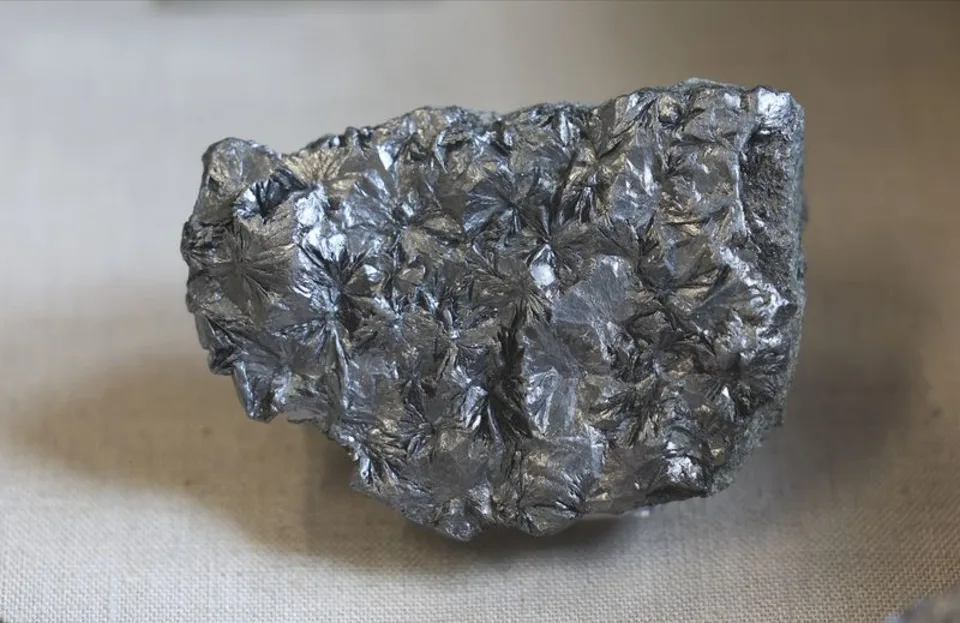
The specific assignments reveal the Army’s priority materials. REalloys will construct a rare-earth separation facility at the Tooele Army Depot in Utah, with output including dysprosium and terbium – heavy rare earths used for high-temperature permanent magnets in weapons guidance systems. Titan Mining will build a graphite processing facility at Pine Bluff Arsenal in Arkansas or Anniston Army Depot in Alabama. Ioneer, a Sydney-based company and the only non-U.S. firm among the four, will develop a boron plant. EnergyX will develop a lithium facility.
David Fitzgerald, deputy undersecretary of the Army, said the main objective is to make the American and allied supply chain for these critical minerals more robust and more resilient. Under proposed leases of up to 50 years, companies would finance, design, build, operate, and eventually decommission the facilities in lieu of cash payments. YourDailyAnalysis dissects the land-for-minerals model as a form of subsidized industrial policy that avoids the direct appropriation questions that cash grants or equity stakes would raise in Congress.
China’s Commerce Department placed export controls on U.S. rare earth companies MP Materials Corp. and USA Rare Earth Inc. last week, restricting the two companies from importing Chinese rare earth precursor materials. A domestic rare-earth separation facility operating on Army property addresses both the supply chain vulnerability and the Chinese leverage that export controls are designed to create.
Shares of Titan Mining rose as much as 12% in New York trading on Thursday. Ioneer’s depositary receipts climbed as much as 7.1%. The market reaction reflects both the commercial value of secured long-term leases with the U.S. government and the strategic premium investors place on any company with a credible domestic critical minerals production pathway.
The agreements are preliminary. Each company must enter exclusive contract negotiations with the Army to finalize lease terms and specific infrastructure improvement obligations. The final agreements could differ materially from the preliminary terms. YourDailyAnalysis ranks the REalloys heavy rare earth separation facility at Tooele as the most strategically time-sensitive of the four, given the immediacy of China’s MP Materials export controls and the current absence of any domestic facility capable of separating dysprosium and terbium at meaningful scale.
The boron and lithium assignments reflect a more recent expansion of the critical minerals definition. Boron is used in nuclear reactor control rods, permanent magnets, and defense composites. Both materials have more diversified global supply chains than heavy rare earths, but Chinese processing still dominates midstream production globally.
The four companies are part of the Army’s strategic capital initiative covering locations in Alabama, Arkansas, Texas, and Utah so far, with additional sites potentially added as the program extends.
Watch the formal lease signing timelines for each of the four companies. The distance between conditional selection and signed lease can be measured in years when federal procurement processes are involved. Your Daily Analysis closes on the operational benchmark that matters most: if the first signed lease and construction start at any of the four sites occurs by end of 2027, the military-base processing model will attract additional companies and materials; if the preliminary selections stall, the policy innovation announced Thursday will remain a policy announcement rather than a supply chain reality.