

Speculation around a potential SpaceX public offering has intensified, but expectations of a straightforward, revenue-driven IPO may underestimate the structural contradictions at the heart of Elon Musk’s company. From the perspective of YourDailyAnalysis, a future listing would place public-market investors inside a business model that has never been optimized for conventional shareholder predictability.
SpaceX has built two fundamentally different engines under one corporate roof. On one side stands Starlink – a rapidly expanding satellite broadband network generating the bulk of the company’s estimated annual revenue and providing cash flow stability. On the other is Starship and the broader Mars program, a capital-intensive, high-risk effort with uncertain timelines and outcomes. There is little indication that this balance would shift materially after an IPO.
Market narratives around a valuation exceeding $1 trillion assume that Starlink will continue scaling into new services such as direct-to-cell connectivity, enterprise networks and potentially data-intensive workloads. Within YourDailyAnalysis, this assumption appears optimistic but not guaranteed. Regulatory approvals, spectrum constraints, customer pricing tolerance and rising satellite deployment costs all introduce friction that could slow growth precisely when public investors expect acceleration.
Starlink’s success has already altered SpaceX’s financial profile, effectively subsidizing the prolonged development of Starship. Yet this internal cross-subsidy also exposes future shareholders to strategic decisions driven by ambition rather than near-term returns. SpaceX has repeatedly demonstrated a willingness to reinvest cash flows into projects with asymmetric risk profiles – a feature that has produced breakthroughs, but also prolonged periods of uncertainty.
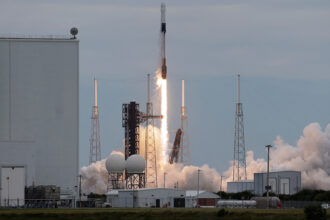
Starship represents the clearest fault line between private and public ownership. Designed for Mars missions, lunar transport and next-generation satellite deployment, the rocket remains experimental. In a private setting, delays and test failures have limited consequences. In public markets, such events could translate into volatility even if core revenue streams remain intact.
Beyond launch and connectivity, SpaceX continues to explore longer-horizon concepts such as space-based data infrastructure and expanded national security platforms. From the standpoint of YourDailyAnalysis, these initiatives function less as valuation anchors and more as strategic options – attractive in theory, but difficult to price and costly to maintain.
Government contracts and defense programs provide a degree of downside protection, embedding SpaceX within national security frameworks. However, these revenues alone are unlikely to justify the valuation levels currently discussed. Any IPO premium would rest largely on investors accepting prolonged reinvestment and strategic ambiguity.
In the assessment of Your Daily Analysis, a SpaceX IPO would not mark a transition from experimentation to monetization. Instead, it would invite public markets to fund an enterprise still defined by long-duration technological risk. For investors, participation would hinge less on earnings visibility and more on tolerance for uncertainty – a trade-off familiar to Tesla shareholders, but potentially magnified in the context of space exploration.
Whether public markets are prepared to absorb that level of risk remains uncertain. What is clear is that a SpaceX listing would challenge traditional valuation frameworks and test investor patience in an era increasingly shaped by long-term technological bets.