


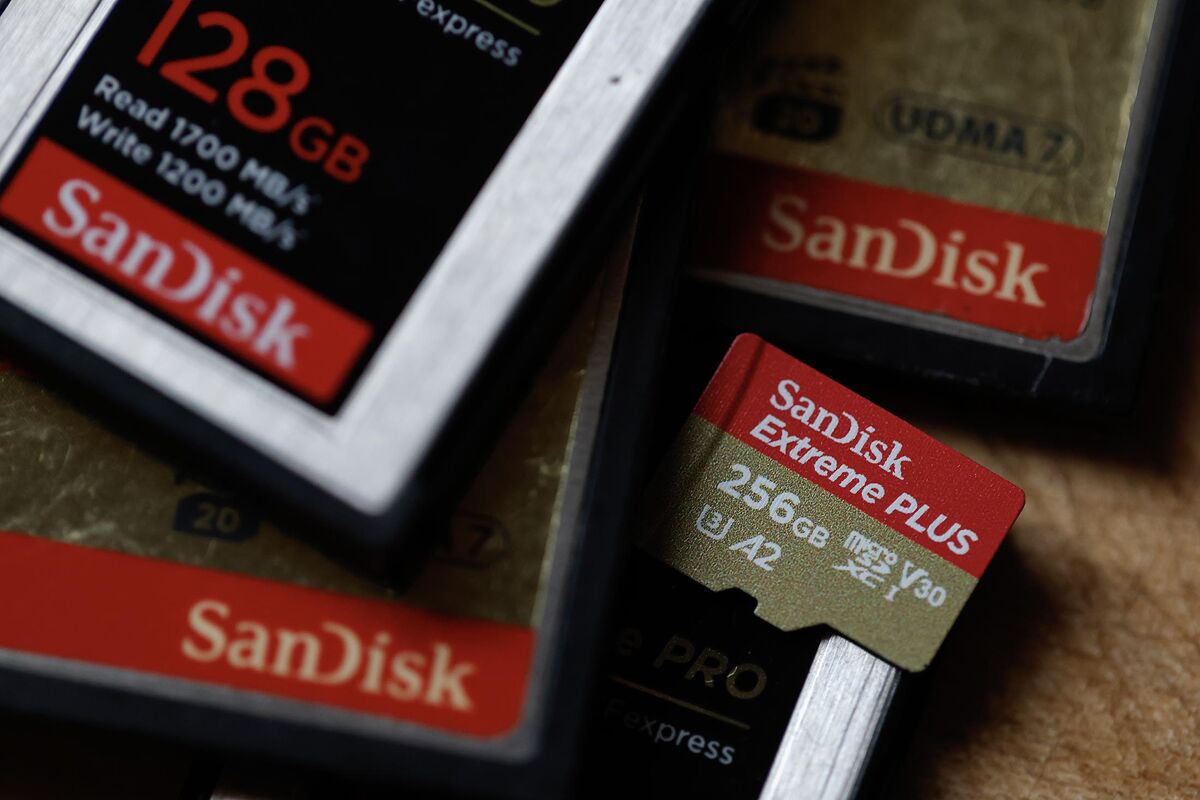
Amid an uncertain start to the year for equity markets, one segment has stood out with relative consistency: memory and data storage. What may appear as a narrow semiconductor niche is increasingly being reclassified as core AI infrastructure, attracting both capital and attention. The recent outperformance of companies such as Sandisk, Western Digital, Seagate, and Micron reflects a broader shift in investor positioning. Rather than focusing solely on platform leaders, markets are rotating toward segments where supply constraints are more visible and demand is directly tied to physical infrastructure. As reflected in YourDailyAnalysis, memory has emerged as one of the clearest bottlenecks in the AI value chain.
This shift is grounded in real demand dynamics. Hyperscalers and chip manufacturers are expanding data center capacity at scale, driving sustained demand for both high-performance memory and bulk storage. Strong guidance from leading memory producers reinforces the view that current demand is not speculative but tied to ongoing capital deployment. YourDailyAnalysis indicates that pricing power has become a defining feature of the current cycle. Significant increases in memory prices have supported margins and strengthened the financial position of key players. This marks a departure from earlier phases where pricing volatility often undermined profitability.
However, the structural narrative does not eliminate historical patterns. The memory industry has long been characterized by cyclical supply expansions that eventually lead to oversupply. While AI demand may extend the current cycle, it does not remove the underlying dynamics. Different segments within the space are benefiting from distinct drivers. High-bandwidth memory supports advanced AI workloads, while traditional storage solutions are seeing increased demand from data-intensive applications such as cloud storage and AI-generated content. This diversification strengthens the overall investment case.
At the same time, capital expenditure is accelerating across the sector. Major players are increasing investment in production capacity to meet demand. While this supports near-term growth, it also raises the risk of future imbalances if supply expansion outpaces demand growth. YourDailyAnalysis suggests that the key differentiator in this cycle is not only scale but also the evolving structure of demand. AI applications are increasing the memory intensity of computing systems, potentially creating a more sustained demand base than in previous cycles.
This helps explain why memory and storage are currently perceived as more straightforward investment themes compared to other AI segments. While software and platform companies face increasing scrutiny around monetization and return on investment, demand for infrastructure components remains directly linked to ongoing spending.
Nevertheless, the simplicity of the narrative can also become a vulnerability. As expectations rise, the sector becomes more sensitive to any signs of demand slowdown or supply normalization. Your Daily Analysis emphasizes that the current environment should be viewed as an extended cycle rather than a fundamentally different one. The duration and intensity may change, but the core mechanisms remain intact.
The outlook remains moderately constructive. Continued investment in AI infrastructure supports demand visibility in the near term, but the balance between supply expansion and demand growth will determine the sustainability of current valuations. From a strategic perspective, attention should focus on capital expenditure trends among major producers, pricing dynamics in memory markets, and signals from large-scale AI investors. As YourDailyAnalysis highlights, these factors will define whether memory remains the most compelling infrastructure trade or approaches the peak of its cycle.