


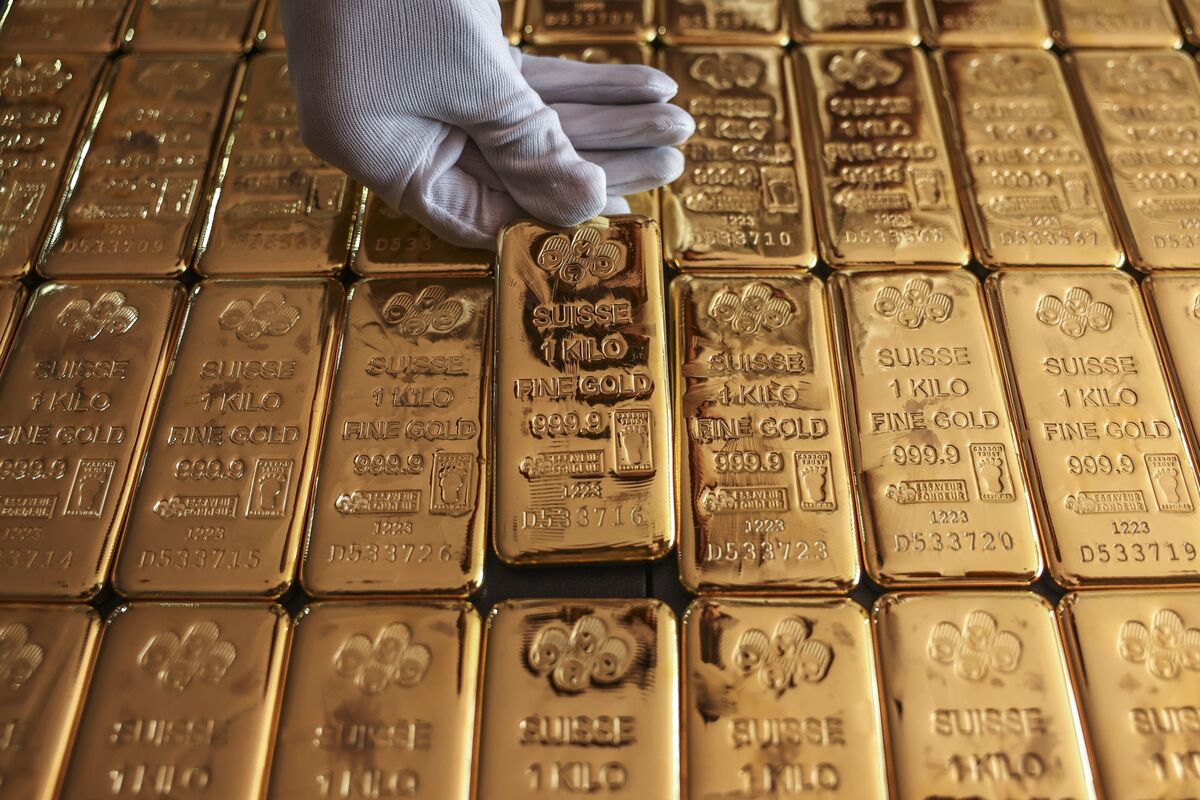
Gold fell as much as 1.4% to below $4,270 an ounce on Monday before paring some losses to trade around $4,290. The metal gave up nearly 5% in the prior week, its worst seven-day stretch since the spring conflict escalation. The pattern is counterintuitive: Israel and Iran exchanged missile strikes over the weekend – the most serious breach of the April ceasefire – yet gold fell rather than rallied. YourDailyAnalysis unpacks this paradox as the central story of Monday’s session: the metal that trades as a safe haven in normal conditions is being driven by two forces that work against each other, and the rate-expectation force is currently winning.
The Friday jobs report is the proximate cause. The Bureau of Labor Statistics reported 139,000 nonfarm payroll additions, topping all forecasts. That data point pushed bond yields and the U.S. dollar higher, reinforcing Federal Reserve rate hike expectations for 2026. Gold is priced in dollars and pays no interest, trading inversely with the dollar and rate expectations. In Friday’s session, gold erased its year-to-date gain. That is what strong U.S. economic data does to the metal in the current environment.
Silver dropped nearly 10% last week, an even sharper decline than gold, trading around $67.02 on Monday. Platinum and palladium also fell. The broad precious metals complex moved in the same direction, suggesting systematic repricing of inflation hedges as investors recalibrate to higher-for-longer rates. The People’s Bank of China added roughly 10 tons to its gold reserves in May, the highest monthly total since 2024, extending its buying streak to 19 months. YourDailyAnalysis tracks PBOC buying as the one structural support the bears have not been able to dislodge: central bank demand at this scale does not disappear on a payrolls print.
The geopolitical dynamic adds confusion. Normally a ceasefire breach of this magnitude – Israel hitting targets in central and western Iran after Iran fired multiple missile rounds – would send gold sharply higher. Instead it fell. The mechanism is specific to this conflict’s macro transmission: every escalation raises oil prices, which raises inflation expectations, which reinforces the case for Fed rate hikes, which strengthens the dollar. And a stronger dollar pushes gold down. The safe-haven demand is being short-circuited by its own inflationary feedback loop.
Trump told the Financial Times that the United States calls the shots and that Netanyahu won’t have any choice regarding further escalation. He added the attacks will not have any effect on the deal. Iran’s IRGC characterized the missile strikes as a warning. That exchange historically sustains a gold premium. YourDailyAnalysis interprets the absence of any such premium as a signal: the inflation-and-rates narrative has fully displaced the traditional safe-haven logic in how gold is currently being priced.
The gold-dollar relationship has been under strain since early 2026. The metal peaked above $4,800 in late March during peak ceasefire uncertainty, then sold off as the April truce reduced supply risk and strong U.S. data reinforced the dollar. The Friday payrolls report completed that repricing, erasing the last of the year-to-date gain.
There is a third scenario worth considering. If the Iran-Israel exchange escalates into a sustained ceasefire breakdown, Hormuz shipping would face renewed disruption, oil would spike sharply, and the resulting inflation surge could become severe enough to trigger genuine safe-haven demand that outweighs the dollar-strengthening effect. The analysts at Your Daily Analysis position that scenario as a tail risk rather than a base case, but note it is the one environment where gold’s traditional role reasserts itself.
U.S. CPI data due Tuesday will provide the next real test. A hotter-than-expected reading strengthens the dollar further. A downside surprise partially reverses Monday’s losses. The PBOC’s 19-month buying streak provides a floor but not a near-term catalyst.
The uncomfortable summary is this: gold is in the wrong position for its own good right now. It should be rallying on a ceasefire breach. It is not. The mechanism that ought to drive safe-haven flows is being overpowered by the same conflict’s inflationary effect on the dollar. YourDailyAnalysis leaves readers with the inflection point to watch: the moment the Federal Reserve stops signaling rate hikes and starts pricing cuts, gold’s traditional role reasserts. That moment has not arrived.