


A historic surge in capital expenditures led by Amazon, Microsoft, Meta, and Google is reshaping the structure of economic growth, yet the expected employment expansion remains conspicuously absent. This divergence, increasingly highlighted in YourDailyAnalysis, reflects a fundamental shift in how capital translates into labor demand, as roughly $650 billion in planned spending flows into AI infrastructure rather than traditional job-generating assets.
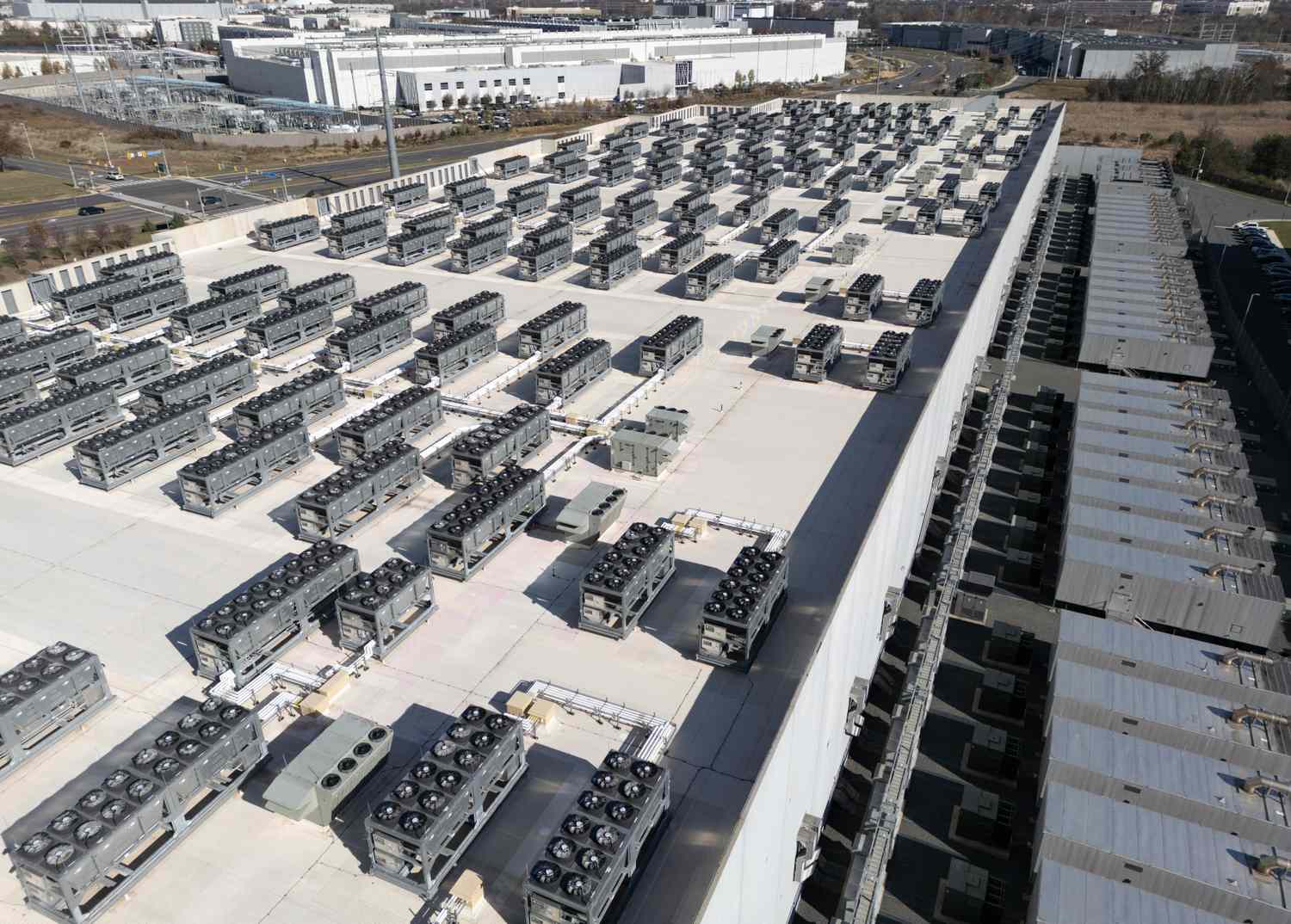
The composition of this investment cycle reveals why conventional employment multipliers are failing to materialize. A dominant share of recent private demand growth stems from AI-related capital formation, particularly data centers and computing hardware. Unlike industrial facilities, these assets allocate disproportionate value to high-end components – semiconductors, servers, and storage – much of which is produced outside domestic labor markets. Construction activity still generates temporary employment spikes, but these projects transition rapidly into low-headcount operations once completed.
This structural imbalance becomes evident when examining operational staffing patterns. YourDailyAnalysis underscores how data centers compress long-term labor needs to a fraction of their construction workforce, often stabilizing at staffing levels measured in dozens rather than hundreds. A facility that briefly supports hundreds of workers during buildout can ultimately function with a team comparable to a small corporate unit, reflecting design priorities centered on automation, uptime, and minimal human intervention.
The implications extend beyond individual projects to the macroeconomic relationship between capital and employment. Historically, rising capital expenditures coincided with broad-based hiring, reinforcing income growth and consumption. That linkage is weakening. As tracked through Your Daily Analysis, current investment flows prioritize technologies explicitly engineered to substitute for labor, collapsing the distinction between capital-intensive and labor-intensive sectors. The technology industry, once defined by human capital concentration, now drives infrastructure expansion that displaces rather than absorbs workers.
Such a shift introduces a new dynamic into economic cycles. Productivity gains may emerge as AI systems enhance output efficiency, allowing GDP to expand without parallel increases in employment. However, the distribution of those gains skews toward capital owners and technology providers, raising questions about income dispersion and long-term demand sustainability. The concentration of value in hardware ecosystems and energy consumption – rather than wages – signals a reallocation of economic power within the production function.
As the current investment wave progresses, the durability of this model will depend on whether secondary effects – such as downstream industries, software ecosystems, and service layers – generate sufficient employment to offset the initial displacement. YourDailyAnalysis captures this inflection point as more than a cyclical anomaly, instead framing it as a redefinition of growth mechanics where infrastructure scales without proportionate workforce expansion, leaving the labor market structurally decoupled from one of the largest capital deployment phases in modern economic history.