


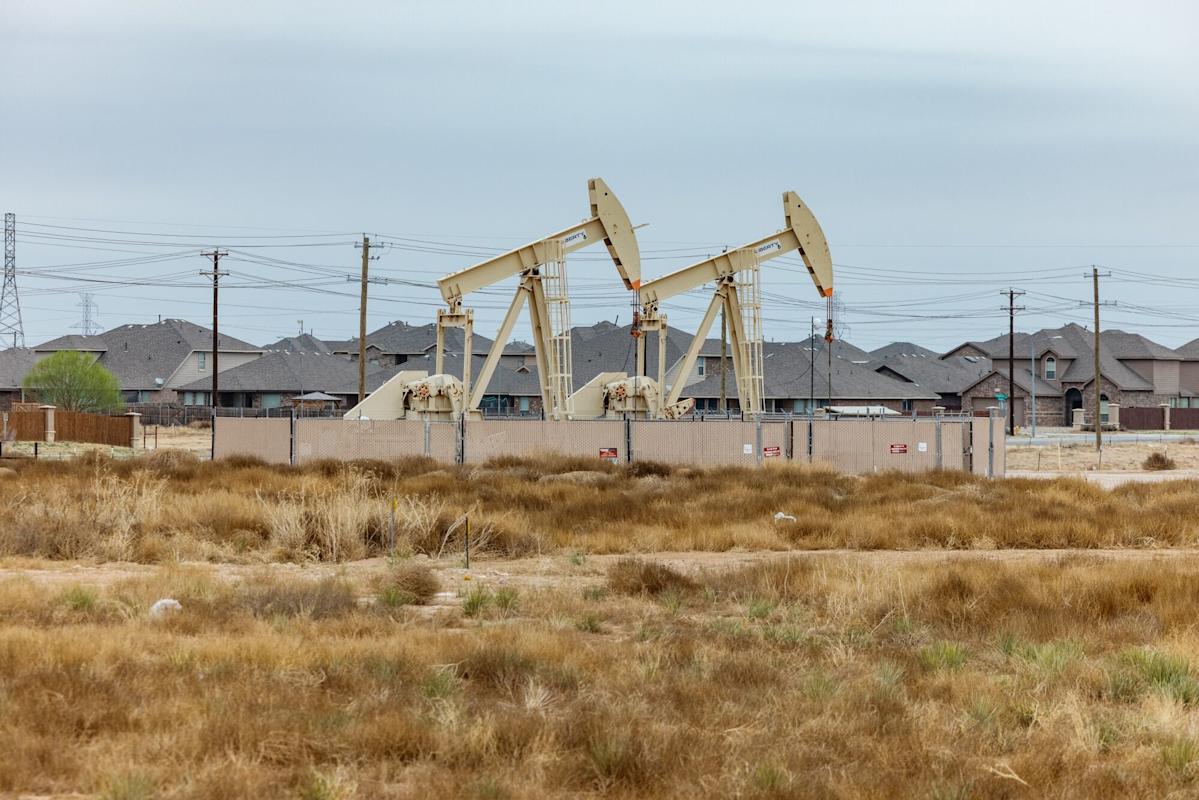
Brent crude added almost 10% across the week’s first three sessions, touching near $97 a barrel before slipping back Thursday after Israel and Lebanon agreed to a ceasefire. West Texas Intermediate retreated toward $95. Iranian attacks on Kuwait damaged the airport and injured dozens on Wednesday; U.S. military strikes near the Strait of Hormuz followed the same day. YourDailyAnalysis catches the three-session rally as a risk premium accumulation trade, not a supply-restored trade.
The supply data tells the real story. UBS analysts led by Henri Patricot found Iran’s crude loadings for May fell below 0.3 million barrels per day, down from 1.5 million in April and 1.7 million in March. The U.S. naval blockade imposed on April 13, following the failure of the Islamabad Talks, has cost Iran an estimated $500 million per day in lost oil revenue. UBS found little evidence of any short-term improvement in vessel traffic or energy flows. The Strait of Hormuz, through which roughly a fifth of global oil supply normally moves, has been functionally closed since late February.
The diplomatic picture is almost deliberately complicated. U.S. and Iranian negotiators reportedly reached a mostly agreed 60-day memorandum of understanding to extend the ceasefire, but the deal still needed Trump’s sign-off. Iran’s state television claimed Tehran agreed to open the strait to pre-war traffic levels; the White House dismissed that as a complete fabrication; Trump said no nation will control shipping through the strait. The reporters at YourDailyAnalysis track these contradictory characterizations as the defining feature of the current oil market: every item about the negotiations moves Brent by several percent, and none of the moves reflect actual changes in supply.
The Israel-Lebanon ceasefire that triggered Thursday’s pullback is real but compartmentalized. Hezbollah’s agreement removes one obstacle Iran cited as a precondition for broader de-escalation. Whether it shifts the Iran-specific dynamic is less clear. The Hormuz standoff has its own logic not directly linked to the Lebanese front. Traders priced the Lebanon news as incremental progress and brought the week’s rally to a partial pause.
The structural oil picture remains bullish for as long as the Hormuz disruption persists. Even if a ceasefire extension is signed, reopening the strait requires physical demining, repositioning of Iranian naval assets, and restoration of port infrastructure. UBS noted that full normalized Hormuz traffic is weeks away from any signed memorandum even in an optimistic scenario. The analysts at YourDailyAnalysis estimate the current risk premium embedded in Brent at roughly $15 to $20 per barrel, contracting only when actual tanker traffic data improves rather than when diplomats announce progress.
The macro links matter. Oil at $95 to $97 per barrel keeps inflation elevated globally, which keeps central bank rate paths tighter than they would otherwise be. The Federal Reserve, which markets now give roughly 50-50 probability of hiking by year-end, is watching energy prices as the key input into its inflation projections. The ECB is expected to raise its deposit rate to 2.25% at its June 11 meeting, in part because of the same energy transmission.
There is a third scenario the market has not fully priced. If the ceasefire extension is signed but Hormuz does not reopen at scale within 30 days, oil traders will need to reassess the structural supply gap from three months of near-zero Iranian exports. OPEC+ has held production discipline, and Saudi Arabia has not signaled any rush to flood the market. The team at Your Daily Analysis maps the supply arithmetic: inventory drawdowns from three months of Hormuz closure will take months to replenish even with a partial reopening.
Watch actual tanker traffic data from Lloyd’s List and vessel tracking services in the coming week. Any direct statement from Washington on Hormuz access terms will move Brent more than background reporting on negotiations.
The week’s oil rally encapsulates the entire market dynamic: three days of geopolitical risk accumulation, one day of diplomatic optimism, no change in the underlying supply picture. Prices are higher than a week ago and still below where they would be if the market had fully priced a prolonged closure with no near-term resolution. YourDailyAnalysis ends on the operational point: the oil market is trading on news, not on barrels, and the barrels will tell the real story when vessel traffic data arrives next week.