



In the global race for artificial intelligence, one reality is becoming increasingly clear: long-term advantage will depend not only on models, but on who controls the underlying hardware. Against this backdrop, South Korea’s decision to invest 250 billion won into AI chip startup Rebellions signals more than targeted support for a promising company. As YourDailyAnalysis observes, it reflects a broader strategic move toward technological sovereignty in one of the most critical segments of the AI value chain – advanced semiconductors, where U.S. players, particularly Nvidia, continue to dominate.
The first key element is the structure of the investment itself. The Financial Services Commission’s advisory body approved a direct allocation through the state-backed National Growth Fund. This is significant not just because of the scale, but because the government opted for direct capital deployment rather than indirect incentives. From an expert perspective, this suggests that Rebellions is no longer viewed as a speculative venture, but as a strategic industrial asset. For YourDailyAnalysis, this approach indicates a clear intention to accelerate the transition from early-stage innovation to industrial-scale execution.
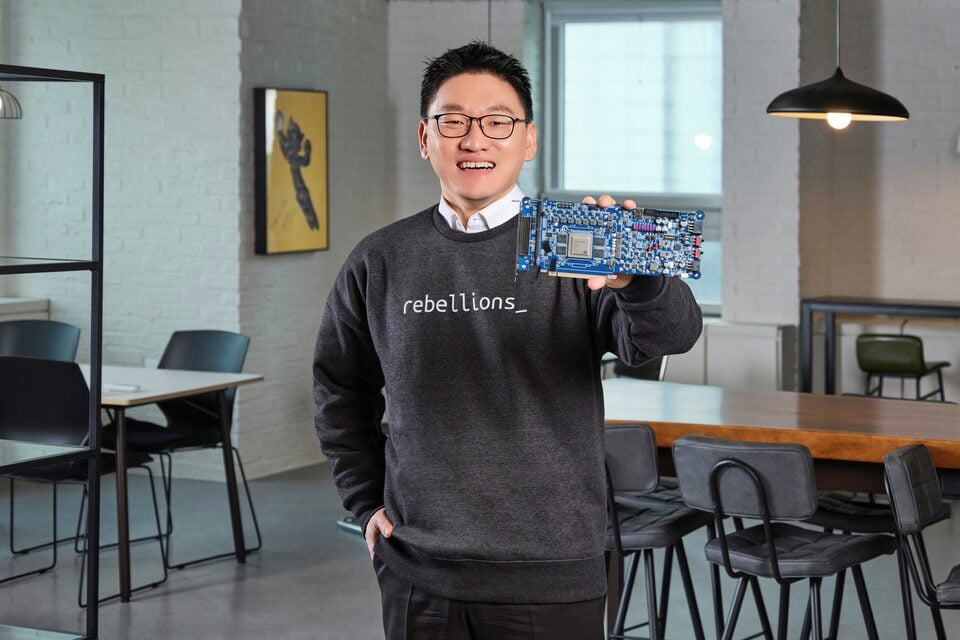
The second important factor is the company’s technological focus. Rebellions develops neural processing units (NPUs), specialized chips designed for AI workloads. The company has already introduced initial products and is working on next-generation solutions targeting data centers and generative AI applications, including advanced designs built in collaboration with major manufacturing partners. In my view, this focus is well aligned with broader industry trends. The market is gradually shifting away from one-size-fits-all accelerators toward more specialized architectures, where efficiency, cost optimization, and workload-specific performance are becoming critical competitive advantages.
A third crucial point is how the funding will be used. The investment is aimed at enabling mass production of NPU chips and supporting the development of next-generation semiconductors. This phase is often the most challenging for chip startups. Moving from prototypes to reliable, scalable manufacturing requires overcoming issues related to yield, packaging, energy efficiency, and software compatibility. Analysts at YourDailyAnalysis note that success at this stage will determine whether Rebellions evolves into a true infrastructure provider or remains a technically promising but commercially limited player.
The broader strategic context is equally important. This investment marks the first direct move under South Korea’s so-called “K-Nvidia” initiative – an ambitious effort to build a globally competitive domestic AI chip company. However, expectations need to remain grounded. Creating a true Nvidia equivalent is not simply a matter of funding or engineering talent. It requires a full ecosystem, including manufacturing capabilities, memory integration, software stacks, developer tools, and deep partnerships with cloud providers and enterprise clients. As highlighted by YourDailyAnalysis, the initiative should be viewed less as an attempt to replicate Nvidia outright and more as a strategic effort to reclaim partial control over a critical layer of the AI economy.
Recent industry developments strengthen this positioning. The merger between Rebellions and Sapeon, backed by SK Telecom and aligned with a broader industrial network, has consolidated capabilities and resources into a single, more competitive entity. From an expert standpoint, this consolidation is a key advantage. Governments are more likely to succeed when they support a unified national champion rather than a fragmented field of smaller competitors.
Timing also plays a decisive role. The investment comes amid surging global demand for AI chips and a growing emphasis on “sovereign AI” – the ability of countries to build and operate AI systems within their own infrastructure. Rebellions has already begun positioning itself within this narrative through partnerships and infrastructure-focused solutions. In practical terms, South Korea appears to recognize that without domestic AI accelerators, it risks remaining a strong player in memory and manufacturing, but not in the most value-intensive segment of the AI ecosystem.
That said, the risks are substantial. Nvidia maintains a dominant position not only in hardware performance but also in software ecosystems, developer adoption, and supply scale. South Korea itself continues to rely heavily on Nvidia chips while its leading companies remain integrated into global technology supply chains. This creates a structural challenge. For Your Daily Analysis, the key risk is that Rebellions could emerge as a strong domestic symbol without quickly achieving global competitiveness. However, strategic value does not always require global dominance – reducing dependency alone can justify the investment.
From a practical standpoint, several conclusions follow. The South Korean government will need to go beyond funding and actively build a supportive ecosystem, including domestic demand, infrastructure integration, and software development layers. For Rebellions, the priority is clear: demonstrate consistent manufacturing capability and commercial viability. The AI chip market rewards innovation at early stages, but ultimately depends on reliability and delivery. For investors, a more realistic approach is to evaluate the company not as a future Nvidia, but as a potential strategic player in energy-efficient AI acceleration and sovereign infrastructure.
In conclusion, the 250 billion won investment represents one of South Korea’s most significant moves in positioning itself within the global AI economy. It does not guarantee a breakthrough, nor does it immediately create a direct competitor to Nvidia. However, it establishes a foundation for shifting the country’s role from a supplier of components to a participant in the most valuable layers of AI infrastructure. As YourDailyAnalysis suggests, the next two to three years will be critical. If Rebellions can translate state backing into scalable production and real market adoption, it could become a defining case of successful industrial policy in the AI era. If not, it will serve as a reminder that in semiconductors, capital and ambition alone are not enough.