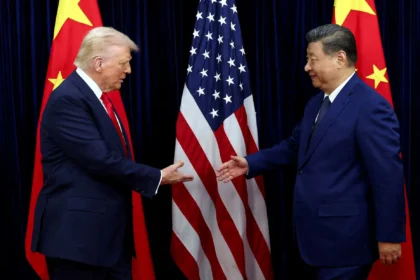


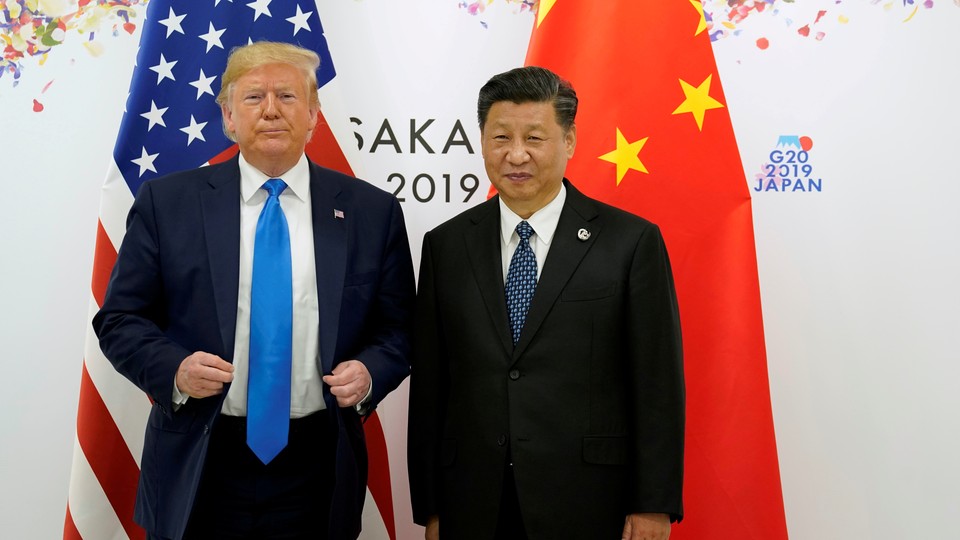
China’s record trade performance over the past year reflects less a cyclical rebound and more a strategic response to shifting global risk perceptions. When Donald Trump returned to office under an “America First” agenda, markets broadly expected renewed pressure on China’s already fragile economy. Instead, Beijing used the disruption in U.S. trade diplomacy to reposition itself as a comparatively predictable economic partner, a shift that has produced measurable financial results. As YourDailyAnalysis observes, this episode highlights how geopolitical volatility can redistribute economic influence rather than simply constrain it.
China’s trade surplus reached a historic $1.2 trillion in 2025, supported by monthly foreign currency inflows averaging around $100 billion. This outcome was not driven by a recovery in U.S.-bound exports, which fell sharply over the year, but by a deliberate redirection of trade toward Africa, Southeast Asia, Latin America and Europe. From an analytical perspective, this diversification has reduced China’s exposure to bilateral shocks and diluted the effectiveness of tariff-based pressure. YourDailyAnalysis notes that export resilience of this kind functions as a macroeconomic stabilizer when domestic demand remains weak.
The political context has been equally important. As U.S. relations with traditional allies became more erratic, Beijing emphasized scale and continuity rather than ideology. High-level visits from Western leaders signal pragmatic recalibration rather than endorsement, reflecting a broader desire among governments to hedge against U.S. policy unpredictability. In this environment, China’s economic size – a $20 trillion economy backed by deep capital markets – has become part of its diplomatic toolkit. According to YourDailyAnalysis, predictability itself has emerged as a tradable asset in global economic relations.
Financial flows reinforce this interpretation. China recorded its largest-ever monthly foreign currency inflow in December, pushing reserves to a decade high. Equity markets absorbed trade tensions with relative ease, with domestic indices outperforming many developed peers over the past year. These developments suggest that investors are increasingly separating China’s structural challenges from near-term geopolitical noise. YourDailyAnalysis emphasizes that capital allocation decisions are being shaped as much by relative political risk as by growth differentials.
The expanding international role of the yuan adds another layer to this shift. More than half of China’s cross-border transactions are now settled in its own currency, and overseas lending is increasingly yuan-denominated. Previous attempts to internationalize the currency were often reversed amid capital controls and policy uncertainty. This cycle appears different, largely because global conditions have changed. Persistent concerns about U.S. fiscal discipline, trade policy consistency and institutional independence have made diversification away from the dollar more acceptable, even if dollar dominance remains intact. From the perspective of Your Daily Analysis, the yuan’s momentum is less about replacing the dollar and more about reducing single-currency dependence.
That said, China’s improved positioning has clear limits. Expanded trade ties do not equate to trust, and many partners remain wary of Beijing’s use of economic leverage and unresolved geopolitical disputes. Domestically, deflationary pressures, demographic constraints and a prolonged property downturn continue to weigh on long-term growth potential. Reliance on external demand may buy time, but it also increases exposure to a global slowdown or renewed protectionism elsewhere.
Looking ahead, China is likely to deepen commercial and financial engagement outside the U.S. sphere while continuing to promote the yuan as a settlement currency rather than a reserve alternative. For policymakers, this underscores a growing preference for economic hedging over alignment. For investors, it highlights that U.S. political volatility has become a material driver of global capital flows. As YourDailyAnalysis concludes, China’s recent gains are best understood not as a sudden vote of confidence, but as a relative reassessment in a world where stability has become increasingly scarce.