


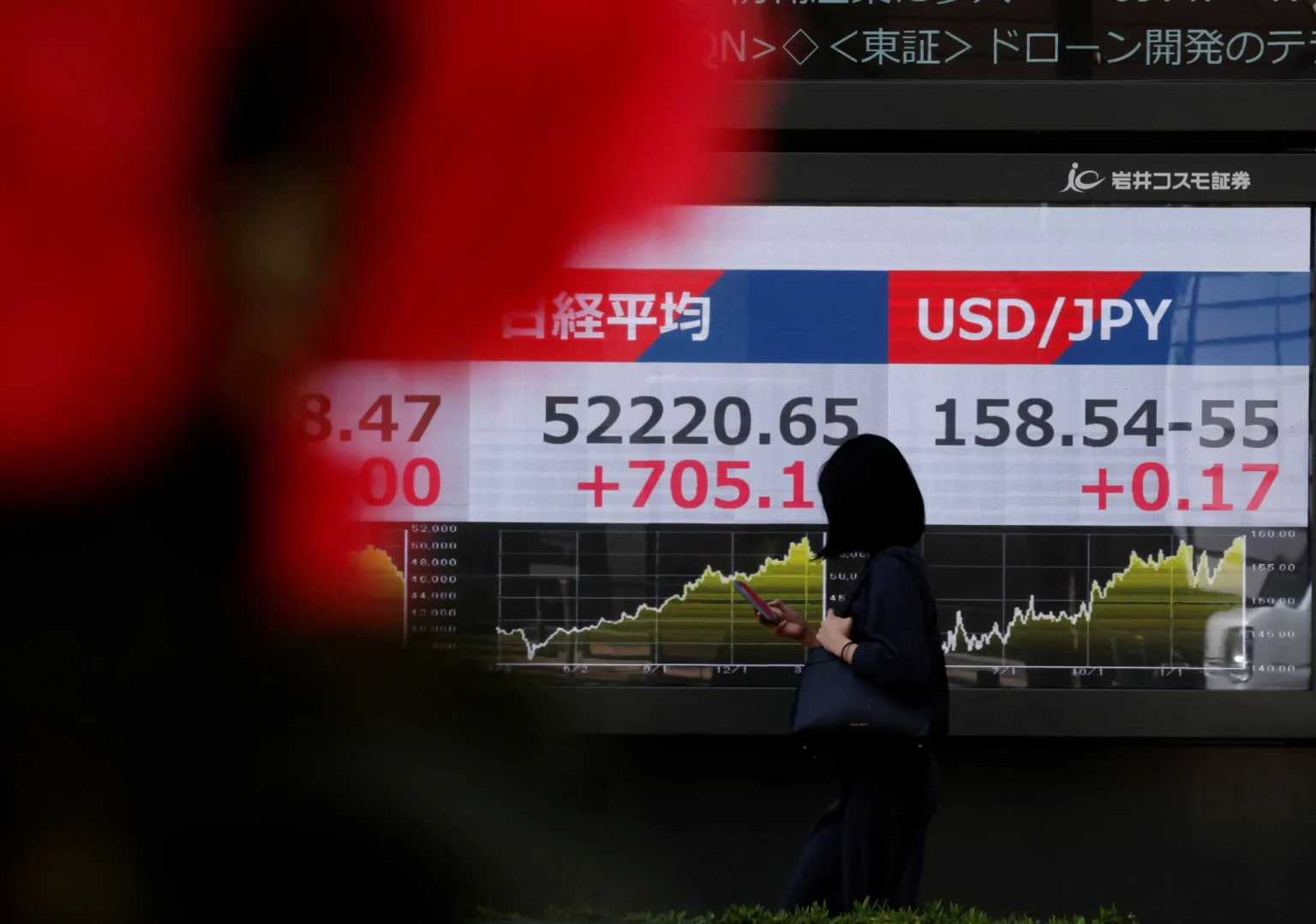
Foreign investors have sharply reduced their exposure to Japanese equities, signaling a deeper reassessment of risk rather than a short-term reaction to market volatility. The scale of recent outflows reflects growing concern that Japan’s economic structure leaves it particularly vulnerable to external shocks, especially those tied to energy supply disruptions. As YourDailyAnalysis underscores, this shift is less about individual companies and more about macro sensitivity in a rapidly changing geopolitical environment.
The ¥1.51 trillion in net foreign selling over a single week marks one of the largest outflows in recent periods and extends a multi-week trend. This pattern suggests that global investors are actively rebalancing portfolios rather than simply locking in profits after earlier gains. Sustained selling pressure of this kind typically indicates a structural repositioning, particularly in markets where foreign capital plays a significant role in driving price movements.
Energy exposure sits at the center of this reassessment. Japan’s heavy dependence on Middle Eastern oil makes it especially sensitive to disruptions linked to the Iran conflict and the instability of key shipping routes. Rising oil prices not only increase import costs but also amplify inflation risks and weigh on domestic consumption. In this context, YourDailyAnalysis notes that the market is effectively pricing in an external shock that could translate into broader economic strain.
The contrast with earlier performance this year highlights the speed of sentiment reversal. Japanese equities had previously benefited from optimism around fiscal policy and corporate reforms, attracting strong inflows from international investors. However, the emergence of geopolitical risk has shifted attention away from domestic improvements toward external vulnerabilities. This rapid change in narrative has contributed to the intensity of the recent sell-off.
Currency dynamics add another layer of pressure. A weaker yen, while traditionally supportive for exporters, now increases the cost of imported energy and raw materials. This creates a more complex environment in which currency depreciation no longer delivers clear benefits. Instead, it reinforces inflationary pressures and contributes to declining purchasing power, further complicating the economic outlook. At the same time, underlying economic indicators have not fully deteriorated. Business sentiment among major manufacturers and service-sector firms has shown relative resilience, suggesting that the domestic economy is not yet in a state of contraction. However, financial markets tend to anticipate future conditions rather than reflect current data. As YourDailyAnalysis highlights, investors may already be pricing in a slowdown that has yet to appear in official statistics.
Monetary policy considerations further complicate the picture. If higher energy prices sustain inflationary pressures, the Bank of Japan could face renewed pressure to tighten policy. At the same time, any weakening in growth would argue for caution. This creates a difficult balancing act, where policy decisions risk amplifying volatility rather than stabilizing conditions. Government intervention provides some short-term relief. Measures aimed at cushioning the impact of higher fuel costs can support consumer sentiment and limit immediate economic damage. However, such policies do not address the underlying issue of structural dependence on imported energy. As emphasized by Your Daily Analysis, fiscal support can mitigate symptoms but cannot fully offset external shocks.
Taken together, these factors suggest that the recent sell-off reflects a broader repricing of Japan’s macro risk profile. The market is responding not only to current developments, but to the potential for sustained pressure from elevated energy costs, currency weakness, and shifting global capital flows. The next phase will depend on external variables rather than domestic reforms. Stabilization in oil markets and clearer signals around geopolitical developments could restore confidence and slow capital outflows. As reflected in YourDailyAnalysis, investor focus is likely to remain on energy prices, currency movements, and cross-border capital flows, as these elements will determine whether the current adjustment evolves into a deeper correction or begins to reverse.