



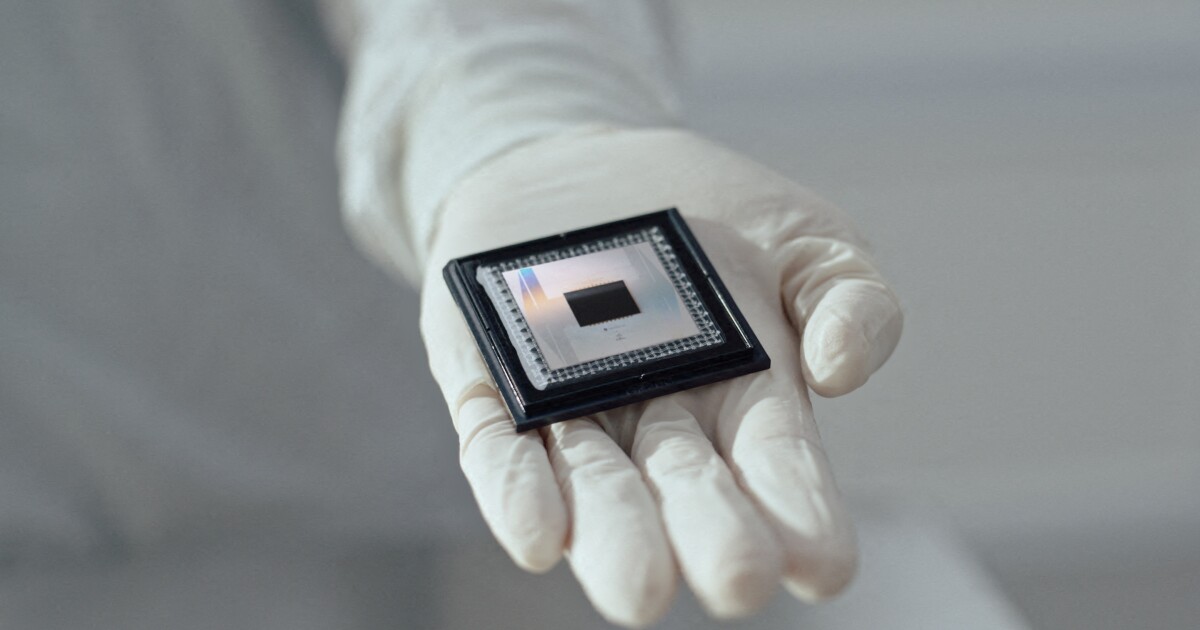
Google has announced plans to collaborate with the United Kingdom on expanding access to its advanced Willow quantum chip, a move that, according to YourDailyAnalysis, reflects the growing strategic importance of quantum computing within national research and industrial policy frameworks. Under the partnership, UK-based researchers will be able to develop and test practical applications for the chip through a structured, competitive access program.
The initiative forms part of a broader global race to build scalable, high-performance quantum computers – a field widely viewed as a potential next frontier in computing, distinct from and complementary to artificial intelligence. Quantum systems are expected to address classes of problems in chemistry, materials science and medicine that remain beyond the reach of classical supercomputers.
The agreement between Google and the UK’s National Quantum Computing Centre (NQCC) will allow a wider pool of researchers to work directly with Willow. From the perspective of YourDailyAnalysis, the partnership highlights a shift toward open-access experimentation models, in which private-sector hardware is integrated into national research ecosystems rather than confined to proprietary labs.
Quantum computing differs fundamentally from conventional computing, relying on principles of quantum mechanics rather than binary logic. Despite sustained investment, the technology remains largely experimental, with limited real-world deployment to date. Current machines are primarily used for research rather than commercial workloads, and their practical impact has yet to be fully realized. The UK program is designed to accelerate that transition by enabling targeted experimentation aimed at identifying viable applications.
Researchers will be invited to submit proposals outlining how they intend to use the Willow processor. Successful applicants will collaborate directly with engineers from Google and scientists at the NQCC to design and execute experiments. Within YourDailyAnalysis, this is viewed as an effort to shorten the feedback loop between hardware development and applied research – a critical factor in moving quantum computing from theory to utility.
When Willow was unveiled in 2024, it was widely regarded as a meaningful technical advance, particularly in terms of performance stability and error mitigation. However, competition remains intense. Major technology companies including Amazon and IBM are developing parallel quantum platforms, each pursuing different architectural approaches. Analysts at YourDailyAnalysis note that the absence of a clear industry standard increases the value of early experimentation across multiple systems.
The United Kingdom already hosts a growing quantum technology sector. Quantinuum, with operations in Cambridge and the United States, reached a valuation of approximately $10 billion in 2024, underscoring investor confidence in the field. Several UK-based firms – including Quantum Motion, ORCA and Oxford Ionics – have placed quantum machines at the NQCC, contributing to a diverse national research environment.
Government policy has played a central role in this expansion. The UK has committed £670 million to quantum technologies as part of its industrial strategy, viewing the sector as strategically important for long-term economic growth and technological sovereignty. Official projections suggest that quantum technologies could contribute up to £11 billion to the UK economy by 2045.
From the assessment of YourDailyAnalysis, partnerships such as the Google–UK initiative illustrate how quantum development is increasingly shaped by collaboration between global technology firms and national research institutions. While large-scale, world-changing quantum machines remain years away, structured access to advanced processors like Willow may determine which countries and companies are best positioned when the technology matures.
Your Daily Analysis considers the collaboration to be less about immediate breakthroughs and more about building the institutional and technical foundations required for quantum computing to move from experimental promise to practical impact over the next decade.