



China’s push to reduce reliance on imported soy is evolving into a broader strategic shift that extends beyond agriculture. What appears as a change in livestock feed reflects a deeper effort to strengthen economic resilience and reduce exposure to external supply shocks. YourDailyAnalysis interprets this transition as part of a wider policy framework focused on increasing national self-sufficiency amid geopolitical uncertainty.
At the farm level, cost pressure remains the main driver. Feed represents the largest share of production expenses, and volatility in soy prices has made traditional models less sustainable. Fermented alternatives, based on cheaper local inputs, allow producers to reduce dependence on imported protein while maintaining nutritional efficiency. This alignment between economic necessity and policy direction accelerates adoption. The strategic dimension carries even greater significance. China continues to rely heavily on imported soy, much of it historically sourced from the United States. YourDailyAnalysis highlights that this dependence creates a structural vulnerability, especially during periods of trade tension. Reducing soy consumption therefore serves both economic and geopolitical goals.
Government policy has intensified its focus on alternative protein sources. Authorities support research, provide incentives, and promote new feed technologies, following a pattern seen in other strategic industries. This coordinated approach combines technological innovation with supply diversification. Even with rapid adoption, the impact remains gradual rather than transformative. Projected reductions in soy imports are meaningful but limited. YourDailyAnalysis notes that soy remains deeply embedded in livestock production, making full substitution complex and time-consuming.
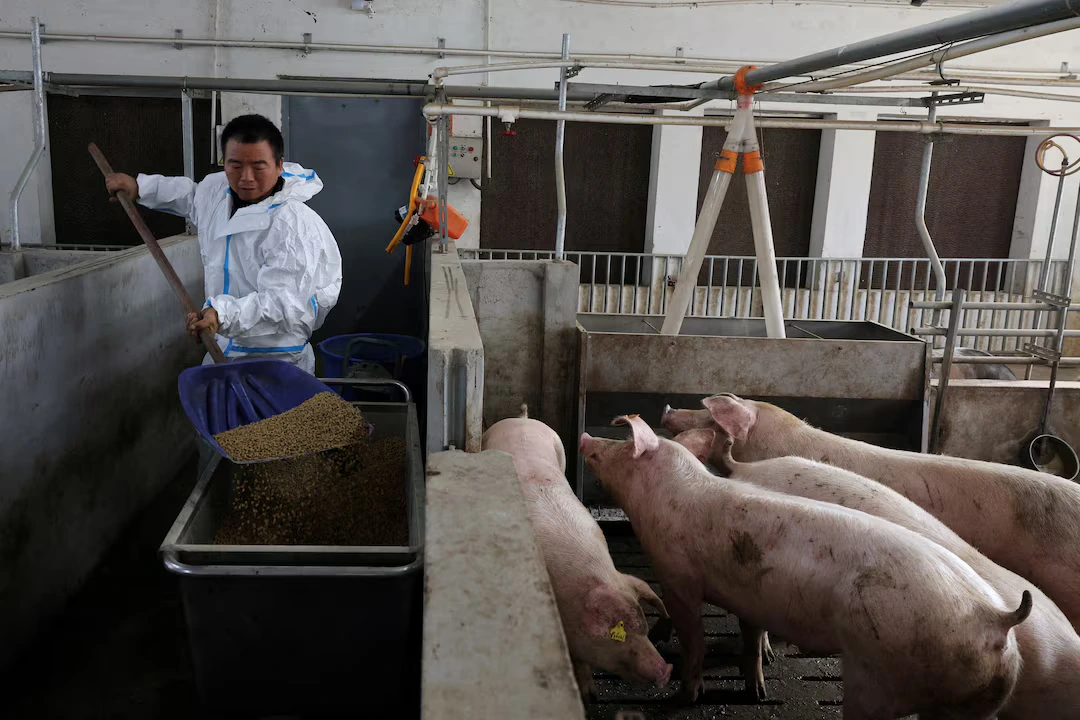
The emphasis on pork production reflects its central role. Pigs consume more soy-based feed than other livestock, so changes in this segment deliver the largest impact. Adjustments in feeding practices within pork production directly influence overall demand. Large producers adapt faster than smaller farms. Industrial companies implement advanced technologies, while smaller operators face higher costs and operational risks. YourDailyAnalysis emphasizes that this gap may accelerate consolidation across the agricultural sector.
The transition extends beyond pork into poultry and dairy, increasing its systemic impact. At the same time, foreign investment supports expansion of fermentation technologies, reinforcing long-term growth expectations. However, challenges remain significant. The shift requires operational changes, introduces quality risks, and lacks full standardization. Inconsistent processes can affect productivity and animal health, slowing adoption.
The direction remains clear: China is not eliminating soy dependence but reducing its strategic importance. Your Daily Analysis concludes that feed composition trends, adoption rates, and productivity outcomes will determine whether this shift becomes a stable long-term model or remains uneven across the sector.