

China’s trade performance is entering a more complex phase, where resilience is increasingly driven by a narrow but powerful segment – AI-related exports – rather than broad-based global demand. This dynamic helps explain why trade volumes remain strong despite rising energy costs and geopolitical disruptions. As highlighted in YourDailyAnalysis, structural demand linked to technology cycles can temporarily offset broader macroeconomic pressure.
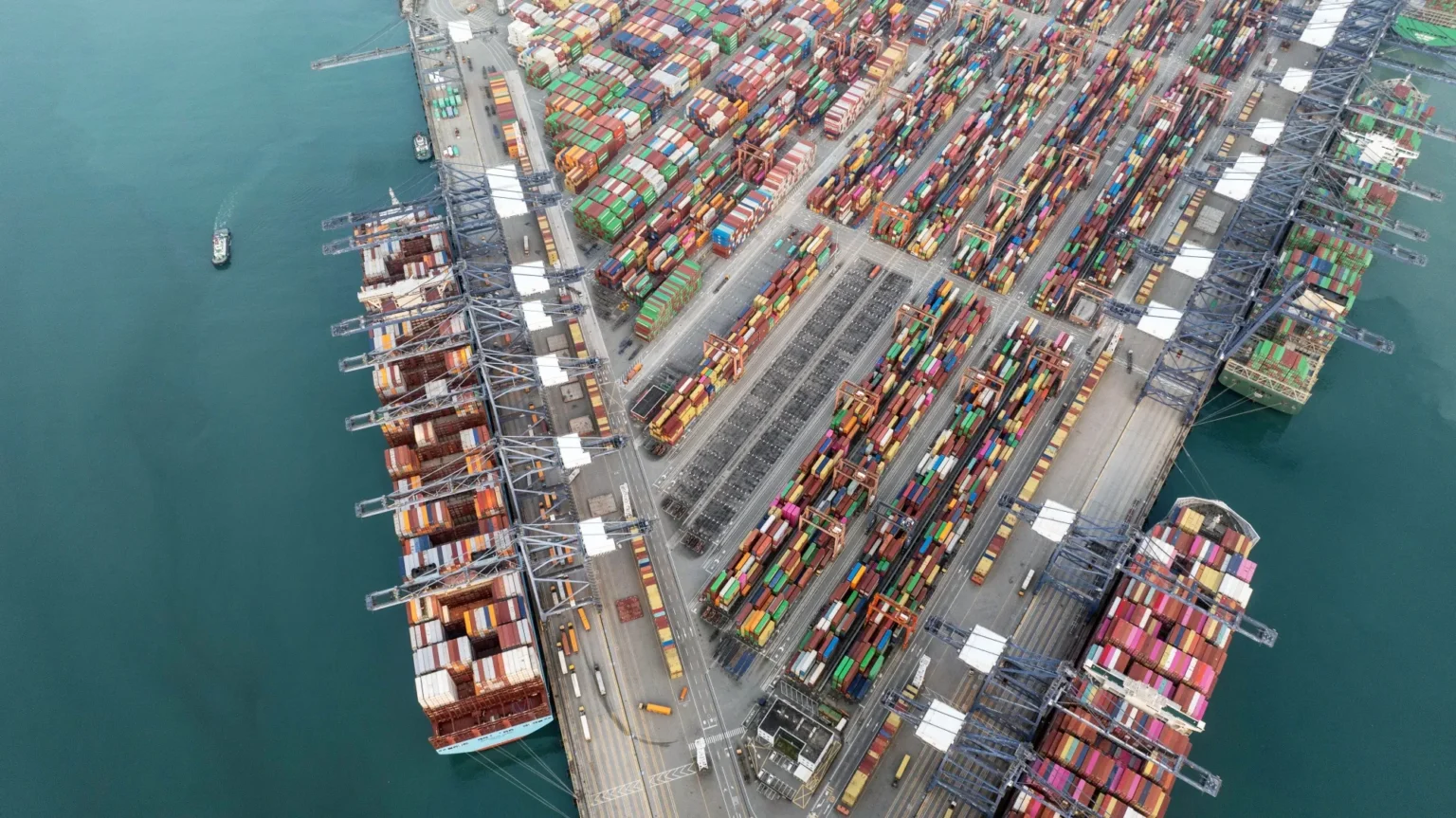
Recent port data shows that nearly 20 million containers passed through Chinese ports in the first three weeks of March, marking a year-on-year increase of over 6%. While this is slower than the double-digit growth seen earlier in the year, it still indicates that trade flows have not yet been significantly disrupted. Early deceleration in momentum often appears before any visible contraction in absolute volumes. Part of this resilience can be traced back to a strong start to the year. Export growth in January and February exceeded expectations, supported by a surge in shipments of semiconductors and related components. This created a buffer effect, allowing trade activity to remain elevated even as external risks intensified.
The role of AI-related demand is becoming increasingly central. A growing share of China’s exports is now tied to intermediate goods used in data centers, chip manufacturing, and energy infrastructure. This reflects deeper integration into global technology supply chains, where demand is driven by capital expenditure cycles rather than consumer spending. Regional data reinforces this trend. South Korea’s sharp increase in semiconductor exports and shipments to China suggests that production activity across the broader Asian supply chain remains strong. This interconnected structure means that sustained demand in one segment can support multiple economies simultaneously.
At the same time, the external environment is deteriorating. Elevated oil and gas prices are beginning to affect global trade expectations, with projections pointing to slower growth if energy disruptions persist. This creates a divergence – China’s export sector may continue to outperform, but within a weakening global backdrop. Energy costs represent a key pressure point. As a major importer of oil, China faces rising input costs across multiple industries. If producers are unable to pass these costs on to buyers, profit margins will compress. YourDailyAnalysis notes that such pressure often translates into delayed effects, including reduced investment and slower production growth.
Another important factor is China’s reliance on exports as a growth engine. A significant share of recent economic expansion has been driven by net exports, increasing sensitivity to external shocks. This dependency amplifies both the benefits of strong global demand and the risks associated with its slowdown. Short-term data may also be influenced by seasonal distortions. Variations in the timing of the Lunar New Year can shift production and shipping patterns between months, making single-period comparisons less reliable. A clearer trend is likely to emerge only over the coming reporting cycles.
A two-speed structure is becoming more visible within China’s export model. High-tech and AI-related sectors continue to demonstrate strength, while more traditional industrial and consumer categories remain more exposed to cost pressures and demand fluctuations. As observed in YourDailyAnalysis, this type of divergence is typical during periods of structural transition. Taken together, the current dynamics point to a fragile form of resilience. AI-driven demand is clearly cushioning the impact of external shocks, but it does not remove the underlying vulnerabilities tied to energy costs and global trade conditions. The system is holding, but not evenly across all sectors.
From an analytical perspective, the outlook remains cautiously constructive. In the short term, China is likely to continue outperforming many peers due to its central role in technology supply chains. Over a longer horizon, as emphasized in Your Daily Analysis, the trajectory will hinge on three variables – whether global AI investment remains strong, how energy prices affect industrial profitability, and whether global trade avoids a deeper slowdown.