


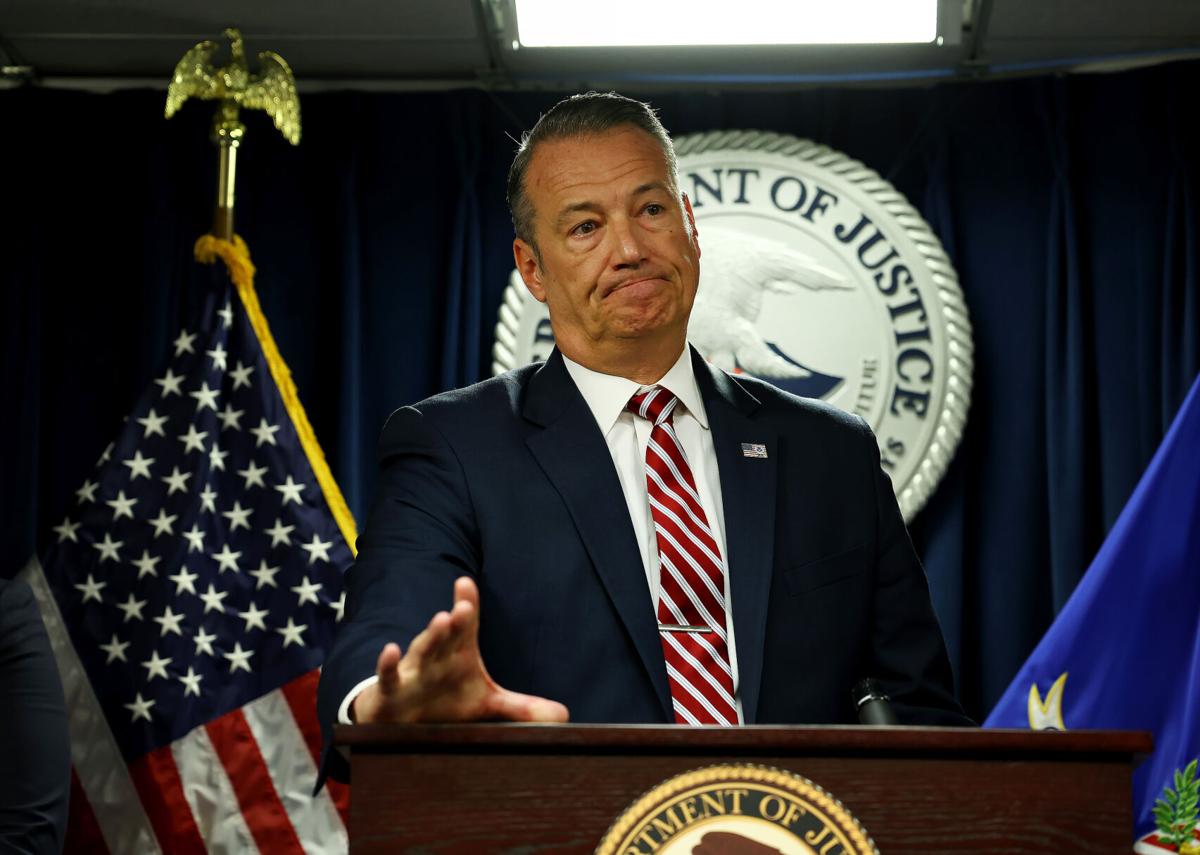
The planned departure of Immigration and Customs Enforcement’s acting director Todd Lyons marks a critical inflection point for U.S. immigration enforcement, arriving after a year defined by operational expansion, internal controversy, and escalating political pressure, a transition that YourDailyAnalysis frames as more than a routine leadership change. Lyons will leave at the end of May, concluding a tenure closely tied to the execution of President Donald Trump’s intensified deportation strategy.
During his leadership, ICE scaled both personnel and infrastructure at an accelerated pace, reflecting a shift toward industrialized enforcement. The agency invested heavily in detention logistics, including over $850 million allocated to warehouse acquisitions across multiple states. These facilities signaled an ambition to standardize and accelerate deportation throughput, echoing Lyons’ own comparison of the system to high-efficiency commercial delivery networks. This operational framing redefined enforcement as a volume-driven process rather than a case-by-case legal mechanism.
Public scrutiny intensified alongside this expansion. Fatal encounters involving ICE agents, including the killing of a U.S. citizen in Minnesota, triggered protests and renewed debate over use-of-force protocols. Simultaneously, criminal charges against an ICE agent in a separate incident reinforced concerns about discipline and oversight within rapidly scaled enforcement teams. As highlighted across YourDailyAnalysis coverage of institutional stress points, such incidents tend to emerge when operational tempo outpaces internal accountability systems.
Political backing for Lyons remained firm despite mounting criticism. Senior administration figures consistently framed ICE’s activities as essential to public safety, emphasizing the removal of high-risk individuals. This narrative, however, has increasingly collided with broader civil liberties concerns and legal challenges, particularly around tactics such as masked enforcement operations and large-scale raids in urban environments. The agency’s evolving posture reflects a deeper structural tension between enforcement efficiency and constitutional safeguards, a dynamic frequently examined through YourDailyAnalysis reporting on federal power expansion.
The timing of Lyons’ exit coincides with leadership changes at the Department of Homeland Security, where Secretary Markwayne Mullin has signaled a review of ICE’s recent investments and operational direction. This overlap introduces uncertainty around whether the agency will continue prioritizing large-scale infrastructure and rapid processing, or pivot toward a more restrained enforcement model. Institutional inertia suggests that existing systems will persist in the near term, yet leadership transitions often redefine strategic priorities in subtle but consequential ways.
Lyons’ move to the private sector also underscores a broader pattern in which senior officials involved in high-intensity government programs transition into advisory or corporate roles, carrying with them operational expertise shaped by controversial policy environments. That trajectory raises questions about how enforcement methodologies developed within ICE might influence private-sector security or logistics practices.
The leadership change does not resolve the underlying contradictions embedded in the current immigration framework. Enforcement capacity has expanded significantly, yet legal, political, and societal constraints continue to limit its application. As the agency enters a new phase, Your Daily Analysis positions this moment as a test of whether institutional recalibration can occur without dismantling the operational architecture built over the past year.