


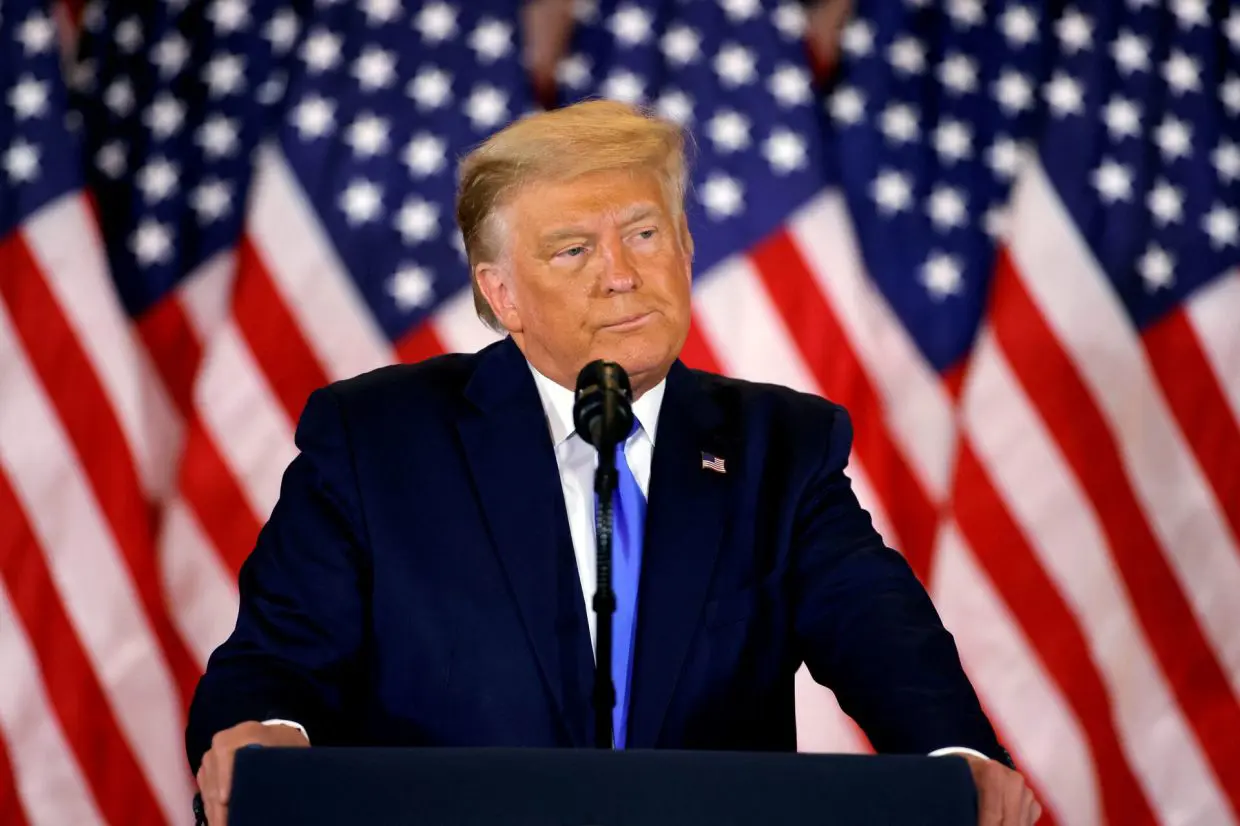
At YourDailyAnalysis, 2025 stands out as the year global trade policy reasserted itself as a central macroeconomic driver rather than a peripheral political lever. President Donald Trump’s return to office coincided with a rapid escalation of tariff measures that lifted U.S. import duties to levels last seen during the pre-war period, forcing governments, corporations, and investors to reassess long-standing assumptions about the durability of open trade regimes.
The immediate effect was a sharp rise in uncertainty rather than a collapse in activity. Tariffs were implemented at scale, but their economic transmission proved more complex than initially feared. Instead of a sudden inflationary surge, costs were diffused across supply chains through a combination of supplier reallocation, margin compression, delayed pass-through, and selective price increases. From a macro perspective, this dispersion muted headline inflation while quietly tightening financial conditions for trade-exposed sectors.
As the year progressed, negotiated frameworks with key U.S. trading partners reduced tail risks. Agreements with Europe, Japan, South Korea and others did not eliminate tariffs but clarified their scope, duration, and exemptions. In Europe, the economic impact of higher duties proved manageable, with growth effects remaining contained as exporters adapted and alternative markets absorbed part of the shock. From the standpoint of YourDailyAnalysis, this outcome reflects resilience rather than resolution: structural exposure remains, particularly in industries facing simultaneous pressure from Chinese competition.
China’s response underscored the limits of tariff-centric strategies. Despite higher U.S. duties, China’s external surplus continued to expand, supported by export diversification, industrial upgrading, and control over strategically important inputs. The persistence of this surplus highlights a core imbalance: tariffs can alter trade flows, but they do not automatically rebalance productive capacity or global demand. This reality is likely to shape policy choices in the next phase, pushing authorities toward more targeted, rules-based instruments.
Crucially, the global economy avoided the downturn many had anticipated. After a brief disruption linked to front-loaded imports, U.S. growth rebounded, driven by sustained consumption and a powerful investment cycle tied to artificial intelligence infrastructure. Global growth forecasts stabilised as uncertainty declined and worst-case trade scenarios failed to materialise. At Your Daily Analysis, this reinforces the view that the macro impact of trade policy is heavily conditional on expectations, adaptability, and financial conditions rather than tariff levels alone.
Looking into 2026, risks become more institutional than cyclical. Legal challenges to the tariff framework introduce uncertainty around its durability, even if headline policy intent remains unchanged. A potential judicial setback would not necessarily unwind existing measures but could reopen negotiations, complicate enforcement, and reintroduce volatility into corporate planning horizons. For markets, this legal dimension is likely to matter as much as macro fundamentals.
Europe’s evolving stance toward China represents another potential inflection point. If concerns over trade imbalances translate into concrete defensive measures, global trade dynamics would shift from a predominantly bilateral U.S.-China framework to a more fragmented, multi-front environment. Such a transition would raise operational and compliance costs even in the absence of further tariff escalation.
North America adds a final layer of uncertainty. The upcoming review of U.S. trade arrangements with Canada and Mexico will influence near-shoring strategies and determine whether existing production corridors retain their perceived stability. From our perspective, trade policy is increasingly about predictability rather than openness.
The central conclusion at YourDailyAnalysis is that trade will remain a persistent macro constraint in 2026, but not a uniform one. Its effects will vary sharply across sectors and regions, creating both pressure points and protected pockets of growth. The key risk for investors and corporates is no longer sudden tariff shocks, but regulatory drift, legal fragility, and enforcement uncertainty. Managing trade exposure as a structural operating condition, rather than a transient policy cycle, is likely to define strategic outcomes in the period ahead.