


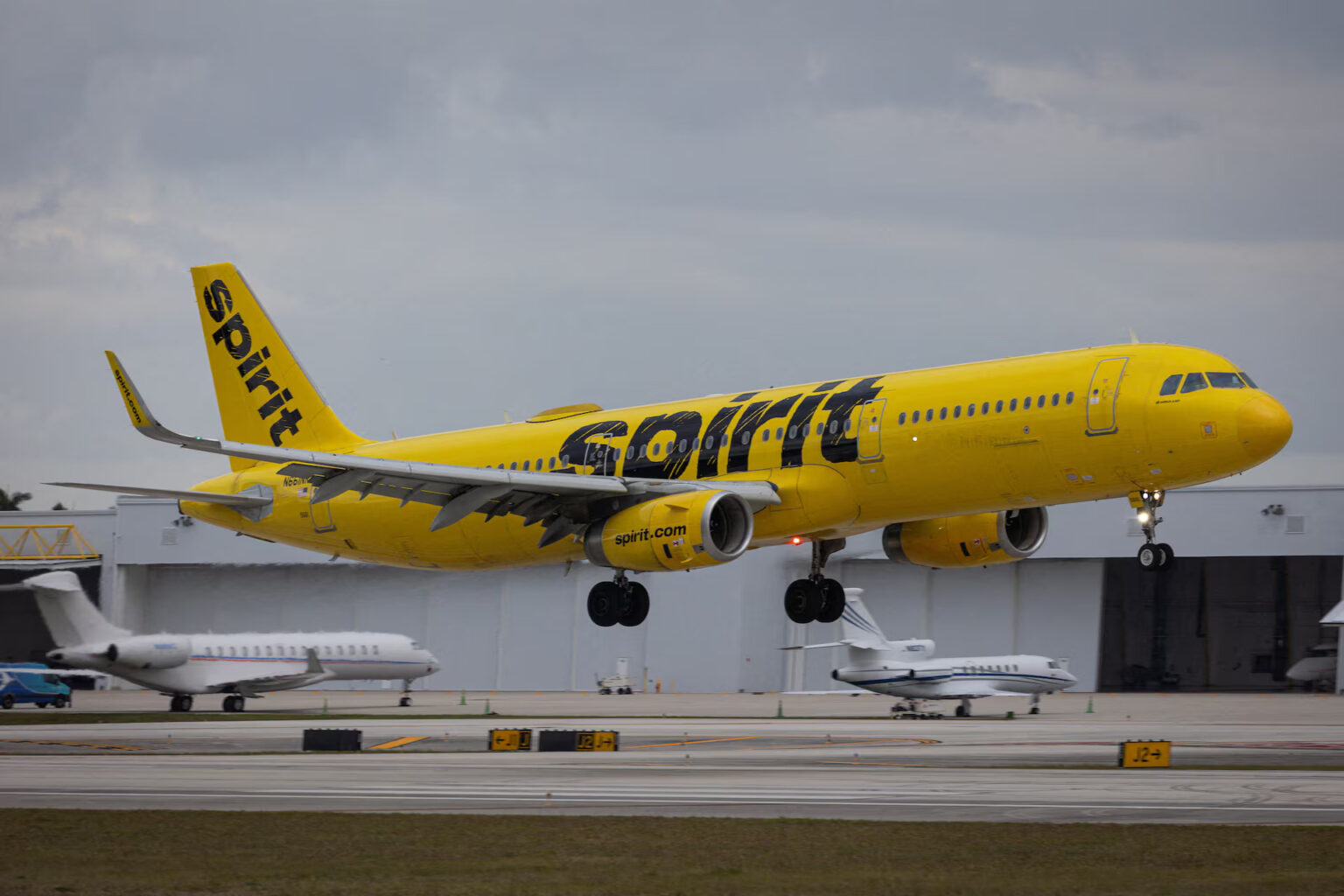
Spirit Airlines’ restructuring saga has reached a moment that YourDailyAnalysis identifies as qualitatively different from the turbulence the carrier has weathered before – not a negotiating stumble, but a potential structural deadlock between a government prepared to offer rescue capital and creditors who find the proposed terms flatly unacceptable. A $500 million lifeline sounds substantial. In the context of Spirit’s accumulated liabilities and the leverage dynamics of distressed debt, it may be barely enough to matter – and the fight over who absorbs the losses embedded in any rescue deal is now openly stalling the process.
The creditor bloc resisting the proposed terms is not a passive collection of institutional bondholders waiting for scraps. Citadel’s presence in the group signals something more deliberate – this is sophisticated distressed capital with a clear view of recovery mathematics and the patience to extract better terms or force an alternative outcome. Their counterproposal going unanswered is not a bureaucratic delay. Silence at this stage of a restructuring negotiation carries meaning, and YourDailyAnalysis frames it less as procedural drift than as a signal that either the government side lacks the flexibility to move, or the internal coordination required to respond has not yet produced a consensus position.
What makes the impasse structurally interesting is the nature of the disagreement. The lenders are not objecting to a rescue in principle – they are objecting to terms that would erode the value of their claims and cap recoveries in ways they consider disproportionate. That framing matters. It places the dispute squarely in the domain of creditor hierarchy and loss allocation, which are the hardest problems in any bankruptcy-adjacent financing. Government rescue capital rarely arrives without conditions that subordinate existing claims in some form; the question is always how far that subordination extends and whether the haircut demanded is proportional to the risk being taken on by the public purse.
YourDailyAnalysis weighs the second-order dimension here – Spirit is not simply a struggling airline. It is the largest ultra-low-cost carrier in the United States by fleet size, and its collapse or prolonged incapacitation carries downstream effects for the segment of the travel market that has no practical alternative. Route competition on price-sensitive domestic corridors tightens immediately when Spirit capacity disappears. That is not an abstract concern for regulators; it is a politically visible outcome in an environment where consumer costs are already under scrutiny.
The timeline pressure is real and asymmetric. Every week the impasse holds, Spirit’s operational position – staff retention, aircraft maintenance cycles, forward bookings – deteriorates further, which paradoxically weakens the asset base that creditors are fighting over. There is a self-defeating quality to prolonged hardball in distressed situations: the prize shrinks as the negotiation drags. Whether Citadel and its co-lenders are factoring that dynamic into their posture, or whether they are betting that the government blinks first to avoid a high-profile carrier failure, is the question that will determine how this resolves.
The government’s willingness to extend rescue financing to a budget airline is itself worth interrogating – it sits uncomfortably close to the kind of selective intervention that distorts competitive dynamics across the sector. Your Daily Analysis traces how that tension tends to play out: competing carriers who survived the same market pressures without public support now face a rival potentially backstopped by terms unavailable in private markets, which creates a structural inequity that neither regulators nor the industry has cleanly addressed.
What the silence around the creditor counterproposal really exposes is a negotiation in which neither side has yet accepted the full cost of the deal they actually need to make. The government wants a rescue that doesn’t look like a bailout. The creditors want recovery terms that don’t look like capitulation. Spirit, somewhere in the middle, is the entity paying the price for that gap – and the longer it goes unanswered, the more the question shifts from how to save the airline to whether anything worth saving will remain by the time both sides find language they can live with.