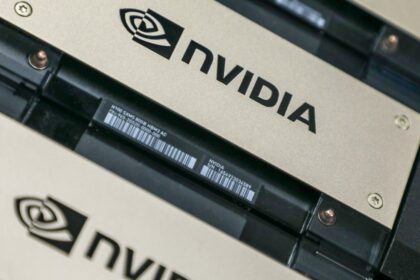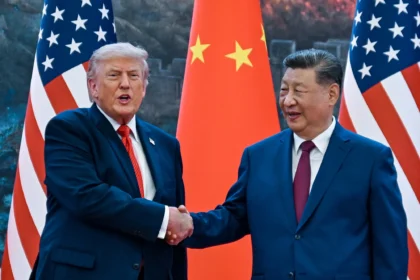


The global technology race is producing an uncomfortable irony. As Washington and Beijing continue to erect barriers against one another, YourDailyAnalysis finds that artificial intelligence has become a powerful commercial bridge, driving record trade flows even as political rhetoric points toward separation. China’s exports surged to an unprecedented $359 billion in April, with semiconductors, computers and other AI-linked products accounting for roughly half of that growth.
The numbers are striking not only because of their scale, but because they reveal where momentum is concentrated. Integrated circuit exports doubled from a year earlier, shipments of computing equipment and components jumped 47%, and China’s own imports of advanced technology accelerated sharply. The country is selling more high-tech goods abroad while buying more critical inputs from regional suppliers, especially South Korea and Taiwan.
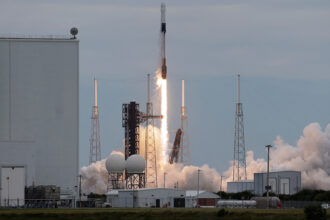
That pattern carries a structural twist. The United States remains the largest source of capital spending on artificial intelligence infrastructure, with major technology firms planning hundreds of billions of dollars in expenditures on data centers and computing systems. Those investments are unfolding primarily on American soil, yet the manufacturing surge they unleash spreads far beyond US borders and reaches deep into Asia’s industrial base.
China occupies the most commercially advantageous position in that chain. YourDailyAnalysis views the current export boom as evidence that Beijing has secured a commanding role in the assembly and large-scale production of AI-related hardware, even while restrictions continue to limit access to the most advanced chips. Control over the technological frontier and dominance in industrial throughput are not the same thing, and the distinction has become economically decisive.
Trade tensions have certainly altered the geography of commerce. The US share of Chinese exports has fallen to near historic lows, but that decline masks a more subtle reality. American investment stimulates demand for servers, networking equipment and semiconductors; Asian producers manufacture and distribute those components; Chinese factories transform them into export revenues at extraordinary speed.
The feedback loop extends further. YourDailyAnalysis tracks how the same AI boom is lifting imports into China, strengthening suppliers across the region and cushioning the effects of rising energy prices and weaker domestic consumption. What appears on the surface as bilateral rivalry is functioning underneath as a tightly coupled production system in which capital, technology and manufacturing continue to depend on one another.
China is also narrowing gaps that once seemed entrenched. Domestic chip self-sufficiency has risen sharply over the past five years, and legacy semiconductors – less glamorous but indispensable to industrial electronics – have become an area of growing strength. Every incremental gain reduces external vulnerability and increases Beijing’s leverage in future negotiations over export controls and market access.
The energy shock linked to tensions in the Middle East adds another layer. Higher oil prices are squeezing manufacturers and consumers, yet they also make electric vehicles and other technology-intensive exports more attractive abroad. Vehicle shipments have therefore joined semiconductors as a major source of resilience, helping offset softness in China’s internal demand. Your Daily Analysis sees a deeper contradiction taking shape. Political leaders continue to speak the language of decoupling, but artificial intelligence is binding the world’s two largest economies through a supply network too profitable and too complex to unwind quickly. The contest between Washington and Beijing has not reduced interdependence – it has merely shifted it into a more strategic and technologically concentrated form.