


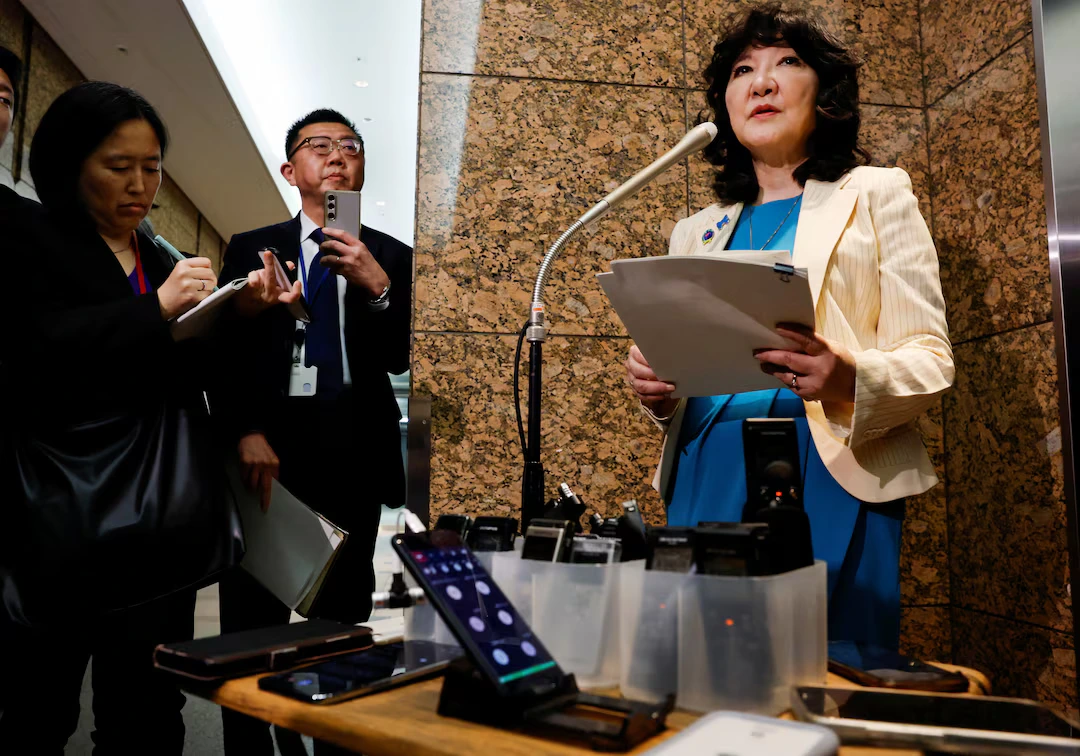
Japan is moving to build a public-private defense line around its financial system after the arrival of Anthropic’s new Mythos model raised fresh cybersecurity concerns, with YourDailyAnalysis treating the move as an early sign that AI risk has shifted from abstract policy debate into operational financial governance. The working group will bring together banks, regulators, the central bank, and local units of major AI developers, giving the issue a level of urgency usually reserved for market stability threats.
The decision lands in a financial sector already shaped by digital dependence. Payments, trading systems, customer authentication, liquidity management, fraud monitoring and cloud-based banking infrastructure now operate through layers of software that few institutions fully control alone. A powerful AI model does not need to “attack” the system directly to become dangerous; it can accelerate vulnerability discovery, automate deception, sharpen phishing operations, or expose weak links between vendors and banks.
Japan’s concern is therefore not only technical. It is institutional. Banks can strengthen internal defenses, but systemic cyber risk rarely respects corporate boundaries. A breach at a smaller internet bank, a software provider or a shared authentication vendor can move across the financial network faster than traditional supervisory tools can respond. That is why the inclusion of megabanks, online lenders, technology firms and policymakers matters more than the formal creation of another committee.
The real question is who controls knowledge when AI changes the speed of threat discovery. YourDailyAnalysis places the working group inside a wider contest over defensive access: if only a limited number of organizations can test advanced models for security purposes, then resilience may depend on privileged channels between governments, developers and systemically important institutions. Smaller players may receive guidance later, after risks have already matured.
Project Glasswing adds another layer of ambiguity. Defensive access to a frontier model could help banks identify weak points before criminals exploit them, but it also concentrates sensitive insight in the hands of selected organizations. Procedures for vulnerability reporting, containment and escalation become more than bureaucratic detail; they define who learns first, who acts first, and who bears losses when containment fails.
Financial authorities appear aware that ordinary cybersecurity playbooks may not be enough. YourDailyAnalysis reads the planned discussions on contingency planning as the most important part of the initiative, because the regulator is openly preparing for scenarios where threats cannot be fully neutralized. That marks a subtle but meaningful shift from prevention toward resilience, where institutions assume disruption may occur and design protocols to limit contagion.
The international angle is unavoidable. Japan’s banking system sits inside dollar funding markets, cross-border payments, securities clearing and global technology supply chains. Coordination with overseas authorities gives the working group diplomatic weight, yet it also exposes a dependency: defensive standards for Japanese finance may partly hinge on information flows from foreign governments and private AI laboratories. Sovereignty becomes harder to define when the threat model comes from code trained, hosted or governed elsewhere.
The stakes reach beyond cyber hygiene. If artificial intelligence becomes a permanent feature of financial defense, banks will face higher compliance costs, deeper vendor scrutiny and pressure to prove that their systems can withstand model-assisted attacks. Your Daily Analysis sees Japan’s move as a preview of the next phase in financial regulation: capital buffers and liquidity ratios will still matter, but confidence may increasingly depend on whether institutions can survive intelligent, adaptive pressure moving at machine speed.