


Something unusual is happening at the front end of the US rates market. Fed funds futures now put roughly 50% odds on a Federal Reserve rate increase by December, with the implied probability climbing to about 73% by July of next year. Yet Fed members themselves, by all available evidence, have not signaled that hikes are on the table. The 30-year Treasury yield has pushed above 5%, the 10-year sits at a 15-month high, and the two-year is at the highest level since March 2025. The bond market and the central bank are looking at the same data and reading it differently, and YourDailyAnalysis pinpoints that divergence as the single most important story for risk assets right now.
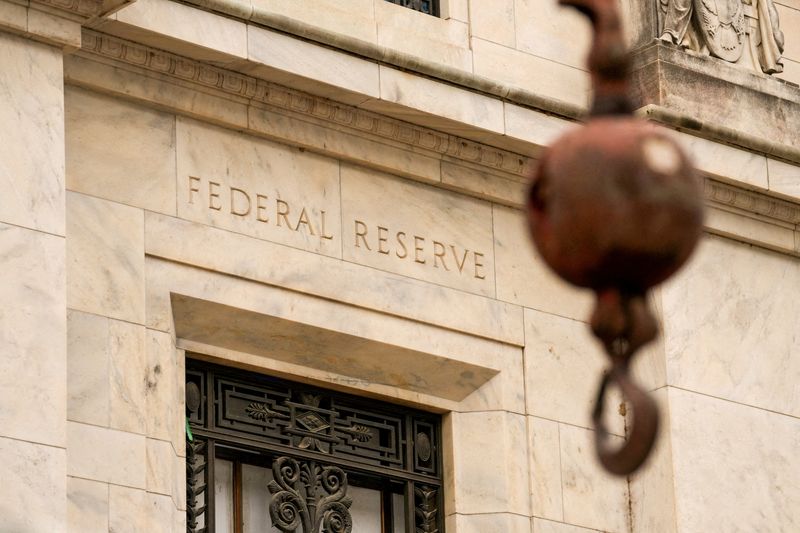
Start with what the Fed actually did. At its April meeting the central bank held interest rates steady in a range of 3.50% to 3.75%, with one dissenting vote in favor of a quarter-point cut and three members pushing back against statement language that hinted at eventual cuts. That is not the posture of a committee about to reverse course and tighten. It is a committee that has paused. The question is whether the pause holds long enough for the inflation data to soften, or whether oil-driven price pressure forces a harder pivot that the Fed itself has not yet acknowledged out loud.
The futures-market signal needs a caveat that often gets buried. Trading volumes in the contracts pricing those late-2026 and 2027 outcomes are thin. The May 2026 contract changed hands roughly 646,000 times this month. The January 2027 contract traded about a third as often. The July 2027 contract has been touched only 6,400 times. Those liquidity numbers function as a warning sign: the market is not so much predicting a hike as paying a small premium for the option that one might come, which is a very different thing.
The fundamental case for higher rates has a clear shape, and it runs through energy. Brent crude has held above $110 per barrel for weeks, and headline inflation is moving in the wrong direction. The Fed’s dual mandate places the central bank in a real bind. There is no serious deterioration in the labor market that would give policymakers cover to cut, and inflation is well above the 2% target. Editors at YourDailyAnalysis frame the trade-off bluntly: cut rates and risk re-anchoring inflation expectations higher, or hold and risk pulling the economy into stagnation as energy costs compound through goods and services.
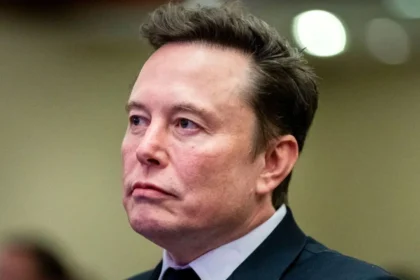
The personnel angle deepens the puzzle. New Federal Reserve Chair Kevin Warsh, who served on the board between 2006 and 2011, built a reputation as an inflation hawk during the financial crisis era. Markets are now testing how he will respond to the oil-driven price impulse. Warsh has said publicly there is room to lower rates, but he has not commented since the April inflation data dropped. Traders are essentially price-discovering his independence from President Trump, who has repeatedly pushed for lower rates. The team at YourDailyAnalysis classifies this dynamic as a structural one rather than a passing news cycle. The credibility of the chair will be settled in the next two policy meetings, not in his confirmation hearings.
Position the data against history and the futures-implied path looks even more aggressive. The Fed has rarely hiked when oil shocks were the dominant inflation driver, because the canonical playbook treats supply-side inflation as transitory unless it bleeds into wages. There is little evidence of that wage transmission yet. Analysts at YourDailyAnalysis have dissected the BLS subindices line by line, and the rise in headline inflation concentrates in energy, transportation costs, and a narrow band of goods directly affected by shipping disruption through the Strait of Hormuz. Core services ex-housing, the indicator the Fed leans on hardest, has not picked up materially.
The investment implication is uncomfortable because it cuts against the natural impulse to follow the market signal. If the bond market is overpricing the odds of a hike, then duration is mispriced lower and the long end of the curve offers asymmetric upside as the geopolitical premium fades. If, instead, oil stays elevated through summer and the labor market starts to crack from energy-driven margin pressure, then the market is reading the situation correctly and Warsh will be forced into an awkward hike that contradicts the Fed’s own stated trajectory.
There is a third scenario that gets less attention but deserves it. The bond market may not be predicting Fed action at all. It may simply be repricing term premium higher because of fiscal concerns, election-year volatility, and a structural shift in who holds US Treasuries. The 30-year yield north of 5% can be explained without invoking any rate hike whatsoever. This reading is more compelling than either of the alternatives, because it accounts for the liquidity gap in the longer-dated futures contracts and for the persistence of yield pressure even on days when oil prices retreat.
The cleanest takeaway from the current setup is that the futures market is sending a low-conviction signal that nobody at the Fed has validated. Your Daily Analysis lands on a simple operational point: the next meaningful piece of evidence will be the May CPI release. If headline inflation prints near consensus and core services stay quiet, expect the futures-implied probability of a December hike to collapse fast. If the print surprises higher and oil holds above $110, the bond market gets its validation and Warsh gets a problem he did not ask for in his first year on the job.