

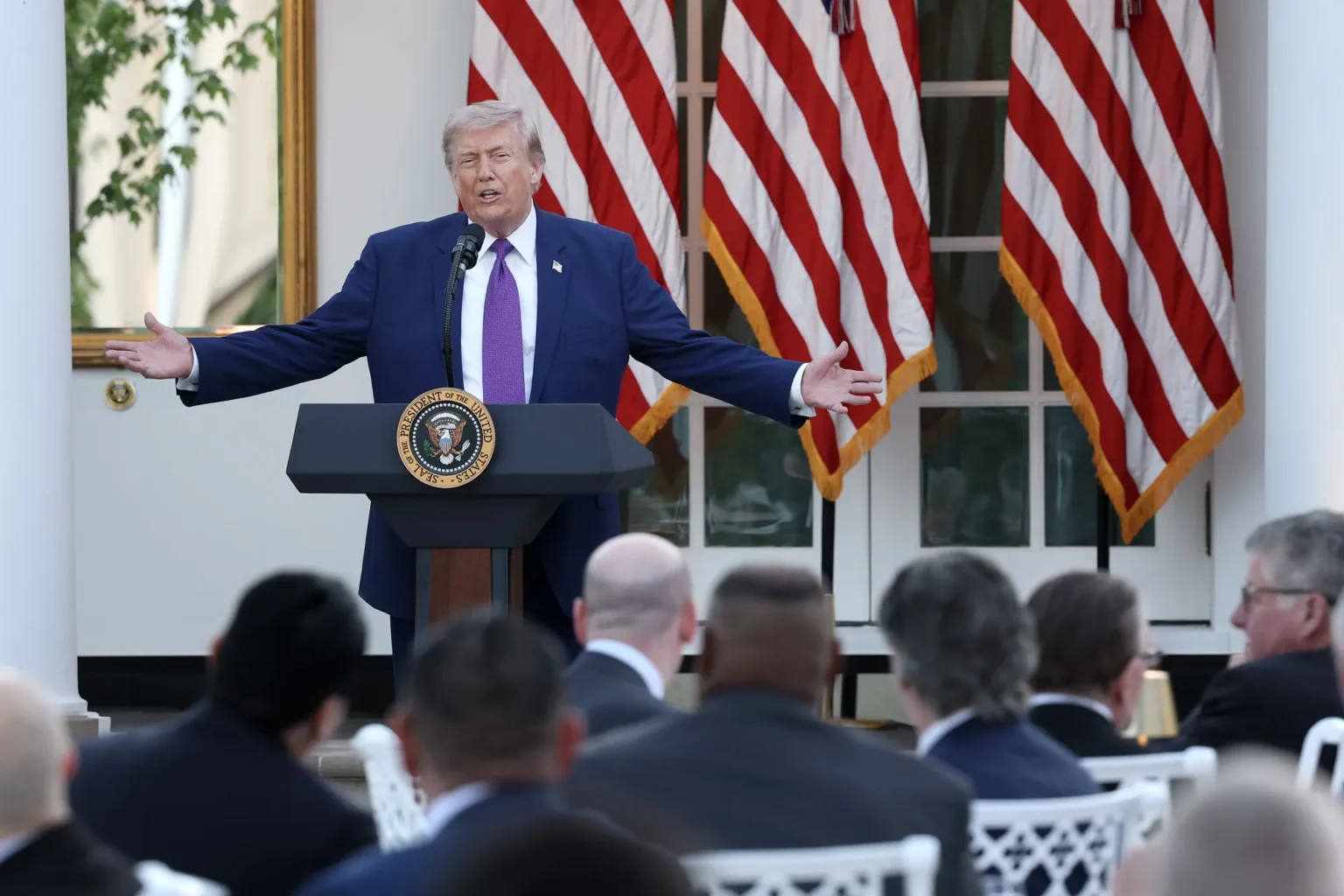
European Union officials meet in Brussels on Tuesday in what may be the final serious attempt to finalize the legislation underpinning the EU-US trade deal before President Trump’s July 4 deadline. The agreement itself was struck nearly a year ago at Trump’s golf course in Turnberry, Scotland, and capped European exports to the US at 15% tariffs in exchange for the EU dropping its own levies on American goods to zero. The deal has now been hanging in legislative limbo for ten months, and the patience on the US side has visibly run out. Trump warned this month he would raise tariffs on European auto imports to 25% from 15%, accusing the bloc of failing to implement what was agreed. YourDailyAnalysis pinpoints Tuesday’s meeting as the inflection point for transatlantic trade relations through the rest of 2026.
The arithmetic of the deal is straightforward. Bernd Lange, the German MEP who chairs the European Parliament’s trade committee, has been negotiating the legislative text with the European Council. Progress has been made on the safeguard mechanism and the review-and-evaluation clauses of the main regulation, but as Lange himself acknowledged earlier this month, there is still some way to go. Analysts at YourDailyAnalysis interpret the gap not as a technical disagreement on specific clauses but as a deeper political problem inside the European Parliament, where socialist MEPs are insisting on solid guarantees in response to repeated Trump tariff threats.
Trump’s leverage is real and is being applied. His ambassador to Brussels, Andrew Puzder, gave an unusually pointed interview to Bloomberg this month in which he flagged that US negotiators put the deal to paper in August and that Brussels has done nothing for nine months. US Trade Representative Jamieson Greer publicly told the EU to keep its side of the agreement. Editors at YourDailyAnalysis flag this coordinated messaging as deliberate. The Trump administration is trying to push Brussels to a binary choice, ratify by July 4 or face tariffs that would do real economic damage to the German and French export base.
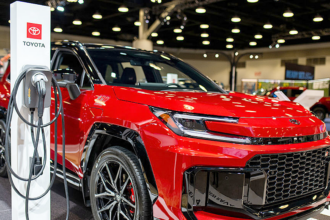
The auto sector is the immediate flashpoint. German manufacturers, who already operate on thin margins after two years of Chinese competition in EVs, cannot absorb a step-up from 15% to 25% tariffs without passing costs through to consumers or accepting margin compression that would force restructuring. Two industry economists estimate that a sustained 25% tariff regime would shave 1.2 to 1.6 percentage points off German GDP growth over twelve months. That is not a hypothetical headache. France’s economy is already stagnating in the first quarter of 2026, and a Franco-German economic shock would push the broader eurozone closer to a recession the ECB has been trying hard to avoid.
The strategic stakes go beyond cars. The Turnberry deal locked in a specific bilateral framework that the EU had hoped to use as a template for trade relationships with other major economies. If the deal collapses, the template collapses with it, and Brussels has to start the architecture conversation over from scratch with a Trump administration that has shown limited patience for multilateral structures. The team at YourDailyAnalysis isolates this as the underappreciated leverage point. Trump may care about the auto numbers, but European trade officials care about the precedent more than they care about any single sector outcome.
Inside the European Parliament, the political coalition supporting the deal is fragile. The center-right EPP wants to lock in the deal to remove a major source of business uncertainty. The Socialists, represented by figures like Brando Benifei, want stronger guarantees against unilateral Trump tariff actions. The Greens and the far left are openly skeptical of the entire framework. YourDailyAnalysis maps the coalition math: the deal probably has the votes in the Parliament if the safeguard mechanism gets sharpened in a way that lets Benifei and his colleagues claim a win on Trump-proofing. If Lange cannot deliver that language by Tuesday, the math gets harder fast.
There is a market angle that is not getting enough attention. European auto stocks have priced in a base case of resolution by July 4. If Tuesday’s meeting fails and the bloc misses the deadline, the auto sector takes an immediate downward revision, and the broader Stoxx 600 follows. The euro itself becomes a focal point. The correlation between trade-deal signals and EUR/USD has tightened to a degree last seen during the 2018 Brexit negotiations. A failure scenario would push the euro back through 1.05 against the dollar within days.
There is also a geopolitical complication worth flagging. The same week Brussels is trying to finalize the trade deal, the EU is also navigating the Ukraine ceasefire conversation and the Iran war response. Bandwidth at the Commission and at major member-state capitals is genuinely stretched. The bandwidth constraint is a real risk factor that most market analysts undercount. Trade deals fail not because the underlying logic stops working but because the people responsible for closing them run out of time to focus.
The clean takeaway is that Tuesday’s meeting is not a routine procedural step. It is the last realistic window for a clean resolution before Trump pulls the trigger on auto tariffs. Your Daily Analysis ends on the asymmetry of the outcomes. A successful close on Tuesday produces a modest market relief rally and lets European industrial planners finally lock in their 2026 capex assumptions. A failure produces a hit to European growth at exactly the moment the ECB is least equipped to respond, and starts a transatlantic trade conflict that neither side can really afford. The probability distribution sits somewhere in the middle, but the consequences of the tails are extremely uneven, and that asymmetry alone is reason for both negotiators and investors to take this meeting more seriously than the calendar suggests.