



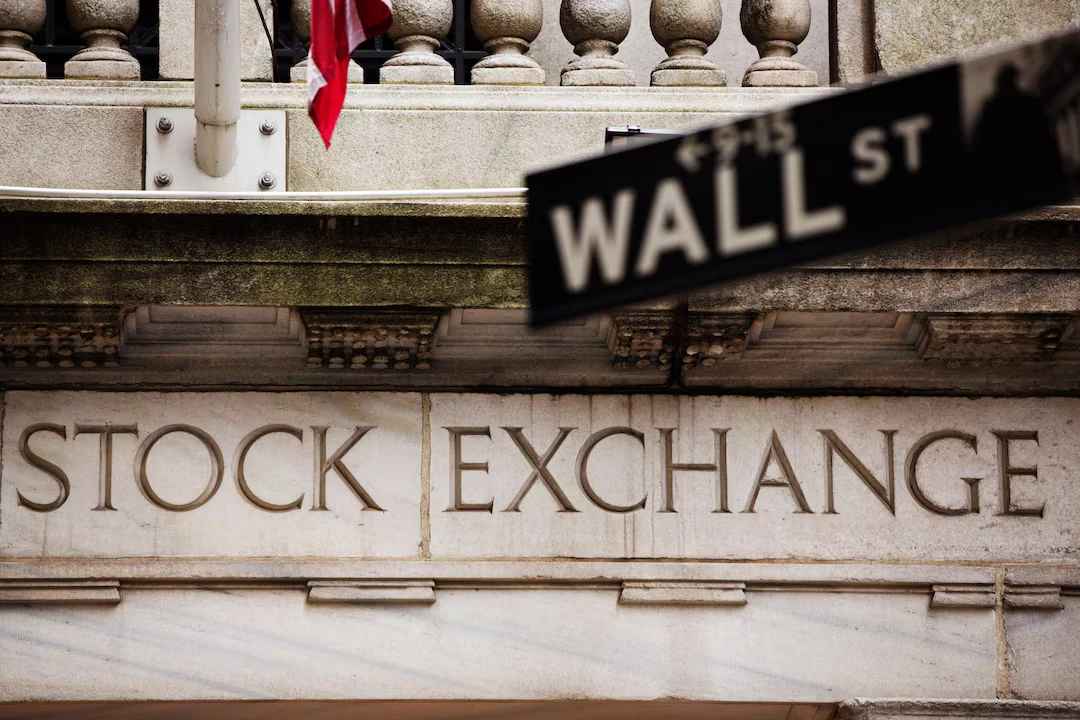
U.S. equity funds recorded their weakest inflow in six weeks, a cautious signal that sits awkwardly beside record-breaking stock prices. Investors added only $911 million in the week through April 29, and YourDailyAnalysis reads the slowdown as a warning against treating index highs as proof of broad confidence. The S&P 500 may have reached 7,272.52, but fund flows tell a less triumphant story.
The hesitation came as crude oil prices climbed and the Federal Reserve left rates unchanged while exposing new tension inside its own policy stance. Three board members voted to remove the central bank’s easing bias, a small procedural detail with large market consequences. When investors cannot tell whether the next policy shift leans softer or tighter, even strong earnings lose some of their ability to pull capital aggressively into equities.
Technology remained the exception. Investors directed $1.43 billion into tech funds, extending purchases for a fourth consecutive week, helped by upbeat results from major U.S. companies. For YourDailyAnalysis, that split matters more than the headline inflow number: investors are not abandoning risk entirely, but they are narrowing their tolerance to the market’s most profitable and momentum-heavy corner.
Healthcare funds moved in the opposite direction, losing $1.06 billion. That rotation exposes a market increasingly willing to pay for earnings visibility and AI-linked growth while cutting exposure to sectors facing slower pricing power, policy uncertainty, or weaker near-term excitement. It is not a full defensive retreat. It is selective aggression – and that can make a rally look healthier than it actually is.
Bond funds absorbed the capital that equities could not fully attract. Inflows rose to $4.87 billion from about $3.41 billion a week earlier, with government bond funds, high-yield debt and short-to-intermediate investment-grade strategies all drawing money. YourDailyAnalysis treats that mix as unusually revealing: investors want income and protection, but they are not hiding only in the safest assets. They still want return, just with more contractual discipline than equities can offer.
Money market funds, usually a refuge during uncertainty, posted a third straight weekly outflow of $13.02 billion. That does not automatically mean investors are rushing into stocks. Some of that cash appears to be moving into bond products, where yields remain attractive and duration can be managed more carefully. The result is a market with plenty of liquidity in motion, but not the kind of one-way conviction normally associated with fresh equity records.
The deeper risk is that U.S. stocks are becoming more dependent on a concentrated leadership group while broader allocation behavior turns cautious. If oil keeps pressuring inflation expectations, the Fed’s room to soften policy narrows, and the premium investors pay for growth stocks becomes harder to defend. Strong tech earnings can carry an index for a while. They cannot remove the macro arithmetic underneath it.
The latest flows leave a sharper message than the S&P 500’s record close. Your Daily Analysis sees a market that has not lost its appetite for risk, but has started bargaining with it – buying tech, adding bonds, draining cash funds, and stepping lightly around everything exposed to policy confusion. That is not panic. It is the posture of investors who still want upside, but no longer trust the floor beneath it.