



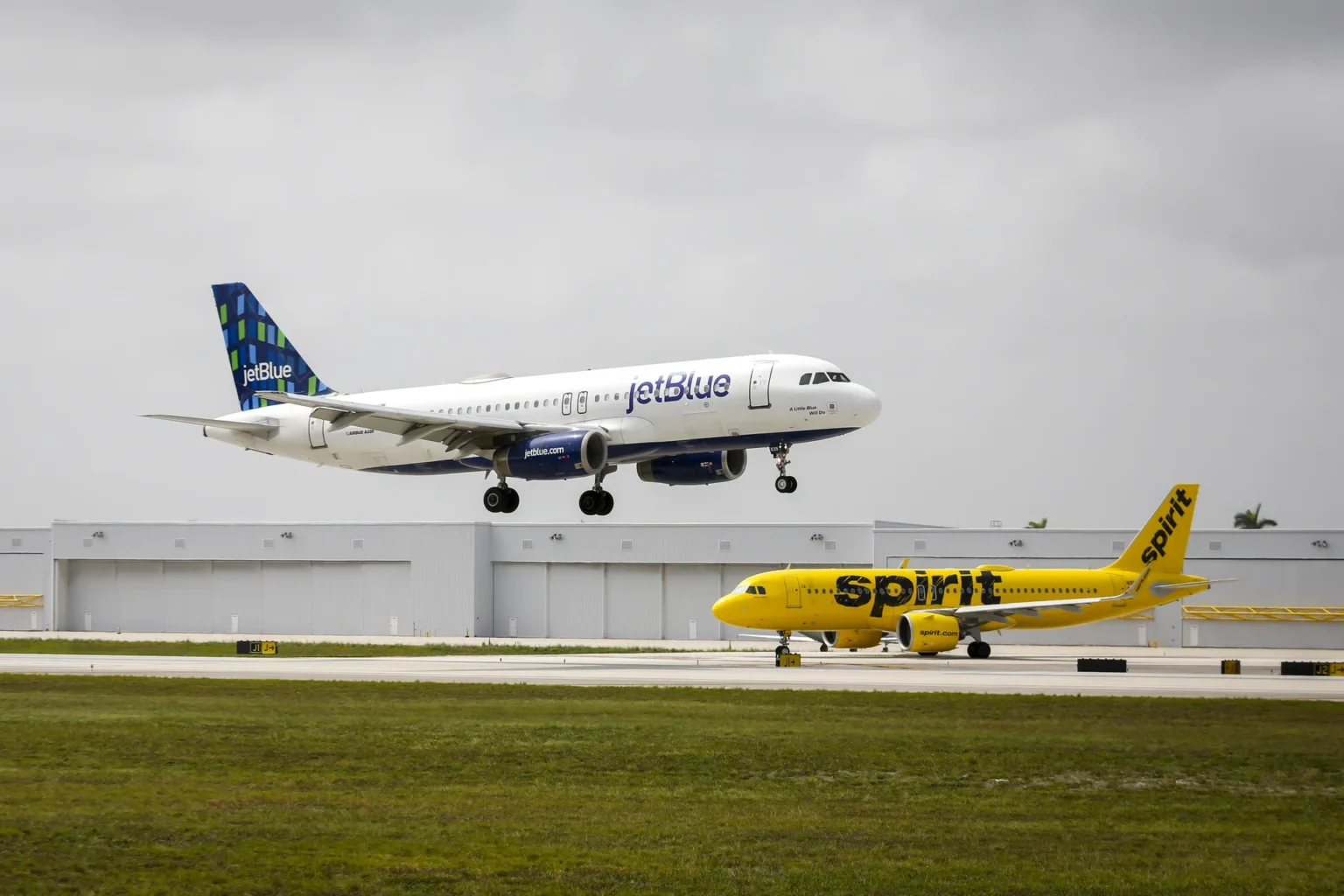
JetBlue and Frontier shares rose before Monday’s open after Spirit Airlines abruptly stopped flying, turning a corporate failure into an immediate land grab across the lower end of U.S. air travel. JetBlue gained about 5% and Frontier added roughly 4%, while YourDailyAnalysis places the market reaction inside a harsher reality: investors are already pricing winners before stranded passengers, lost jobs and broken routes have fully settled into the system. Spirit’s shutdown before dawn Saturday erased thousands of flights and removed a familiar pressure point from domestic fares almost overnight.
The collapse followed failed talks with bondholders over a government-backed rescue, leaving the carrier to enter a structured wind-down rather than limp through another round of temporary financing. Around 17,000 direct and indirect workers lost positions, and passengers holding tickets suddenly became inventory for rival airlines. That is the brutal arithmetic of airline distress – planes stop, but demand does not disappear.
JetBlue moved fastest around Fort Lauderdale, Spirit’s largest hub and one of the clearest prizes left behind. The airline plans 11 new nonstop cities from the airport, with most routes starting July 9, including Baltimore, Charlotte, Nashville, Detroit, Houston and Chicago, then Barranquilla and Cali in October. A projected 130 daily departures from Fort Lauderdale this summer would mark JetBlue’s largest operation there and a rise of more than 75% from its 2025 levels, a scale-up that YourDailyAnalysis treats less as rescue work than as controlled expansion under unusually favorable conditions.
The rescue-fare language helps soften the optics. JetBlue offered $99 one-way fares for stranded Spirit travelers with valid itineraries through May 6 and capped certain Blue Basic fares at $299 on overlapping nonstop routes involving Fort Lauderdale and San Juan through May 8. Cheap seats matter politically and commercially after an airline failure, but they also buy goodwill while capacity gets repriced. Once the emergency period fades, the real test will be whether replacement service preserves affordability or simply absorbs demand at higher yields.
Frontier’s response carries a different strategic tone. As Spirit’s closest ultra-low-cost rival, it already serves more than 100 routes once flown by Spirit and plans nine additional routes plus 15 daily flights across 18 former Spirit markets this summer. YourDailyAnalysis sees Frontier’s discount campaign – up to 50% off base fares through November and a $199 summer flight pass – as a bid to claim Spirit’s price-sensitive customer base before JetBlue can reposition those travelers into a less stripped-down model.
The numbers behind Spirit’s exit are large enough to matter but not large enough to freeze the entire U.S. market. Between May 1 and May 15, the airline had more than 809,000 seats on sale across 4,119 domestic flights, while its domestic share had already fallen to 3.9% from 5.1% a year earlier. That erosion makes the shutdown easier for rivals to absorb than it would have been during Spirit’s stronger years, yet the concentration of disruption in specific leisure and visiting-family routes could still push fares higher in pockets where ultra-low-cost capacity mattered most.
There is an uncomfortable twist in the history. Frontier and JetBlue both tried to buy Spirit, with Frontier opening the contest in 2022 before JetBlue topped it with a deal that later reached $3.8 billion and then collapsed under antitrust scrutiny in early 2024. YourDailyAnalysis captures the irony without softening it: the same assets regulators refused to let JetBlue acquire as a whole are now being redistributed through route additions, fare promotions and airport expansion. No merger closes. The market still consolidates, just messier and with more damage along the way.
For passengers, the disappearance of Spirit removes more than a logo from airport screens. It weakens the fare anchor that forced larger airlines to defend cheap basic seats on routes where comfort mattered less than price. For labor, aircraft lessors and airports, the wind-down creates a scramble over crews, gates, aircraft placement and operating slots. That scramble can look efficient from a stock chart and still feel chaotic on the ground.
The sharper lesson is not that JetBlue and Frontier benefit from a rival’s failure; markets expected that within hours. Your Daily Analysis points to a stranger outcome: antitrust law blocked a clean acquisition, financial stress destroyed the target, and competitors now collect pieces of the network under the language of emergency service. Spirit leaves behind empty seats, stranded customers and a warning that low-cost competition can vanish before consumers notice how much they relied on it.