


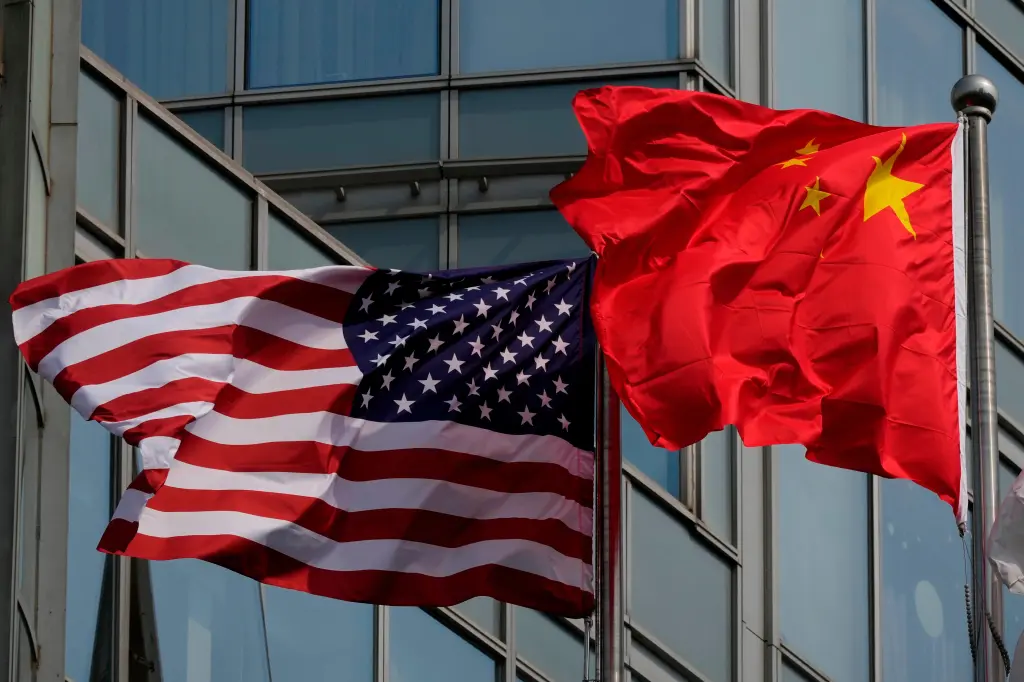
On May 20, China’s Ministry of Commerce issued its second statement in five days reaffirming that both countries had agreed in principle to include agricultural products in a reciprocal tariff reduction framework following the Trump-Xi Beijing summit. The document carried no product list, no implementation timeline, and no volume commitments beyond what the White House had already announced publicly. YourDailyAnalysis walks through this document and arrives at a clear verdict: the vagueness is not a drafting oversight, it is the actual deliverable, and both governments designed it that way.
Start with the damage that needs repairing. Chinese imports of U.S. agricultural goods fell 65.7% year-on-year to $8.4 billion in 2025, according to U.S. Department of Agriculture data, as rounds of tit-for-tat tariffs shut the trade lane. China’s farm imports from the United States still carry an additional 10% levy that remains in place. During the summit, the White House announced China agreed to buy $17 billion worth of U.S. agricultural goods annually, on top of an existing multi-billion-dollar soybean commitment. U.S. Trade Representative Jamieson Greer said publicly that the U.S. expects China to buy double-digit billions worth of U.S. farm goods over three years. Even Rogers Pay, a director at Trivium China, estimated the $17 billion purchase agreement combined with a 25 million metric ton soybean deal would roughly total out to just over $30 billion – the same figure cited in Chinese statements as the scope of a planned board of trade overseeing tariff reductions. The team at YourDailyAnalysis measures the gap between that stated aspiration and mechanical implementation as the central risk embedded in this agreement.
The implementation problem is structural. Fulfilling a $17 billion annual purchase commitment at current tariff levels is arithmetically difficult for Chinese commercial buyers. The ministry statement said both sides in principle agreed on including agricultural goods in a tariff reduction framework – not that they had finalized a product list or set any timeline. China re-certified 425 U.S. beef facilities with five-year extensions and approved registrations for 77 additional plants. It committed to resume poultry exports from certain U.S. states affected by avian influenza and agreed to discuss agricultural biotechnology issues of concern to Washington, without elaborating further. These are concrete, actionable steps. The tariff structure that determines whether Chinese crushers can profitably source U.S. soybeans, wheat, and corn at commercial scale remains entirely undefined. YourDailyAnalysis attributes this pattern to Beijing’s standard incremental negotiating posture: release concrete secondary steps, preserve the primary tariff decision as ongoing leverage, and avoid locking in commitments that domestic political pressures might later make costly.
There is a counter-argument worth running. Agricultural trade works well as a politically visible, economically manageable demonstration of good faith. American soybean, corn, and beef farmers produce tangible quantities that generate visible domestic political benefit in farm-state swing territories. Chinese consumers benefit from lower input costs. The symbolic value of this announcement may be its primary near-term function – giving both governments something concrete to reference while harder structural negotiations over technology access and strategic manufacturing capacity proceed in parallel. YourDailyAnalysis endorses that reading as the most operationally honest framing of what the May 20 statement actually contains.
Market participants expecting a 10% soybean tariff cut – which analysts suggest could allow private Chinese crushers to resume purchases largely sidelined during last year’s trade disruption – will need a formal tariff document before acting on that signal. The board of trade referenced in ministry statements has not been formed. Product lists have not been published. Two statements in five days repeating identical architecture with identical gaps represents a negotiating tempo, not an implementation one. The next genuine signal will be a formal tariff document or a scheduled board formation – neither of which has a confirmed date. Your Daily Analysis leaves readers with one operational point: track the 90-day trade truce expiration window as the structural deadline that converts aspiration into obligation. That is when silence becomes a decision.