

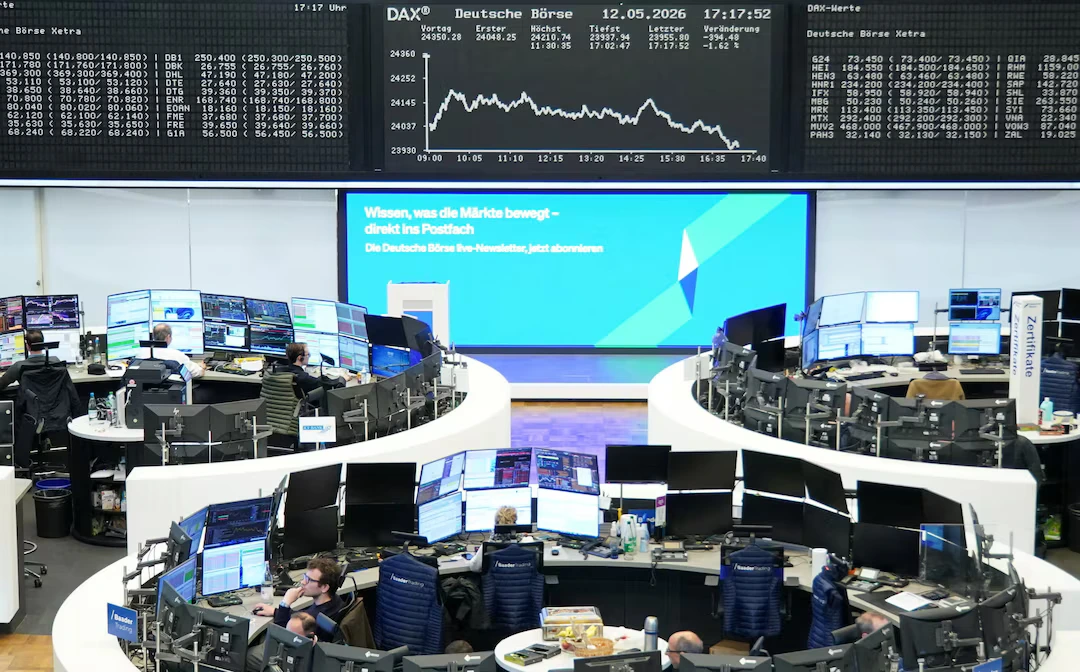
The headlines out of Europe have been reliably bad. Euro zone economic activity fell at its sharpest rate in more than two and a half years in May. The Iran war has stalled the “Make Europe Great Again” trade. Energy costs are squeezing margins across the continent. And yet, quietly underneath all of that, European AI-linked equities have staged one of the stronger rallies of 2026. YourDailyAnalysis breaks down why that divergence exists and how long it can plausibly hold.
The numbers come from TS Lombard research, and they are striking. Two AI-related baskets tracked by the firm account for more than two-thirds of the positive performance in European stocks over the past month and a half. The first basket, built around semiconductor supply chain names such as ASML, Infineon, and STMicroelectronics, gained roughly 20% since the start of April. The second basket, focused on AI infrastructure buildout including data centers, and anchored by Schneider Electric and Italy’s Prysmian, rose around 22% over the same period. Davide Oneglia, European and global macro director at TS Lombard, put it plainly: “The performance of our EU AI baskets since April is on par with the Nasdaq, just a touch behind Taiwan.” That is not the Europe investors expected to find in the middle of a war-driven energy shock. YourDailyAnalysis flags the underlying precision here: these are not diversified European indexes catching a bid – they are tightly constructed thematic baskets, and the selectivity makes the result more meaningful, not less.
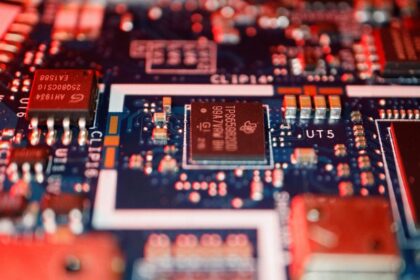
The structural logic behind this is straightforward: European AI plays are not AI hype – they are hardware reality. ASML supplies extreme ultraviolet lithography machines without which no cutting-edge semiconductor fab can operate anywhere in the world. Schneider Electric builds the thermal management and power distribution infrastructure that every hyperscale data center requires. Prysmian makes the high-voltage cable connecting renewable energy and grid infrastructure to AI-hungry compute clusters. None of these businesses depend on European economic growth cycles to generate revenue. Their customers are TSMC, Amazon Web Services, Microsoft Azure, and Google Cloud. The demand driver is global capex, not European consumer confidence. These companies sit in the supply chain that matters most in 2026, and geography is largely incidental to their revenue.
There is a counter-argument worth taking seriously. The South Korean index rose 55% over the same period, while Taiwanese stocks gained roughly 28% and the Nasdaq 100 climbed about 21%. European AI names are participating in a global theme, but they are not leading it. LSEG data shows that European gains still trail Asia significantly. Seema Shah, chief global strategist at Principal Asset Management – a firm managing around $578 billion – acknowledged Europe’s renewed focus on innovation, particularly in defense and energy sectors over the past two years, but framed the tech rally as part of a broader global AI re-rating rather than a distinctly European story. YourDailyAnalysis endorses that read: the continent is a beneficiary, not an originator.
The geopolitical layer deserves attention. The war paused broader European equity sentiment but did not interrupt the underlying order pipelines for ASML or the data center construction schedules for Schneider Electric. Capital expenditure commitments by hyperscalers are multi-year, fixed in contracts, and not meaningfully adjustable in response to a six-month energy shock in Europe. Analysts at YourDailyAnalysis argue that this insulation from the Iran war cycle is precisely what makes the sector interesting: it represents European equities that have effectively decoupled from the local macro drag.
Your Daily Analysis takes the position that the rally can extend further if two things hold: U.S. tech earnings stay strong through the second quarter, and the Iran conflict moves closer to resolution without expanding. A renewed surge in energy prices from a deal breakdown would eventually hit data center operating costs and could soften capex guidance – that is the clearest downside. The secondary risk is a sector rotation away from AI-linked plays if macro fears around European recession deepen faster than expected. Watch ASML’s next quarterly report as the single best read-through for whether European AI hardware demand remains intact – its order book is the most direct forward indicator in the entire chain.