


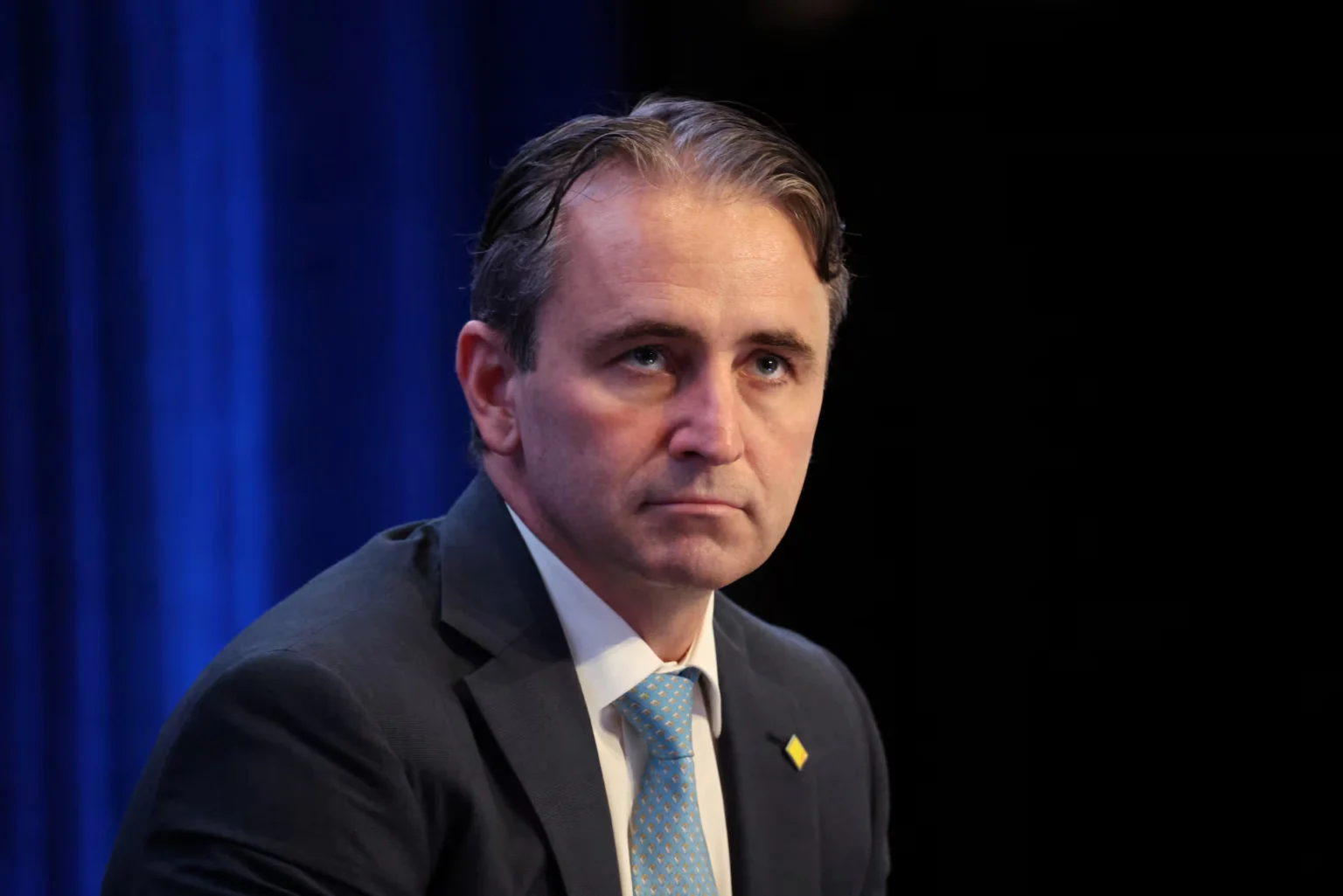
The Commonwealth Bank of Australia hosted its own AI summit last week, with OpenAI CEO Sam Altman as a speaker, and announced the hire of what it described as Australia’s first chief AI scientist at a bank. On Tuesday at an Australian Financial Review conference in Sydney, CEO Matt Comyn took a different tone: the cost of using AI will rise in less predictable ways as companies push toward complex tasks, and businesses globally will tighten scrutiny of AI-related spending through 2026. The phrase he used for low-value AI output: work slop. YourDailyAnalysis interprets the sequence – summit one week, cost warning the next – as deliberate competitive positioning.
CBA invests A$2.4 billion annually in technology and capability, at least A$500 million more per year than any other major Australian bank. That scale gives Comyn’s warning a specific credibility. He is not signaling retreat from AI. He is warning that the phase in which companies deploy AI and defer the ROI question is ending. The scarcity, he said, is not around analysis or the preparation of PowerPoints or Word docs – those can be produced exponentially. What is scarce and increasingly expensive is AI output that actually changes a decision.
CBA chief economist Luke Yeaman has described the AI investment boom as a genuine economic driver, not speculative, and noted that U.S. hyperscaler capital expenditure is on track to exceed $500 billion annually this year. But Yeaman has also flagged that stronger AI-linked demand is contributing to U.S. inflation pressure, and CBA’s global economics team now sees the Federal Reserve beginning a rate hiking cycle as early as December 2026. The reporters at YourDailyAnalysis note that Australian corporate exposure to this dynamic is indirect but real: domestic firms that committed to AI spending in 2024 will face the same ROI questions Comyn is now flagging.
CBA’s strategic framing is to use AI to strengthen advantages that are hard to replicate: customer relationships at scale, deep knowledge of the Australian economy, and secure use of institution-specific data. That is a different AI ambition from generic productivity software. It is a moat-building argument that requires AI deployed in institution-specific ways, which is also why the bank hired a chief AI scientist rather than a generic technology officer.
Comyn’s remarks also touched on workforce disruption and the energy and water demands of data centers as growing management challenges alongside cost. These are three dimensions of the same constraint: AI at scale is more expensive, more labor-intensive, and more energy-intensive than its initial deployment phase suggested. The editors at YourDailyAnalysis read the intervention as a market-shaping signal directed as much at CBA’s competitors and clients as at the conference audience itself.
What CBA is really saying is that cheap AI is cheap and will get cheaper, complex AI is expensive and will get more so, and CBA has already put A$2.4 billion a year toward the harder kind. The decision to hire a chief AI scientist from outside financial services, and to host Altman as a summit guest, reinforces that this is not defensive positioning but a genuine technological commitment funded at a level competitors cannot quickly match.
The competitive dynamic in Australian financial services AI is early enough that the first institution to speak plainly about ROI pressure tends to set the sector’s conversation for the following quarter. CBA has claimed that position deliberately. Whether Westpac, ANZ, and NAB issue similar cost-scrutiny guidance in coming weeks will reveal where each institution stands in its own AI deployment cycle. The analysts at Your Daily Analysis rank this as a competitive signal worth tracking as closely as any earnings metric.
The question the work slop framing raises is whether corporate AI budgets will bifurcate: large committed spenders continuing to invest at scale in complex applications, while smaller organizations pull back from undifferentiated deployments. If that happens, the gap between AI-capable and AI-dependent organizations widens.
Watch CBA’s next quarterly results for the empirical test. The A$2.4 billion technology spend needs to show up in non-interest expense ratios as a measurable efficiency gain, not just in strategic announcements. YourDailyAnalysis identifies that ratio as the single number that will most directly answer whether Comyn’s cost warning is a market-shaping insight or a well-timed reframe of a spending cycle that has not yet proven its returns.