


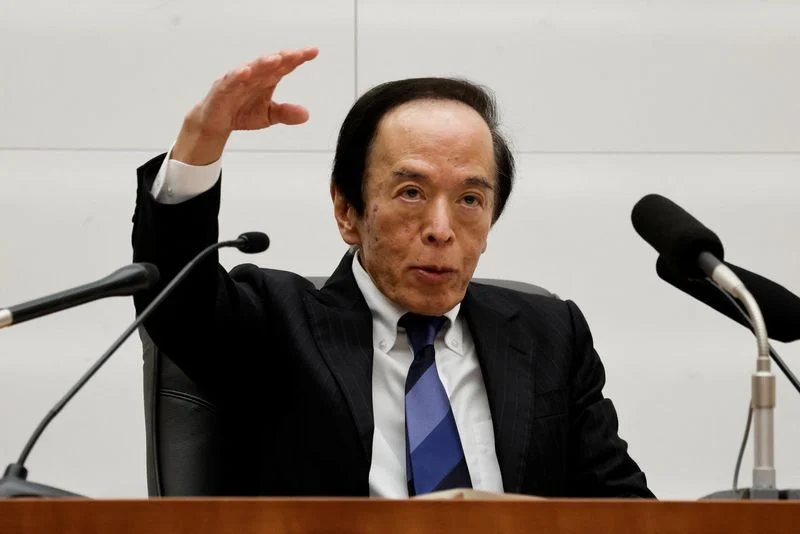
Bank of Japan Governor Kazuo Ueda’s speech on Wednesday all but guaranteed a rate hike at the June 15-16 meeting. The signal was unmistakable: the same pros-and-cons formulation he used before the December increase, but with one critical addition. This time Ueda explicitly abandoned the BOJ’s practice of looking through supply-side inflation. If Iran war energy shocks risk spilling into second-round pricing effects, the bank will act. YourDailyAnalysis lays out the shift as the most consequential change in BOJ communication in two years: Ueda is no longer asking whether Japan has achieved stable inflation, but whether inflation risks are dangerous enough to require pre-emptive action.
The context requires the longer view. The BOJ exited a decade of massive stimulus in 2024, raised its policy rate to 0.75%, and spent the following months managing yen weakness and market expectations simultaneously. The July 2024 rate shock, when a surprise hike sent USD/JPY crashing toward 139 and forced Ueda to justify the decision in a special parliamentary session, became the template for what the bank tries to avoid. Every hike since has come with extensive advance guidance. June will be no different.
The inflationary dynamic is specific. The Iran war has sent energy prices sharply higher since February, and Japan imports nearly all of its oil. The pressure arrives at a moment when Japanese firms have shifted their price-setting behavior in ways that make energy shocks more likely to embed in core inflation. Ueda said the bank must weigh the pros and cons of raising rates if upside price risks outweigh downside economic risks, even with an unclear Middle East situation. The reporters at YourDailyAnalysis track this as a textbook inflation-expectations problem: the longer the bank waits, the harder it becomes to claim any shock is temporary.
Ueda also addressed the political dimension. The Takaichi government has shown reluctance toward rising government borrowing costs, and Ueda framed timely rate hikes as a way to anchor market confidence rather than undermine it. That is a defensive move against the perception that the BOJ is caving to fiscal pressure. Japan’s ten-year bond yield has risen alongside rate hike expectations, and any suggestion of delay would erode the independence the bank has spent two years rebuilding.
The yen is the variable that makes June more urgent. USD/JPY hit 160.01 on Wednesday, crossing that threshold for the first time since April 30, triggering verbal warnings from Japanese authorities. The 160 level is the line Tokyo has historically defended by spending reserves. Intervention without a rate hike is a temporary fix; a rate hike aligns the tool with the underlying problem. The editors at YourDailyAnalysis position this dual pressure as the reason June is more likely to produce a decisive move than any of the past three meetings.
The market is pricing it. Dominant bets already favor a June hike, and swap markets are pricing further increases in the second half of 2026. The question is not whether June delivers a hike but what guidance follows. Quarterly hikes conditional on inflation data would give the yen a sustained lift. Ambiguous guidance would see the post-hike yen rally fade within weeks, as it did after December.
There is a counter-argument that the bank’s own forecasts undercut the urgency. The BOJ’s baseline scenario assumes the Middle East turmoil will calm and inflation will settle near 2%. On that path, the bank expects to keep raising rates at an appropriate pace. But the crucial shift is that the bank will no longer wait for that baseline before acting. If inflation risks build faster than projected, June’s hike may be followed by another in September. The analysts at YourDailyAnalysis point to the BOJ’s own admission: firms changing price-setting behavior means energy shocks now carry more inflationary amplitude than two years ago.
Watch the June 15-16 statement. The language on future hike pace will carry more weight than the rate decision itself. Any mention of readiness to act under geopolitical uncertainty confirms the regime change Ueda signaled on Wednesday.
Ueda’s five-year term is halfway done. Having dismantled the radical stimulus he inherited, he is steering the bank toward conventional monetary policy for the first time since the 1990s. The trigger for full normalization may not be Japan’s economic success but an Iranian energy shock that forced the bank’s hand. Your Daily Analysis closes on the structural point: Japan’s policy direction has changed, and the June meeting will define how fast it moves.