



Beijing added indium phosphide to China’s export control list on February 4, 2025. The move drew little public attention at the time. Seventeen months later, it is one of the most consequential supply chain decisions in the global AI infrastructure buildout. InP substrates are the foundational material for high-speed optical transceivers – the components that allow AI data centers to route enormous volumes of data through light rather than copper. No substitute exists. No Western country produces InP at the scale the AI buildout requires. The problem YourDailyAnalysis lays out: China holds 70% of global indium production, controls every InP export permit leaving Chinese facilities, and has demonstrated willingness to use that control as a trade instrument.
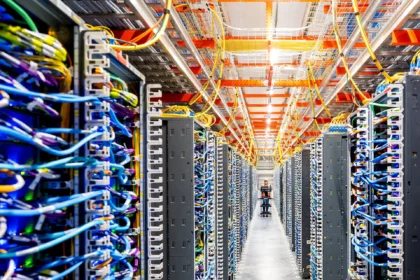
The photonics dependency is structural. As AI workloads scale, data centers face a physical constraint: copper interconnects cannot move data fast enough between GPUs and storage at the speeds AI training requires. The industry solution is co-packaged optics, integrating optical transceivers directly into the compute package. Goldman Sachs projects 800G optical module shipments exceeding 34 million units in 2026, with 1.6T modules surpassing 25 million – every unit in both categories depends on InP substrates.
Nvidia announced $2 billion investments each in Coherent and Lumentum in March, specifically to secure optical component supply. Marvell Technology acquired Celestial AI for its silicon photonics work. How YourDailyAnalysis reads the investment pattern: the money is real, the urgency is real, and the timeline to close the supply gap is longer than the timeline for AI data center expansion.
AXT, the world’s second-largest InP substrate producer, operates primary production at its Tongmei subsidiary in China. AXT’s CEO Morris Young said the timing for permit issuance can be fluid and doesn’t necessarily align with quarterly reporting. The company’s InP backlog reached $60 million by end-2025, up from $49 million in Q3, more than doubling from Q2. AXT completed a $632.5 million capital raise to double InP capacity in both 2026 and 2027.
Paul Triolo, a partner at Albright Stonebridge Group, described Beijing’s posture precisely: rather than blocking finished photonics products outright, it can slow or condition the export of upstream compounds and substrates that determine whether the optical-module ecosystem can scale quickly enough to meet hyperscaler demand. China is conditioning raw material exports in a way that slows the Western AI supply chain without triggering a formal trade dispute. The strategic calculus, as YourDailyAnalysis reads it: Beijing is running a materials chokepoint strategy that is more sophisticated than rare earth export bans and harder to counter diplomatically.
The domestic Chinese InP producers – Yunnan Germanium, Guangdong Xiandao, and Zhuhai Dingtai Xinyuan – simultaneously ramp capacity for China’s own AI buildout. China restricts InP exports to slow Western AI infrastructure while building its own photonic supply chain with the same material.
The U.S. Chamber of Commerce and manufacturing groups sent a letter to the USTR this week calling for InP access to be treated as a priority in trade negotiations. The structural exposure YourDailyAnalysis surfaces: the administration is simultaneously conducting the most aggressive tariff campaign against China in decades while depending on Chinese export permit goodwill for the material that makes its AI infrastructure ambitions physically possible. Those two postures are in direct tension.
Watch the next AXT quarterly report for the InP backlog figure and permit issuance pace. AXT operates at the beginning of the value chain, and its revenue visibility is the most direct real-time indicator of whether Chinese permit flows have normalized or remain constrained.
The InP situation is the clearest current example of a materials chokepoint dependency: a single upstream input, in a concentrated supply chain, without near-term substitutes, where the controlling party has demonstrated both willingness and institutional mechanism to use supply restriction as leverage. The conclusion Your Daily Analysis draws: every hyperscaler capex announcement projecting multi-year AI data center buildout carries an embedded InP dependency the market is not pricing, and that dependency runs through Chinese government discretion at every export permit step.