



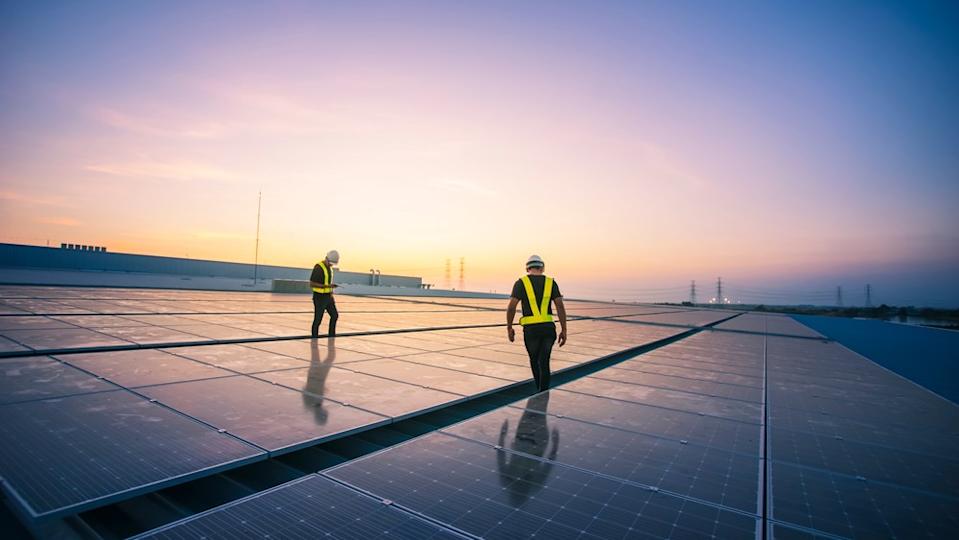
Cypress Creek Energy announced financial close on June 11 on phases one and two of the Steel River Energy Center, a solar-plus-storage project in Mississippi County, Arkansas. The transaction secures $3.5 billion in financing, fully underwritten by Barclays, BNP Paribas, Santander, and Wells Fargo. The two phases will add 1.63 gigawatts of solar and 1.9 gigawatt-hours of battery storage to the MISO grid, with a third phase expected to bring the total to 2.45 GW of solar and 2.9 GWh of storage by 2029. A 100% virtual power purchase agreement with an undisclosed investment-grade technology company anchors the revenue structure. The deal YourDailyAnalysis takes as a market signal: a federal government openly hostile to clean energy subsidies could not slow it.
Cypress Creek acquired the project from Swift Current Energy in March 2026, less than three months before the financing closed. That timeline is unusually fast for a project of this scale and reflects a transaction already well-advanced when Cypress Creek took ownership. Kevin Smith, CEO at Cypress Creek Energy, said the financing reflects both the scale of the project and strong capital market support for high-quality energy infrastructure projects backed by experienced sponsors.
The project will use First Solar panels – 100% domestically manufactured – along with structural steel mostly sourced from Mississippi County, Arkansas. Smith told POWER Magazine: there’s a lot of talk about strengthening American supply chains. We’re doing it. On the procurement side, YourDailyAnalysis notes this framing doubles as political positioning: a $3.5 billion clean energy project sourcing from American manufacturers is far harder to challenge under any federal administration than one dependent on Chinese solar panels.
The VPPA with a technology company is the revenue backbone. Virtual power purchase agreements allow corporate buyers to receive the economic value of the energy without taking physical delivery. The 1.9 GWh storage component differentiates the project from pure solar by enabling dispatchable power during evening peak demand hours, which is the profile data centers and grid operators most value.
Solar and storage accounted for 91% of new additions to the U.S. grid in Q1 2026, according to SEIA and Wood Mackenzie data. That figure captures a buildout cycle that has continued despite the Trump administration’s withdrawal from the Paris Agreement, reduced IRA tax credit support, and explicit presidential statements against green energy mandates. A 600-megawatt Google-linked solar project in West Memphis, Arkansas, is under development for a nearby data center campus. The context YourDailyAnalysis brings: the AI data center buildout is becoming the demand anchor for large utility-scale renewables, replacing the policy anchor that the IRA provided.
MISO territory has been one of the grid regions with the greatest need for new capacity additions given accelerating data center demand and the retirement of older coal plants. The project expects to create approximately 700 construction jobs in Mississippi County, with materials procurement concentrated in Arkansas-based companies.
Tax equity financing accompanied the construction debt, with an undisclosed major investor participating. The combination of construction debt from four coordinating banks, tax equity, and a long-term VPPA represents a complete three-legged financing structure. What YourDailyAnalysis draws from the structure: institutional appetite for this asset class is not policy-dependent at the project level.
Cypress Creek manages an 8.6 GW operations and maintenance portfolio across 24 states, with more than 19 GW of projects commercialized since inception. The Steel River Energy Center represents one of the largest single developments in the company’s history and a significant step up in individual project scale.
The unnamed technology company offtaker is almost certainly a hyperscaler or large AI infrastructure operator. The project’s location in MISO, its storage component, and its scale are consistent with data center power procurement strategies from the largest technology companies currently building in the Mississippi River corridor. The question Your Daily Analysis carries: whether Steel River represents a single large deal, or the first announced transaction in a wave of hyperscaler-backed solar-plus-storage financings building quietly across the midwest grid.