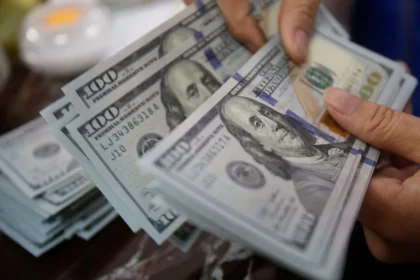



Eight consecutive sessions of dollar gains against the yen. Then one headline out of Washington – negotiations with Tehran are in the final stages – and the streak snapped. The dollar index touched 99.472 on Wednesday, May 20, its strongest level since April 7, before pulling back to trade flat at 99.128 on Thursday morning. Dollar-yen softened to 158.87, retreating from the 160 threshold that currency market participants and Bank of Japan watchers treat as the unofficial trigger point for intervention. YourDailyAnalysis argues that this moment captures something important about 2026 macro architecture: the dollar is no longer moving on U.S. fundamentals alone. It is a geopolitical instrument, trading on the probability distribution of the Iran war.
The clean read on the correlation is this: when war risk rises, safe-haven flows push the dollar up. When peace signals emerge, those flows reverse. Joseph Capurso, head of FX at Commonwealth Bank of Australia, wrote in a client note that the reversal was driven directly by positive news about the Iran conflict. He also issued a caution that reporters at YourDailyAnalysis flag as the key tension in the current setup: “While the U.S. has domestic political incentives to seek peace, we would not be surprised if President Trump chooses military escalation to gain tactical advantage in negotiations.” That logic matters. It means the dollar’s move on Iran news is not a one-way bet. Every ceasefire headline can be unwound by a strike order twenty-four hours later.
President Trump on Wednesday described negotiations as being in the final stages, while simultaneously warning of further attacks if Iran refuses a deal. That dual-track communication is deliberate. It keeps safe-haven positioning uncertain – traders cannot fully unwind dollar longs when the same press conference contains an escalation threat. The euro, steady at $1.1626, had dipped to $1.1583 on Wednesday before recovering. Sterling held at $1.3430. Bitcoin traded flat around $77,650. YourDailyAnalysis interprets the muted moves across these pairs as evidence that markets are not yet treating an Iran deal as the base case – they are pricing in elevated probability, not certainty. The dollar index range of 99 to 100 reflects exactly that ambiguity.
The Bank of Japan element adds a second variable that analysts at YourDailyAnalysis weigh carefully. Board member Junko Koeda delivered hawkish comments on Thursday, saying the central bank needs to continue raising rates with underlying inflation already near its 2% target. That statement gave yen bears pause. The 160 level in dollar-yen has acted as a psychological ceiling – above it, intervention risk rises sharply, as the Bank of Japan demonstrated in 2022 and 2024 when it spent hundreds of billions of yen defending the currency. The current 158.87 reading puts the market in a relatively comfortable zone, but the path back toward 160 is short if the Iran deal collapses. The probability structure resolves into three scenarios: deal signed and risk-off unwinds sharply, deal collapses and safe-haven flows resume, or prolonged ambiguity keeps the dollar index pinned in the 98–100 range through the summer. None of those three scenarios currently has a clear majority probability in the options market, which explains the low realized volatility in currency pairs even as geopolitical noise remains extreme.
The Australian dollar offers a separate signal. The Aussie slipped 0.3% to $0.7129 after data from the Australian Bureau of Statistics showed the jobless rate climbed to 4.5%, above analyst expectations of 4.3%. That surprise on unemployment reduced market expectations for Reserve Bank of Australia tightening. Westpac economist Ryan Wells wrote that a June pause is now high-conviction. Taken together, the session on May 21 told a multi-track story: peace optimism softened the dollar, Australian labor data softened the Aussie, and Bank of Japan hawkishness nudged the yen back from the intervention zone.
The editors at Your Daily Analysis settle on the uncomfortable bottom line: currency markets are not yet convinced the Iran conflict ends neatly. The dollar’s eight-day streak was a bet on war persistence. Thursday’s pullback was a bet on diplomacy. Neither thesis is stable. Until the Strait of Hormuz reopens verifiably, every FX position in safe-haven assets carries truncation risk in both directions – and the next Trump statement could reset the entire positioning within hours.