


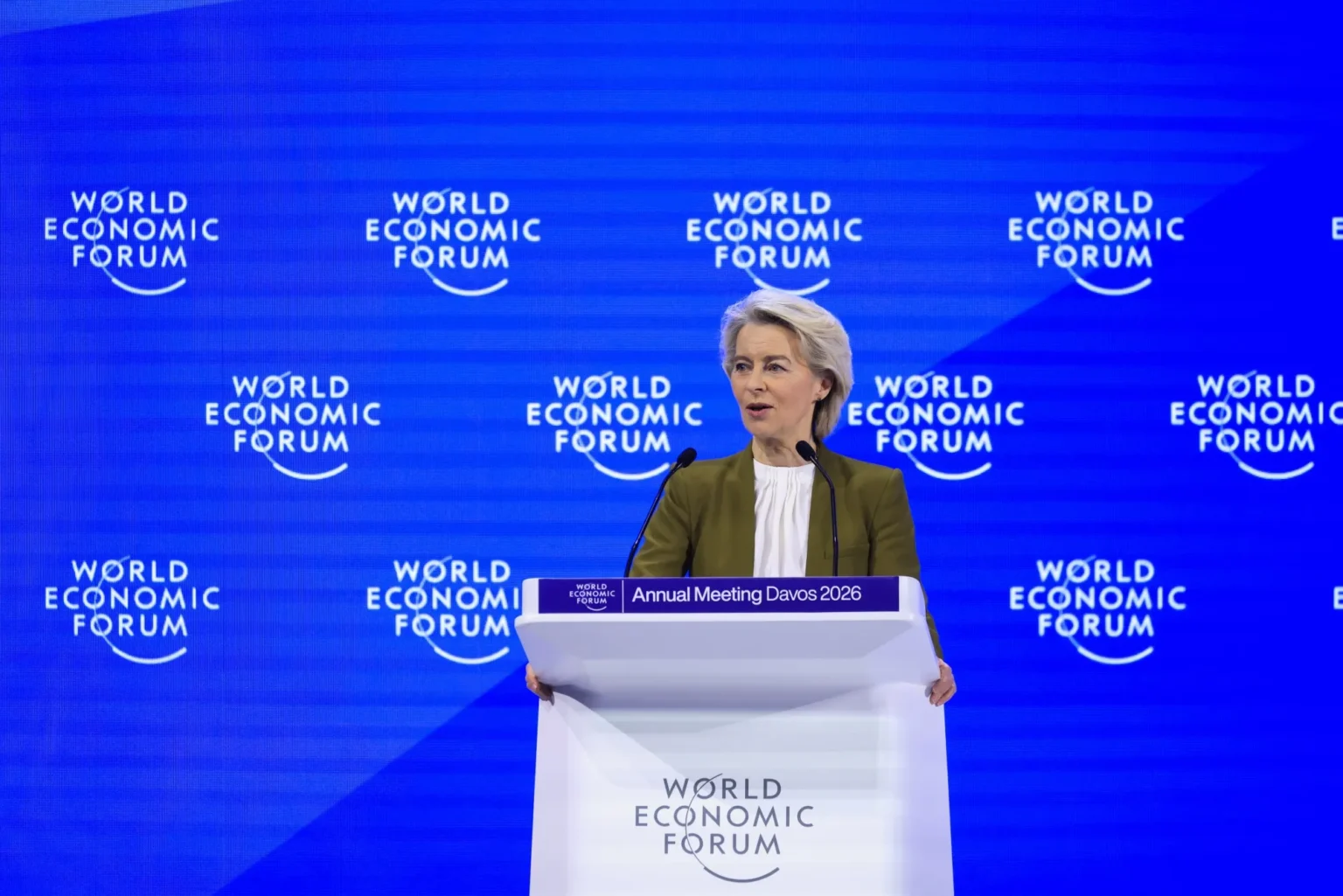
The European Union is signaling that it is prepared to treat Washington’s latest tariff threats not as routine trade brinkmanship, but as a direct challenge to the credibility of last year’s transatlantic trade settlement. Speaking in Davos, European Commission President Ursula von der Leyen framed the dispute in unusually explicit terms: agreements reached between allies cannot be selectively suspended when political pressure rises. In the context of YourDailyAnalysis, this is less a rhetorical flourish and more a warning that Brussels may reclassify US actions as coercive rather than negotiable.
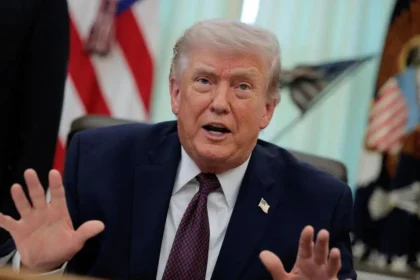
At the center of the confrontation is President Donald Trump’s proposal to impose new tariffs on goods from several European countries unless progress is made toward US control over Greenland. While the headline tariff levels – initially 10%, potentially rising to 25% – are not unprecedented, the conditional nature of the threat represents a sharp escalation. Tying trade penalties to territorial and sovereignty demands introduces a political risk premium that markets cannot easily discount.
The existing EU–US trade framework, finalized last summer, was designed precisely to prevent this kind of escalation. By capping most tariffs at around 15% and suspending retaliatory measures, both sides aimed to stabilize expectations for exporters, investors, and supply chains. The current standoff tests whether that framework still functions as a binding constraint or merely as a temporary pause.
From an analytical standpoint, the risk is not limited to higher tariffs themselves. When trade agreements are perceived as reversible at the discretion of political leadership, corporate behavior changes rapidly. Firms shift from long-term capital planning toward short-term contingency management: inventory buffers grow, supplier diversification accelerates, and cross-border investment decisions are delayed or downsized. YourDailyAnalysis views this behavioral shift as the true economic cost of policy uncertainty.
Brussels’ response options extend well beyond reinstating suspended tariffs on US goods. The EU’s anti-coercion instrument – so far unused – allows for a broader set of countermeasures, including targeted restrictions on investment access, public procurement, and specific market segments. The strategic value of this tool lies not only in its deployment, but in the credibility of its availability. Once markets believe the EU is willing to escalate beyond goods trade, negotiation dynamics change materially.
Political timing further complicates the equation. With EU leaders meeting under growing domestic pressure to defend sovereignty and institutional credibility, visible unity becomes a priority. At the same time, Washington’s strategy appears designed to maximize leverage through unpredictability. Historically, such configurations tend to produce cycles of sharp escalation followed by partial de-escalation. However, even if a compromise emerges, the volatility introduced into the system rarely disappears entirely.
In YourDailyAnalysis, the base scenario remains a negotiated off-ramp that preserves the core elements of last year’s agreement while reframing the dispute around Arctic security cooperation and investment support for Greenland. This would allow both sides to claim strategic success without triggering a full-scale trade conflict.
The downside scenario is more structural. If tariff threats tied to geopolitical objectives become normalized, transatlantic trade risks being reclassified by markets as politically contingent rather than rules-based. That shift would raise hedging costs, weaken investment confidence, and embed a persistent risk discount into dollar- and euro-denominated assets alike.
For investors and policymakers, the key takeaway is that this episode should not be treated as an isolated headline. In Your Daily Analysis, it represents an early signal of a broader transition toward trade policy as an explicit geopolitical lever – a shift that demands faster decision cycles, greater emphasis on liquidity, and a reassessment of how political risk is priced across global portfolios.