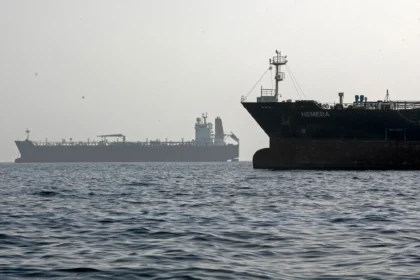




The scenario almost nobody was running at the start of 2026 is now the central question in energy markets. Brent crude, which climbed past $144 per barrel at its April peak as the Strait of Hormuz went into effective shutdown, has since pulled back to around $110. WTI was trading near $102 on May 21 after Iran’s supreme leader ordered enriched uranium to remain inside the country – a development that briefly reignited fears of deal collapse. YourDailyAnalysis makes the case that the more consequential question is not what oil does in the next week of diplomacy, but what happens to prices the moment a credible deal is signed and Iranian and Gulf crude flows resume. The answer involves a structural surplus that was already building before the war began.
Position the data against the pre-war baseline. In February 2026 – before the Strait of Hormuz crisis – WTI was trading below $64.50, pressured by persistent oversupply. The International Energy Agency had projected a record annual average surplus of just over 3.7 million barrels per day for 2026, driven by OPEC+ output restoration and non-OPEC supply growth. Global inventories had already expanded in 2025 at the fastest pace since the pandemic. The war didn’t create tight fundamentals; it masked an oversupplied market with a supply shock so large it overwhelmed the underlying glut. The IEA’s May 2026 report noted that cumulative supply losses from Gulf producers since the Hormuz shutdown already exceed one billion barrels, with more than 14 million barrels per day currently shut in.
The post-deal arithmetic now matters more than the immediate military headlines. When the Strait reopens, those 14 million barrels per day don’t return overnight – logistics, insurance, tanker positioning, and port processing all require weeks. But the market’s forward curve will price in the return long before the first tanker clears Hormuz. Goldman Sachs raised its Brent forecast to $90 per barrel by late 2026 from $80 previously in late April, citing supply losses that proved more persistent than expected. The EIA’s May Short-Term Energy Outlook estimated global oil inventories were drawing at 8.5 million barrels per day in Q2 2026 on average, with Brent averaging around $106 in May and June. YourDailyAnalysis projects that a verified Hormuz reopening would move those EIA assumptions sharply in the other direction within a single reporting cycle.
There is a counter-argument that deserves space. Billy Leung, investment strategist at Global X ETFs, argued in late April that the fat tail is still ahead, not behind – meaning the risk of severe market dislocation from prolonged Hormuz closure remains underpriced. That is a legitimate point at the time of the comment. But the same logic runs in reverse: a peace settlement combined with a pre-existing 3.7 million barrels per day surplus and Saudi Arabia’s capacity to add production creates a downside scenario for oil prices that crude bulls are not adequately discounting. Reporters at YourDailyAnalysis note that the UAE’s departure from OPEC effective May 1, 2026 complicates the supply picture further – the EIA now expects OPEC’s spare capacity to average 2.5 million barrels per day in 2027, down from higher estimates that included UAE volumes. That spare capacity overhang is another weight on any post-deal price floor.
Zoom out on the macro feedback loop. Oil at $100-plus sustains inflationary pressure in an economy where the Federal Reserve is already navigating Iran-war commodity shocks. A Federal Reserve Bank of Minneapolis analysis published May 4 highlighted that the pass-through of energy prices into core inflation – directly through jet fuel and airline fares, indirectly through manufacturing inputs – is large enough that the Fed cannot simply look through this shock as it might a typical brief energy spike. If oil prices collapse post-deal, that inflationary pressure disappears rapidly, potentially opening space for rate cuts that equity markets would welcome. The chain reaction runs: deal signed, Hormuz reopens, oil falls, inflation eases, Fed pivots, equities rally.
The editors at Your Daily Analysis drive home one final variable: the five-year long-stop clauses now appearing in new energy contracts, Hormuz shipping insurance premiums at historic highs, and the pace of OPEC+ spare capacity deployment. The energy market is one diplomatic cable away from the most rapid price reversal since the 2020 demand collapse – and the structural surplus beneath the crisis was never resolved, only buried.