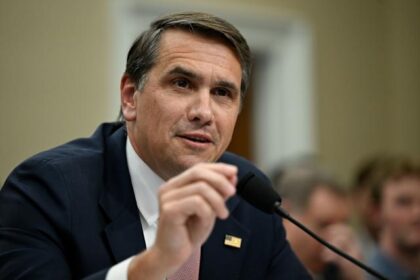



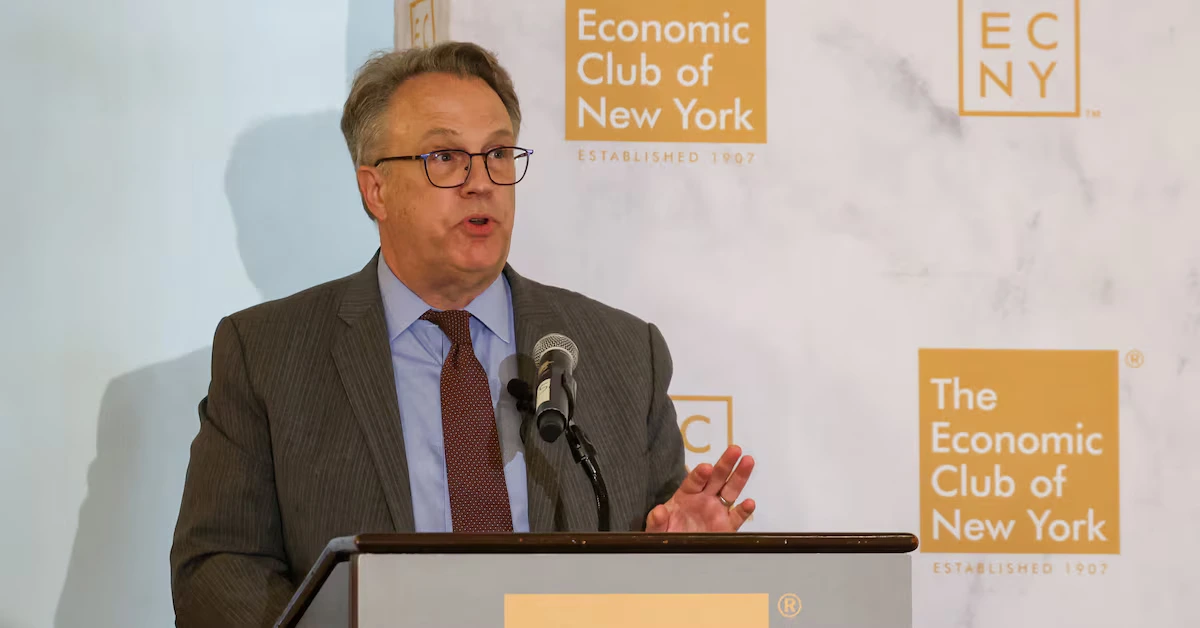
Federal Reserve Bank of New York President John Williams said in a Fox Business interview Tuesday that he has grown a little less worried about price pressures in the economy, citing declining oil prices. “Inflation is still too high,” Williams said on the network’s Mornings with Maria program, but “I do feel a little bit more positive about the near-term inflation outlook because of the energy price declines that we’re going to see.” YourDailyAnalysis isolates the qualifier doing the real work in that sentence: Williams is citing expected future declines, not inflation data that has already arrived, which makes this a forecast-based reassurance rather than a confirmed trend.
Williams was explicit about the mechanism: “We definitely have seen a big decline in oil prices, not only the current oil prices, but future expected oil prices,” he said, adding that he expects energy costs to “come down quite a bit and that will bring headline inflation down.” That framing connects directly to the easing of the U.S.-Israeli conflict with Iran, which had roiled global energy markets during its hot phase; as that pressure has faded and the two sides work toward a settlement, some of the inflationary risk premium built into oil markets has come out as well.
What Williams pointedly did not do is translate that relief into forward guidance. “Monetary policy is well positioned…to achieve our maximum employment and price stability goals,” he said, declining to signal whether the Fed’s next move is up or down. YourDailyAnalysis treats that silence as consistent with, not a departure from, the approach set by new Fed Chair Kevin Warsh, who has steadfastly avoided giving guidance on rate policy and has said he believes markets should set their own path rather than be steered by central bank signaling.
The policy backdrop makes Williams’s comments more consequential than a single official’s opinion would normally be. The Fed left its overnight rate range unchanged at 3.5% to 3.75% at last month’s meeting, and a number of officials have been weighing the possibility of a hike given inflation’s persistence above the 2% target. Some of that hawkish pressure, Williams’s comments suggest, has already begun to fade as the ceasefire following the Iran conflict eases energy-driven price risk – which means the case for a near-term hike may be weakening less because of labor-market or core-inflation data and more because of a single, geopolitically contingent input.
Williams also addressed the economy more broadly, saying growth continues at a solid pace and that risks around the labor market have stabilized, and confirmed he does not plan to change his own public communication style under Warsh’s leadership, saying he will continue offering his own views on data and the outlook rather than issuing explicit forward guidance. YourDailyAnalysis reads that as Williams signaling he intends to keep functioning as an independent voice on the Federal Open Market Committee rather than defer entirely to the new chair’s more hands-off public posture.
Watch whether other regional Fed presidents echo Williams’s more sanguine tone on energy-driven inflation relief in the coming weeks, and whether oil prices actually follow through on the declines Williams is forecasting. Your Daily Analysis views the real test as whether this rhetorical softening shows up in the Fed’s next Summary of Economic Projections, since verbal reassurance from a single regional president carries less weight than a shift in the committee’s own median rate-path forecast.