


The launch of UPS’s new logistics hub in Taiwan represents more than regional expansion – it reflects a structural shift in how supply chains are being reconfigured around semiconductors and AI-driven industries. A $100 million investment into its largest facility in Asia-Pacific signals that demand for high-tech logistics is increasingly viewed as long-term and strategic.
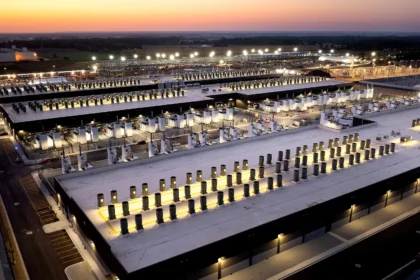
The facility, located in Taoyuan near Taiwan’s main international airport, is designed to handle a high concentration of technology-related shipments, with approximately 80% of cargo tied to the semiconductor ecosystem. YourDailyAnalysis notes that this level of specialization suggests logistics providers are no longer operating as general carriers, but as critical enablers of specific industrial verticals – particularly those linked to advanced manufacturing and AI infrastructure.
Geographic positioning plays a central role. Proximity to a major aviation hub allows for faster and more reliable movement of high-value, time-sensitive components. In semiconductor logistics, speed and predictability are often more important than cost efficiency alone, making location a strategic advantage rather than a logistical detail. The involvement of Applied Materials as a key user of the facility reinforces its practical relevance. This is not a speculative build-out, but infrastructure aligned with an existing and expanding demand base. From an operational perspective, anchor clients of this scale significantly reduce utilization risk and support more stable throughput over time.
Taiwan’s broader semiconductor ecosystem remains a core driver behind the investment. With TSMC continuing to expand production capacity to meet sustained demand for AI-related chips, the surrounding logistics network is evolving in parallel. YourDailyAnalysis highlights that infrastructure tends to follow capital expenditure cycles, and in this case, the scale of ongoing investment in chip manufacturing supports the rationale for long-term logistics expansion. UPS’s consideration of future flight operations to Kaohsiung further illustrates a forward-looking approach. As semiconductor production increasingly extends beyond northern Taiwan into southern clusters, logistics networks are likely to adapt accordingly. This suggests that the current facility may represent the first step in a broader regional footprint rather than a standalone project.
The development also fits into a wider pattern of secondary beneficiaries of the AI cycle. While attention is often focused on chipmakers and technology firms, logistics providers are capturing indirect value by supporting the physical movement of components and equipment. YourDailyAnalysis suggests that these “infrastructure layers” often deliver more stable returns during sustained technology cycles. At the same time, the concentration on a single industry introduces exposure to sector-specific risks. Semiconductor demand remains cyclical, and geopolitical factors surrounding Taiwan continue to represent a structural uncertainty. A highly specialized logistics asset may therefore be more sensitive to shifts in these variables than diversified facilities.
Overall, the investment reflects a calculated alignment with one of the most critical supply chains in the global economy. UPS is effectively positioning itself within the operational backbone of the semiconductor industry rather than simply servicing it from the periphery. Your Daily Analysis maintains a moderately positive outlook on this development. In the near term, continued expansion in AI infrastructure and semiconductor production is likely to support utilization and growth. Over a longer horizon, the trajectory will depend on the pace of industry investment, geographic diversification of chip manufacturing, and the stability of regional supply chains.