



Argentina is set to make a major payment on its dollar bonds this week, pulling off a feat few investors thought possible while the country refuses to tap global debt markets. The government says it has already secured the funds needed to cover the $4.3 billion semi-annual obligation, split between principal and interest, and has identified further financing sources that eliminate the need to access international debt markets for the rest of President Javier Milei’s term, which runs through the end of 2027. YourDailyAnalysis flags the scope of that claim: eliminating the need for global bond issuance through 2027 is a much stronger statement than simply covering this week’s payment, and it’s the part of the announcement markets will be testing hardest.
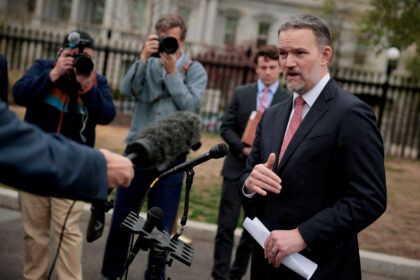
The strategic choice underlying this is deliberate, not circumstantial. Investors had urged Economy Minister Luis Caputo to seize a window of opportunity to raise capital before the war in the Middle East rattled markets; instead, the government held off, arguing borrowing costs remained too high. On Monday, Caputo doubled down, unveiling a financing plan that excludes international debt issuance this year entirely, relying instead on local dollar bonds, multilateral-backed loans and other lower-cost sources. “Going to the market is just another option, not an objective,” Caputo told reporters, framing the goal as refinancing debt as cheaply as possible rather than demonstrating market access for its own sake.
The domestic financing numbers back up that framing. Since March, the Treasury has raised roughly $4 billion through sales of bonares – locally issued dollar-denominated bonds maturing in 2027 and 2028 – at yields averaging 6.9%, well below the roughly 8.6% investors estimate Argentina would currently pay on international markets. YourDailyAnalysis treats that spread as the entire justification for Caputo’s strategy in one number: borrowing at home costs Argentina roughly 170 basis points less than borrowing abroad right now, which makes avoiding international markets a straightforward cost-minimization decision rather than a defensive one.
That domestic-first approach marks a sharp shift from Caputo’s own history. While the bedrock of his current strategy is the local market, it stands in contrast to the spree of international bond sales he oversaw during his time under former President Mauricio Macri – meaning the same official who once relied heavily on global issuance is now the architect of a strategy built around avoiding it, a reversal that itself signals how much Argentina’s cost calculus has changed.
Not everyone views the strategy as risk-free. “Investors were very vocal at the beginning of the year about the need for Argentina to come to markets, much like Ecuador did,” said Gustavo Medeiros, head of research at Ashmore Group, pointing to concerns about Argentina’s international reserve levels, though he noted the government has been very successful in accumulating dollars this year. Jimena Zuñiga, Argentina economist at Bloomberg Intelligence, put the risk more starkly: “They are being very careful on not issuing at high rates, likely out of concern on the impact this can have on deficit metrics. That’s a reasonable concern, but it carries significant risks because there could be shocks undermining those plans for 2027 – and they could be missing a good issuance window now.” YourDailyAnalysis reads Zuñiga’s warning as the most precise articulation of the trade-off: Argentina is optimizing for today’s borrowing cost at the expense of locking in access before conditions potentially worsen ahead of next year’s presidential election.
That election-timing risk is concrete rather than abstract. Argentina has about $25 billion in dollar debt due in 2027, which it plans to cover with $5 billion of local bond sales next year, dollar purchases from the central bank, International Monetary Fund disbursements, proceeds from privatizations, and carryover cash from this year’s financing surplus – a financing mix with, as several investors quoted by Bloomberg noted, little wiggle room should any single source underperform or election-related volatility push sovereign spreads wider.
Watch whether Argentina’s benchmark dollar bond yields, currently in the high 8% range, continue tightening toward what officials argue is a more justified level given the country’s improving fiscal position and exports, and watch for any signal that Caputo is reconsidering international issuance as the 2027 election approaches. Your Daily Analysis views spread compression as the single clearest signal of whether Argentina’s markets-avoidance strategy is being rewarded or whether investors are quietly pricing in the election-year risk multiple analysts have flagged.