


Oil prices rose more than 1% on Thursday after the U.S. carried out fresh strikes on Iran, denting hopes for talks to end their war and for the full reopening of the Strait of Hormuz, a chokepoint for one-fifth of pre-war global oil supplies. Brent crude futures rose 1.1% to $78.88 a barrel, while U.S. West Texas Intermediate crude rose 1.2% to $74.37 a barrel, with both benchmarks having already risen more than a dollar in post-settlement trade Wednesday. YourDailyAnalysis starts with the scale of Thursday’s strikes rather than the price move itself: U.S. forces struck approximately 90 Iranian military targets, a scope that goes well beyond a symbolic or retaliatory gesture.
The targeting details matter for assessing intent. U.S. Central Command said the strikes hit air defense systems, coastal surveillance assets, missile and drone storage sites, naval capabilities, and military logistics infrastructure along Iran’s coastline – U.S. officials framed the operation as aimed at keeping the critical Strait of Hormuz open to traffic. That stated objective is consistent with the target list: coastal surveillance and naval capabilities are precisely the assets Iran would use to threaten shipping through Hormuz, which suggests this wave of strikes was designed specifically around preserving the strait’s access rather than broader war aims.
The trigger sequence is important context. Iran said on Wednesday it attacked U.S. military sites in Bahrain and Kuwait in response to earlier U.S. strikes on infrastructure, and the fresh U.S. strikes came hours after Trump declared the interim agreement to end the war was “over.” That back-and-forth – U.S. strikes, Iranian retaliation against regional U.S. bases, further U.S. strikes – is the kind of escalatory cycle that tends to be harder to unwind quickly once both sides have crossed from posturing into direct exchanges of fire.
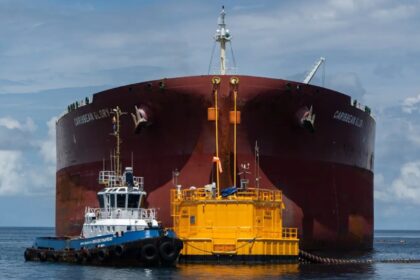
The market impact is already visible in shipping behavior, not just prices. “The rush of oil that passed through the strait in recent weeks is over for now, with shipowners expected to take a more cautious stance,” IG analyst Tony Sycamore said in a note. YourDailyAnalysis reads that shift in shipowner behavior as the more reliable real-time indicator than price alone – tanker operators adjusting routes and risk tolerance reflects an actual operational judgment about safety, distinct from the speculative positioning that can drive short-term price swings.
The forward-looking commentary from analysts leans toward extended uncertainty rather than a quick resolution. “Despite the interim peace deal between Washington and Tehran, significant geopolitical risks remain,” said DBS Bank’s head of energy research Suvro Sarkar, who expects conflict uncertainty to support prices in the near term. ING analysts separately noted that the latest escalation is undermining confidence in the fragile ceasefire that had been in place. Your Daily Analysis notes the convergence across separate analyst notes on the same point: the ceasefire’s fragility, not just this specific round of strikes, is now the dominant risk factor being priced into oil.
One analyst view adds a specific behavioral prediction worth tracking. “We believe Iran has every incentive to prolong these discussions, suggesting that the war risk premium in oil prices may not fully dissipate for several months, leading to continued volatility despite an overall downward price trajectory in the medium term,” the same DBS analyst said – a forecast that explicitly separates near-term volatility from a medium-term price direction, rather than assuming the two move together.
Watch whether Iran responds to Thursday’s approximately 90-target strike with further retaliation against U.S. regional bases, which would signal the escalatory cycle is continuing rather than cooling, and watch tanker traffic data through the Strait of Hormuz for confirmation of the pullback Sycamore described. Your Daily Analysis sees the next Iranian response, more than any single day’s oil-price move, as the clearest signal of whether this ceasefire can still be salvaged.