


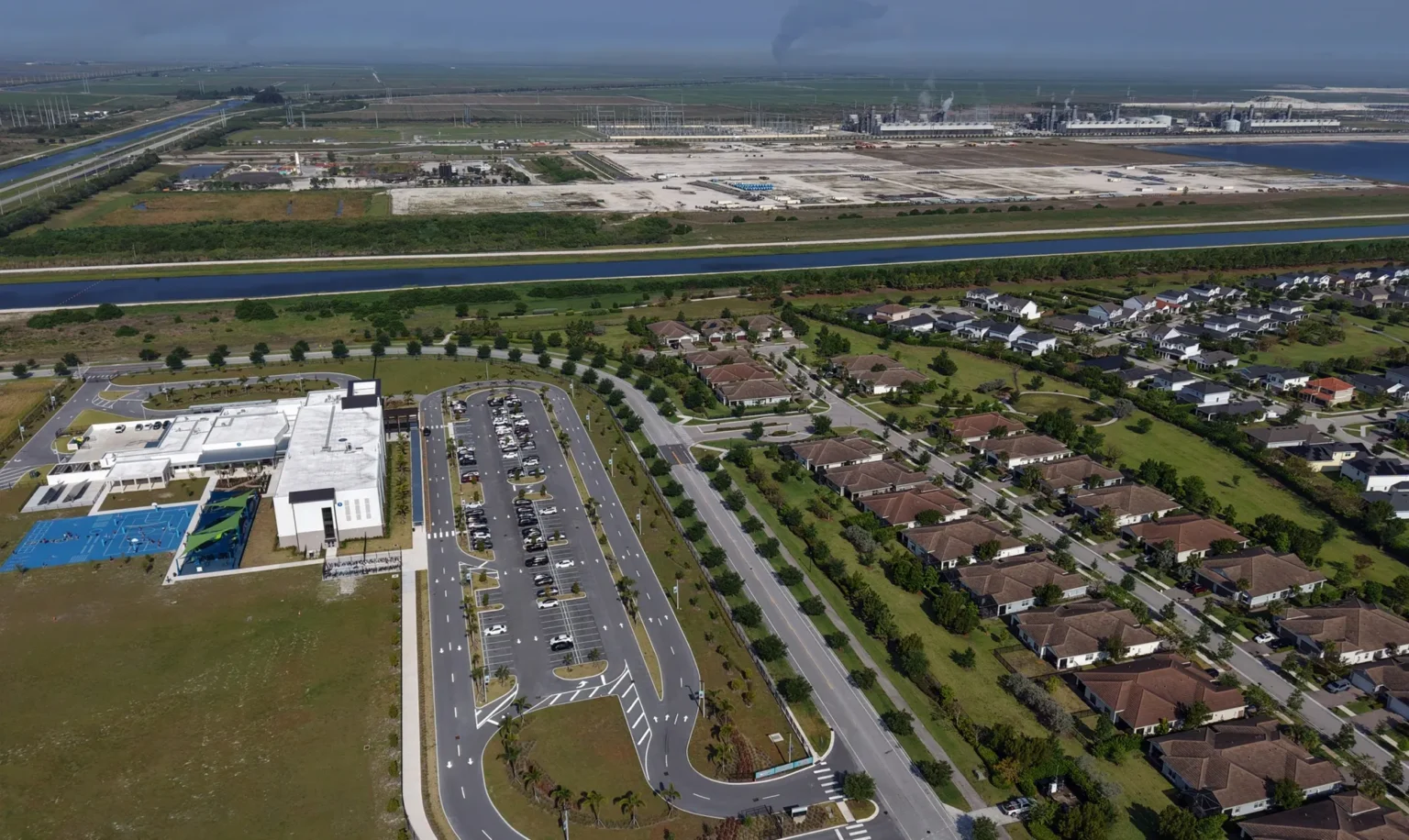
A vote in Palm Beach County on whether to allow construction of a digital infrastructure hub to house AI data centers and warehouses is set to show the strength of Florida’s efforts to rein in the technology industry. Project Tango, which would fill dozens of acres of land about 20 miles from President Donald Trump’s Mar-a-Lago club, faces a bitter backlash from residents who fear it will cause power and water bills to spike and create noise and heat for homeowners and schools; its fate will be decided by county commissioners meeting Wednesday. YourDailyAnalysis flags the geography as the detail that makes this vote a genuine test case: a data-center fight playing out almost literally in the president’s backyard forces a level of political visibility that similar disputes elsewhere in the country haven’t had to contend with.
The state-level backdrop shapes what’s actually at stake in Wednesday’s vote. Project Tango is the most high-profile plan to come up for approval since Ron DeSantis, Florida’s Republican governor, signed legislation preventing large data centers, which need copious energy and vast water supplies, from passing on their utility costs to ratepayers. YourDailyAnalysis reads that law as the reason this fight is happening at the county level at all: DeSantis’s legislation gave Palm Beach County commissioners real leverage over cost allocation, transforming what might otherwise be a straightforward zoning approval into a genuine political battle over who bears the infrastructure burden.
This local dispute sits inside a much broader national pattern that gives it added significance beyond Florida. Local opposition has blocked major data-center projects in states including Indiana, North Carolina, Virginia and Tennessee, with at least 75 data-center proposals blocked or delayed in the first three months of this year across the U.S., according to the advocacy group Data Center Watch. New York Governor Kathy Hochul went further still, imposing a statewide moratorium on so-called hyperscale data centers on Tuesday to give state officials time to craft more regulations protecting the environment and the electrical grid.
The federal-state tension underlying all of this is direct and, so far, unresolved in the states’ favor. States are acting despite an executive order by Trump aimed at thwarting state-level regulation of AI, with some AI advocates warning that a patchwork of rules could hamper the industry’s growth and leave the U.S. trailing China in a vital strategic competition. Your Daily Analysis treats that gap between Trump’s stated federal preemption goal and the reality of state and local action as the real story here: an executive order aimed at stopping exactly this kind of local pushback has not stopped New York’s moratorium or Palm Beach County’s own one-year freeze on new applications, suggesting the order’s practical reach is considerably narrower than its rhetoric.
The politics of the issue cut across party lines in a way that’s unusual for Florida specifically, which adds to the significance of Wednesday’s outcome. “This is an issue that transcends party lines. Democrats and Republicans have really come together on this,” said Anna Eskamani, a Democratic state representative who has pushed for data-center regulation. Data centers have also become a flashpoint in the race to succeed DeSantis, with Republican frontrunner Byron Donalds facing criticism from both parties for accepting millions of dollars in tech-industry contributions despite promising, with Trump’s endorsement, that utility customers won’t bear development costs.
The economic counterargument being made locally is concrete rather than abstract, which complicates a simple opposition narrative. Kelly Smallridge, president of the Business Development Board of Palm Beach County, noted that if fully built, Project Tango is projected to bring in $460 million in annual property-tax revenue, potentially offsetting reduced taxes for many homeowners. That $460 million figure is likely the number most likely to determine how commissioners actually vote, regardless of how loud the community opposition has been – a tax windfall of that scale gives officials a politically defensible reason to approve the project even amid genuine local anger.
Watch how Wednesday’s commission vote lands, and watch whether Palm Beach County’s broader one-year moratorium on new data-center applications, already in place since July 7 with Project Tango exempted, gets extended or expanded to cover future projects regardless of this outcome. Your Daily Analysis sees this vote as a bellwether other Republican-led states will watch closely, since a rejection this close to Trump’s own residence would send an unmistakable signal about the ceiling on federal AI-preemption efforts even within the president’s own political base.