

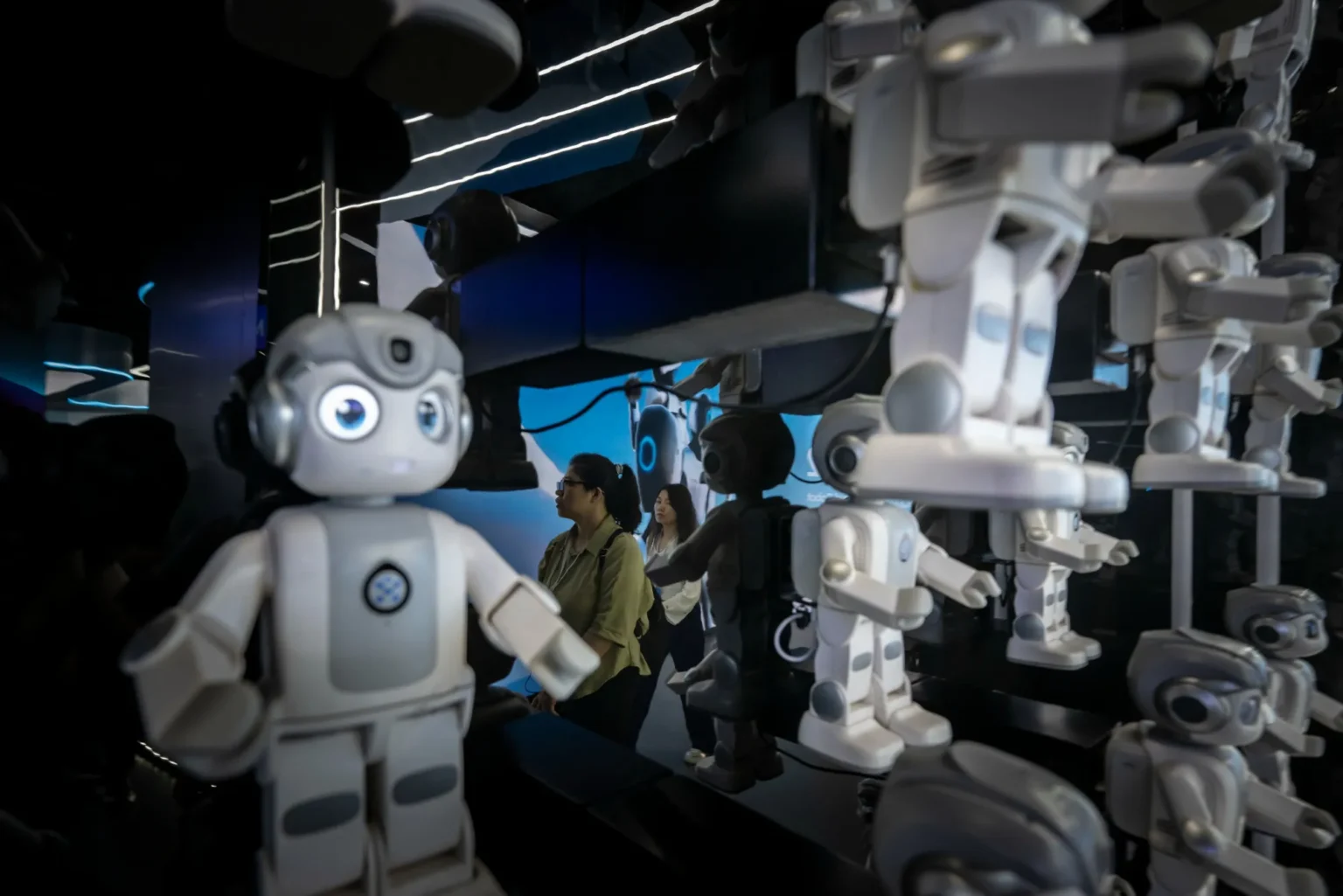
Washington risked widening its tech confrontation with China by restricting more foreign-made goods, including some humanoid robots and power inverters. Citing possible “supply chain vulnerabilities” identified by national security officials, the Federal Communications Commission said Tuesday it was adding “advanced robotic devices” and connected inverters to its registry of communications-related items it considers posing an “unacceptable risk.” YourDailyAnalysis highlights the regulatory vehicle itself as the more revealing detail than the restriction’s substance: using a communications-equipment registry to restrict robots and inverters is a notably indirect legal path, one that lets Washington sidestep a more explicit, robotics-specific ban while achieving much the same practical effect.
The announcement’s own careful wording, avoiding China by name while achieving an outcome that overwhelmingly targets Chinese suppliers, is itself a meaningful signal about how this rule is designed to function. The announcement didn’t mention China directly, saying only that the curbs apply to foreign-made products, though given China’s dominance in robotics, the move amounts to an effective ban; companies can seek exemptions from the Department of Defense or Department of Homeland Security. YourDailyAnalysis frames that country-neutral drafting alongside a country-specific practical effect as a now-familiar regulatory pattern, one that gives Washington a defensible legal position while still functionally excluding the dominant foreign supplier in the targeted category.
A foreign policy analyst’s assessment of the rule’s likely economic impact frames this as considerably more consequential than a routine trade restriction. “This is a very, very big deal,” wrote Chris McGuire, a senior fellow who served in both the Trump and Biden administrations, on social media, adding that the move could be “transformational” for the US robotics industry by incentivizing reshoring of robotics supply chains while preventing China from flooding the US market with cheap robots that also pose national-security risks. YourDailyAnalysis notes that McGuire’s service across two administrations of different parties lends his “transformational” characterization more weight than a single-administration partisan assessment would carry, though his framing remains a prediction about reshoring incentives rather than a confirmed outcome.
This isn’t Washington’s first use of this specific regulatory mechanism against a China-dominated hardware category, which suggests a deliberate, repeatable template rather than a one-off action. The FCC earlier targeted foreign-made drones, another industry China leads, saying in December last year it would ban most foreign-made drones and critical components for unmanned aircraft systems. Your Daily Analysis registers that drone precedent as the clearest evidence this robotics and inverter action follows an established playbook: identify a hardware category where China holds dominant global market share, route the restriction through the FCC’s communications-risk authority rather than a more visible trade or export-control action, and let the practical effect follow from the legal mechanism rather than an explicit country-specific ban.
The immediate market reaction shows financial exposure concentrated specifically in companies most dependent on US sales, rather than across Chinese tech broadly. Shares of Chinese inverter maker Sungrow Power Supply fell 7.8%, adding to a 14% drop when news of a potential ban first surfaced on July 1, while rival GoodWe Technologies lost 3.2%; Sungrow generated 60% of its revenue outside China last year, with an estimated 30% to 40% of its inverter gross profit coming from the US market in 2025. Chinese humanoid robotics shares were comparatively unshaken, with a tracking index for the sector slipping just 0.4% and one major robotics maker actually rising, suggesting investors see the inverter makers as considerably more exposed to this specific rule than the robotics companies are.
Watch how many companies apply for and receive exemptions from the Department of Defense or Homeland Security, since the exemption process itself will determine how absolute this “effective ban” actually turns out to be in practice. Beijing’s response, still pending as its Foreign Ministry and Commerce Ministry had not immediately replied, is the more consequential near-term variable, given that Beijing had already warned Washington earlier in the week against sanctioning Chinese AI companies, raising the odds this rule specifically becomes a retaliatory flashpoint rather than a contained, sector-specific dispute.