

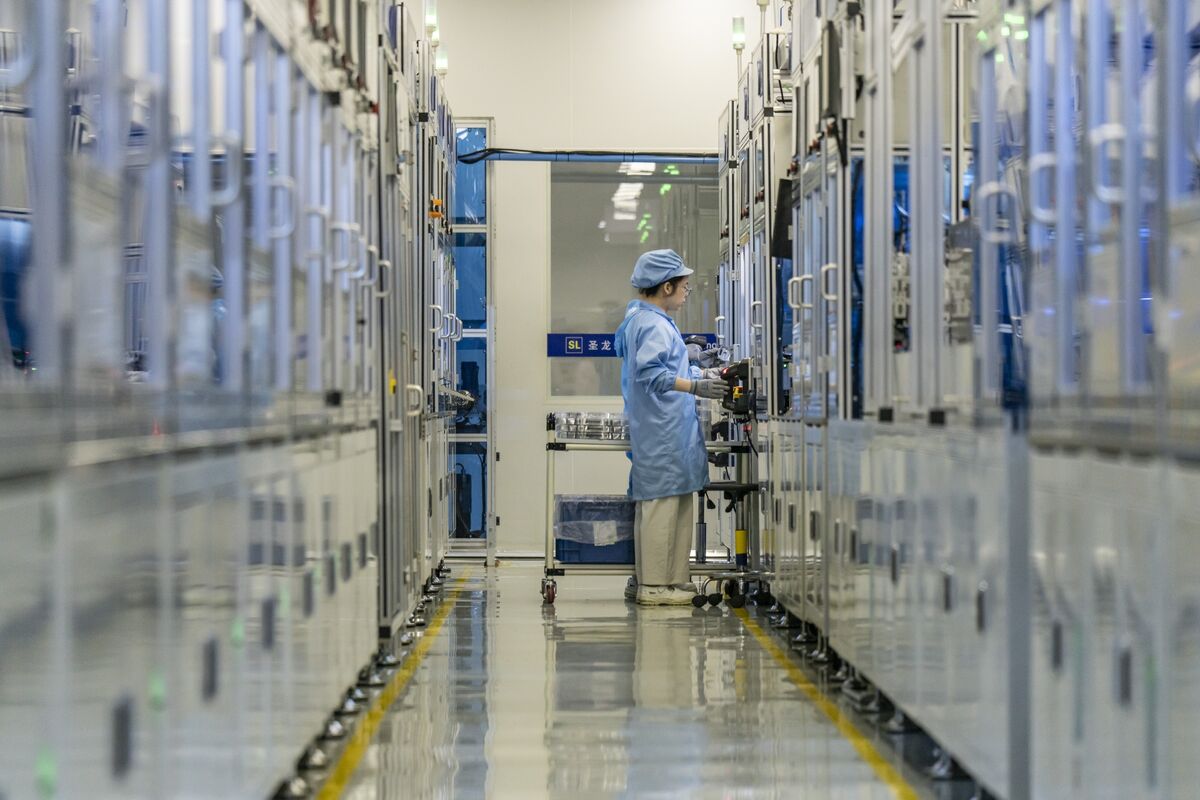
China’s factory activity unexpectedly contracted for the first time in five months, adding to signs of slowing economic momentum. The official manufacturing purchasing managers’ index was 49.2 in July, versus 50.3 in June, the National Bureau of Statistics said Friday, with the median estimate of surveyed economists at 50.1, meaning the miss caught forecasters off guard rather than confirming an already-expected slowdown. YourDailyAnalysis highlights that gap between the median forecast and the actual reading as the reason this print qualifies as a genuine surprise rather than a mere confirmation: a nearly one-point miss against consensus is large enough in PMI terms to force real-time reassessment of the broader growth trajectory.
The non-manufacturing reading accompanying this release is, on its own terms, the more severe of the two numbers, even though the factory contraction has drawn more attention. The non-manufacturing measure of activity in construction and services fell more than forecast to 49, the lowest since December 2022, from 50.2 the prior month, with a reading below 50 indicating contraction. YourDailyAnalysis frames that construction-and-services reading as arguably more consequential than the manufacturing miss: services and construction together represent a larger and more consumer-facing share of China’s economy than factory output alone, and a multi-year low there points to weakness reaching well beyond the export-oriented manufacturing sector.
The specific imbalance underlying both weak readings is described explicitly in terms of domestic demand versus export resilience, which shapes how policymakers are likely to respond. The declines suggest economic weakness is becoming more entrenched, with soft domestic demand outweighing resilience in exports, even as investors increasingly focus on whether policymakers will roll out stimulus measures to stabilize the economy after the government dialed back infrastructure spending in recent months. YourDailyAnalysis singles out that infrastructure-spending pullback as the more actionable variable for Beijing to reverse quickly, compared with export resilience or domestic demand broadly, since infrastructure spending is a direct fiscal lever policymakers control far more precisely than consumer sentiment.
The broader growth numbers disclosed alongside these PMI figures situate the July slowdown inside a longer deceleration that predates this specific report. Economic growth slowed to 4.3% in the second quarter from a year earlier, the weakest quarterly growth in more than three years, though a strong first quarter means growth in January-June was 4.7%, within this year’s official target range of 4.5% to 5%; concerns over the health of China’s economy have been intensifying since April as growth weakened and became more unbalanced. That combination, a weak second-quarter print cushioned by a strong first quarter, means the full-year 4.5%-to-5% target likely remains technically achievable even after July’s PMI miss, but with progressively less room for further deterioration in the second half.
The policy response so far has been rhetorical commitment rather than a fresh, quantified stimulus package. Top officials pledged to “roll out pragmatic and effective new policies in a timely manner” during a key policy meeting Thursday, and separately pledged to speed up the pace of public spending and the use of funds raised through government bonds, even though economists had expected officials to act with little urgency given exports still soaring at a double-digit pace this year. Your Daily Analysis marks that pre-PMI expectation of official patience as the assumption most likely to be tested by Friday’s data: a genuine, unexpected contraction in both manufacturing and non-manufacturing activity gives policymakers a considerably stronger case for near-term action than the export-driven complacency many economists had priced in just days earlier.
Watch whether the “pragmatic and effective new policies” language from Thursday’s meeting translates into a specific, quantified stimulus package in the weeks following this PMI miss, since vague policy pledges have historically preceded both meaningful action and extended delay in China’s recent economic cycles. Watch the August PMI release specifically for whether the non-manufacturing index’s slide to a multi-year low proves a one-off or the start of a sustained services-sector deterioration layered on top of the factory contraction.