

Europe’s political corridors have taken on an urgent, almost electric quality in recent months. Closed-door meetings, frantic drafting sessions, and cross-continental calls all reflect one reality: the global trade order that powered Europe’s growth for decades is collapsing faster than Brussels can redesign its own defenses. What was once a world shaped by open markets and predictable supply chains is now defined by tariffs, export controls and a wave of industrial nationalism. At YourDailyAnalysis, we view the European Commission’s upcoming economic-security package as a direct response to this new age – and as one of the bloc’s most ambitious attempts to reinvent its industrial resilience.
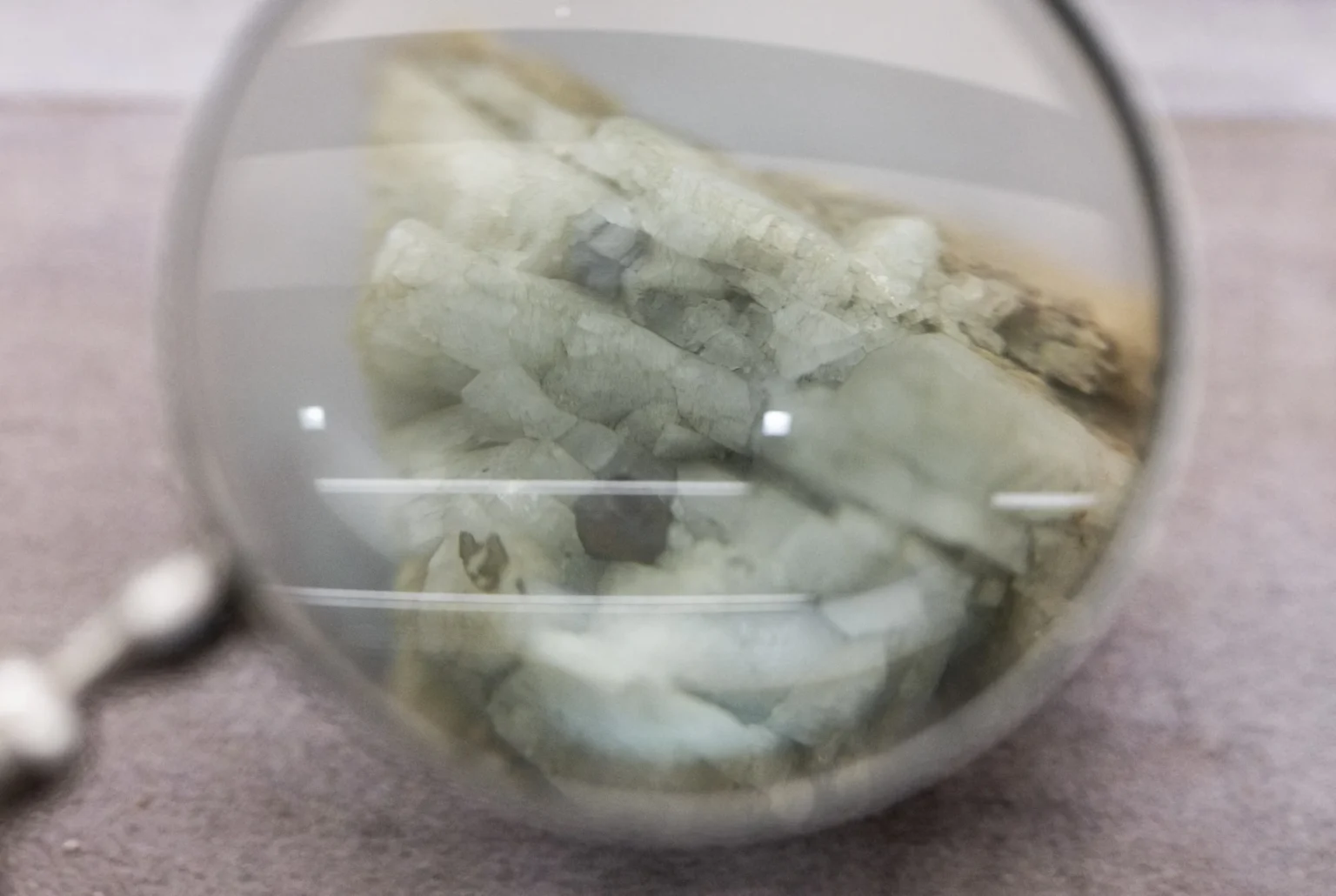
Next week, the Commission will unveil a sweeping plan, including ResourceEU, a framework modeled loosely on the RePowerEU program that cut Europe’s dependence on Russian gas. But this time the challenge is far more complex. Gas can be replaced by Norway or LNG cargoes; rare earths, gallium, germanium and lithium cannot. China dominates not only mining but also the processing stages – the part of the value chain Europe almost entirely outsourced. Recent Chinese export restrictions triggered alarm across Europe’s auto, clean-energy and semiconductor sectors, exposing what industry leaders quietly feared: strategic dependency has become a structural risk.
The EU intends to allocate an initial €3 billion to fast-track 25 urgent strategic projects across rare earths, lithium, gallium and germanium. Yet even these funds barely dent the core problem: building an extraction-to-processing ecosystem from scratch requires political courage, accelerated permitting and a willingness to assume environmental and financial risk. Inside YourDailyAnalysis, we often remind policymakers that “strategic autonomy demands faster decisions than markets are naturally built for.”
Companies, for their part, are signaling that they will not invest without price-stability guarantees or long-term offtake commitments – the same tools the U.S. has already mobilized. Washington’s Defense Department has guaranteed minimum prices to American suppliers, while Japan, Canada and Australia are aggressively expanding their own mineral-security programs. Europe, meanwhile, is signing memoranda of understanding with Brazil, Kazakhstan, South Africa and Australia, but few of these political agreements have translated into capital flows. Several European rare-earth projects are already being courted – and sometimes captured – by the U.S. and Asia, offering faster permitting and less regulatory friction.
Still, the Commission is trying to build long-term foundations. A pilot program for shared strategic stockpiles is launching with several member states, modeled on Japan’s mineral-reserve system. The EU’s Global Gateway initiative may also become a financing tool for overseas mining and processing projects that benefit both partner countries and European industries. The European Investment Bank is being positioned as a key financial engine. Yet none of these initiatives come with clear timelines. As we often state at YourDailyAnalysis, “time is the one commodity Europe burns faster than the raw materials it lacks.”
The broader competitive landscape makes Europe’s challenge even sharper. The U.S., Canada, Australia and Japan are not merely diversifying – they are building entire supply chains end-to-end. Europe, for all its scientific expertise and advanced manufacturing base, risks becoming a technology hub without the raw inputs that feed its factories. Processing capacity is a particular weakness, and building it takes years.
And yet the outlook is far from hopeless. Europe remains the world’s largest EV market, a global leader in clean-energy equipment, and one of the most formidable industrial blocs on the planet. Now it also has political urgency – something that was missing a decade ago. If the Commission manages to convert strategies into signed contracts, and declarations into operating facilities, ResourceEU could mark a genuine turning point.
The conclusion writes itself: Europe is entering a decade in which access to raw materials will matter as much as access to technology. At Your Daily Analysis, we believe the success of the coming strategy will depend on Europe’s willingness to act faster than its institutional habits, and more decisively than its political comfort zone normally allows. Without that shift, the future of European manufacturing – and the supply chains that sustain it – may end up shaped by competitors rather than by Europe itself.