


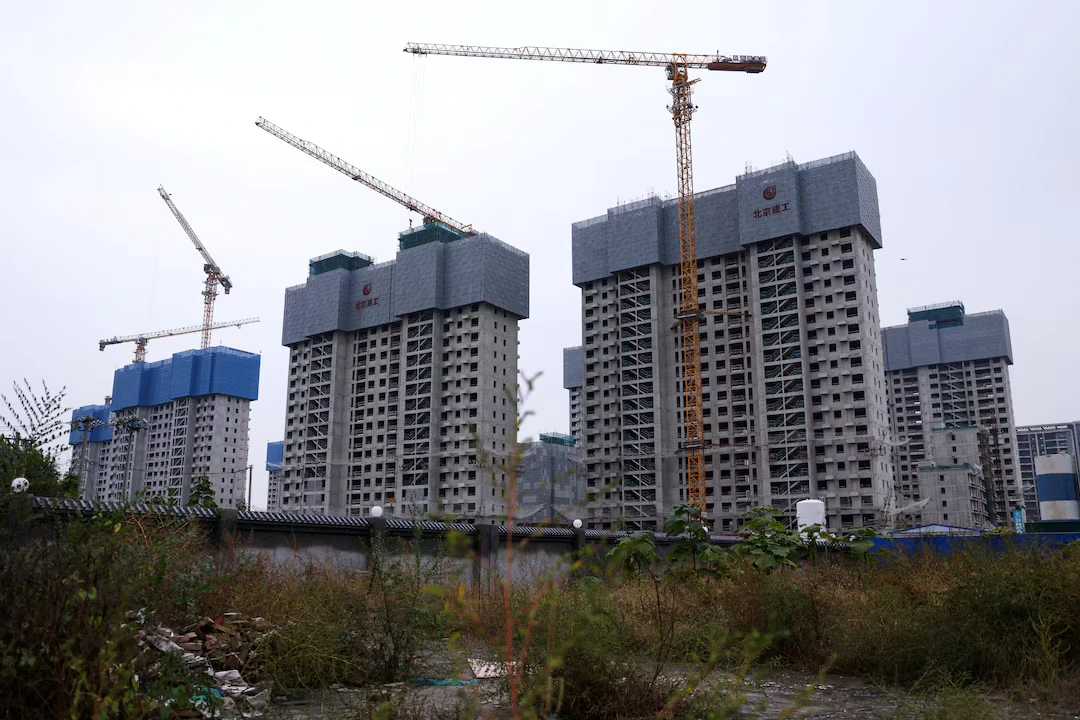
China is preparing to enter a new political and economic cycle with a familiar target: a GDP growth rate of around 5% for 2026. Behind this headline number lies a broader strategic calculation. Beijing is seeking to anchor the first year of its upcoming five-year plan on a foundation of stability while containing deflationary pressure, reviving weak consumer demand and navigating the deep structural drag from its property slump. As we at YourDailyAnalysis observe, the choice of maintaining the same growth target as 2025 reflects both confidence in policy tools and recognition that the economy is not yet ready for a decisive structural pivot.
Government advisers who spoke privately with reporters say the consensus leans toward keeping the 2026 goal at roughly 5%, with a minority suggesting a slightly lower band of 4.5–5%. The final decision is expected to be endorsed at the Central Economic Work Conference later this month. While advisers do not formally set policy, their views echo the broader expectations of private-sector economists: preserving a psychologically important benchmark while leaving room for fiscal and monetary maneuvering.
In practical terms, this implies another year of expansionary budgeting. Most advisers support maintaining a deficit of around 4% of GDP – the same record level set in 2025 – in order to counter sluggish demand and offset the lingering shock from the property downturn. Analysts expect the People’s Bank of China to resume monetary easing as early as January 2026, opening the door to renewed support for developers and additional liquidity measures to stabilize credit flows.
Yet the macroeconomic backdrop remains uneven. Industrial output is running ahead of demand, reinforcing deflationary forces. Morgan Stanley projects that China will likely remain in deflation through 2026, with the GDP deflator falling by about 0.7% before showing a marginal rebound in 2027. As we highlight in YourDailyAnalysis, this would mark a rare four-year stretch of sustained price weakness – a challenge that complicates both policy timing and the credibility of growth targets.
Alongside short-term stimulus, Beijing is attempting something far more complex: a long-delayed shift from investment-driven growth toward a consumption-led model. Household consumption currently accounts for roughly 40% of GDP – dramatically below the nearly 70% seen in the United States. China’s leadership has pledged to “significantly” raise this share over the next five years. Some advisers suggest aiming for 45%; others warn that such progress will be impossible without deep structural reforms, from strengthening social welfare to easing the household registration (hukou) system that reinforces urban–rural inequality.
This tension – between immediate stabilization and long-term rebalancing – defines the current moment. As we note in YourDailyAnalysis, the 5% target is less a sign of unbridled optimism and more a marker of political intent: Beijing wants to keep growth steady while preserving flexibility if global conditions deteriorate or domestic risks intensify.
Looking further ahead, China has an even more ambitious objective: doubling per capita GDP to $20,000 within a decade. Achieving this benchmark will require sustained average growth of roughly 4.2% – a feasible number on paper, but one that hinges entirely on the structural reforms policymakers have been slow to deliver.
For now, the country will continue to rely on a mixture of fiscal stimulus, accommodative monetary policy and selective support for struggling sectors. If these tools can hold the economy above the 5% boundary in 2026, Beijing will enter the new five-year plan from a position of relative strength. If not, China risks slipping back into a cycle of debt-driven investment and export dependency – a model it has spent years promising to leave behind.
The next phase will hinge on whether policymakers can align short-term stabilization with long-term transformation. This balance will shape not only China’s economic trajectory but also the broader strategic landscape of Asia in the decade ahead. And as always, Your Daily Analysis will continue tracking these developments as they unfold, step by step.