

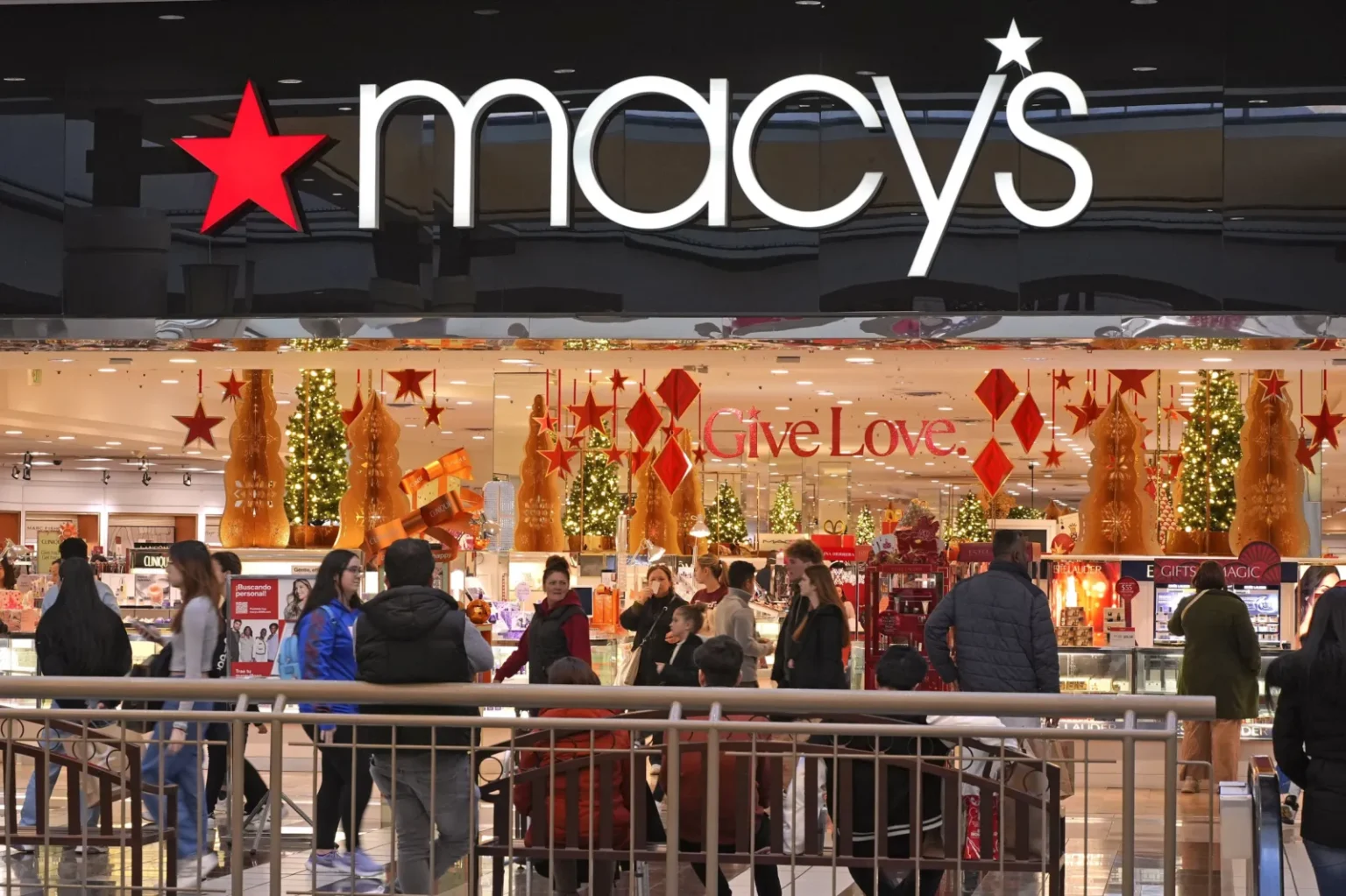
For years, Macy’s has served as a barometer for the American retail landscape – once a symbol of mass-market prosperity, later a reflection of the sector’s structural fatigue. But its latest quarterly report suggests the department-store pioneer may be writing an unexpected comeback chapter. At YourDailyAnalysis, we see the shift not as a lucky break, but as early evidence that Macy’s painful restructuring is beginning to alter its long-term trajectory.
The third fiscal quarter delivered the strongest performance in more than three years. Macy’s once again topped Wall Street expectations: adjusted earnings reached $0.09 per share compared with a projected loss, and revenue landed at $4.71 billion. On the surface the gains appear modest, yet comparable sales – up 3.2% across owned, licensed and marketplace channels – tell a different story. From our perspective at YourDailyAnalysis, this is the metric analysts watch most closely: when a shrinking store base generates more revenue per location, it signals a structural improvement rather than a seasonal fluctuation.
Those numbers allowed Macy’s to lift its full-year guidance for the second consecutive quarter. The retailer now expects adjusted EPS of $2.00–$2.20 and revenue as high as $21.63 billion. Even though annual sales will likely fall short of last year’s $22.29 billion due to the closure of 64 stores, the company is effectively validating its “smaller but stronger” strategy.
Still, the real momentum is coming from outside the flagship brand. Bloomingdale’s posted a 9% increase in comparable sales, while Bluemercury added 1.1%. As we’ve noted repeatedly at YourDailyAnalysis, American consumers are increasingly polarized, and premium-leaning concepts weather income volatility far better than mass-market formats. Macy’s is trying to bend this dynamic to its advantage through its store-revival program – the “First 50” remodels, later expanded to 125 locations. Added staffing, cleaner merchandising, and sharper branding have begun to shift customer perception inside the legacy Macy’s banner.
CEO Tony Spring remains cautious, and rightly so. The holiday quarter will test every optimistic projection. The biggest uncertainty revolves around so-called “aspirational customers” – shoppers who prefer Macy’s but live under tighter financial constraints. Their willingness to spend on gifts will determine how confident the retailer can remain through year-end. In our view at YourDailyAnalysis, Spring’s hesitance reflects a realistic reading of the environment: import tariffs and cost inflation continue to pressure margins, and even “selective” price increases risk dampening conversion.
Yet Macy’s protected profitability better than expected. Margins compressed less than forecast, suggesting that the company and its suppliers absorbed part of the cost pressure without triggering a pullback in demand. Cooler October weather played a role as well, boosting sales of cashmere, outerwear, boots, and other high-margin seasonal categories.
Financially, Macy’s remains in a delicate but controlled position. Net income fell to $11 million from $28 million a year earlier – a predictable drop given the scale of store closures and restructuring. What matters, as we note at YourDailyAnalysis, is that Macy’s remains profitable during a period when many department-store peers would struggle to break even. The company also continues to return capital through dividends and buybacks, an implicit sign of management’s confidence that margins will stabilize.
The market remains unconvinced: Macy’s shares have climbed nearly 33% year-to-date, beating the S&P 500, yet Wednesday’s report triggered a mild pullback – a reaction driven more by holiday-quarter nerves than by the fundamentals. In the long run, the key question is the speed at which Macy’s can execute its “Bold New Chapter.” The planned closure of 150 underperforming stores by 2027, alongside accelerated investment in Bloomingdale’s and Bluemercury, will determine whether the company can achieve sustainable margin expansion.
As our analysts at Your Daily Analysis note, the verdict is hard to miss: Macy’s is showing early, fragile signs of a turnaround. The data points are promising – stronger comps, strategic pruning of stores, improved in-store experience – but the recovery is far from assured. The company must maintain its current transformation tempo while navigating tariff pressure and an uneven consumer backdrop. If Macy’s succeeds, it may evolve from a relic of the department-store era into a modern case study in “lean, focused retail” – proof that even century-old giants can learn to compete again.